
Strengthening State Revenue: Tax Crime Enforcement Urged to Be More Measurable
Enforcement of tax crime law in Indonesia is considered to require reform so that corporate and director liability is clearer, more measurable, and does not result in sentencing disparities. Legal certainty is important for safeguarding state revenue and ensuring fair enforcement.
Doctor of Law from Pancasila University (UP) Sujatmiko said reform needs to be carried out through strengthening regulations, judicial guidelines, and coordination among law enforcement agencies.
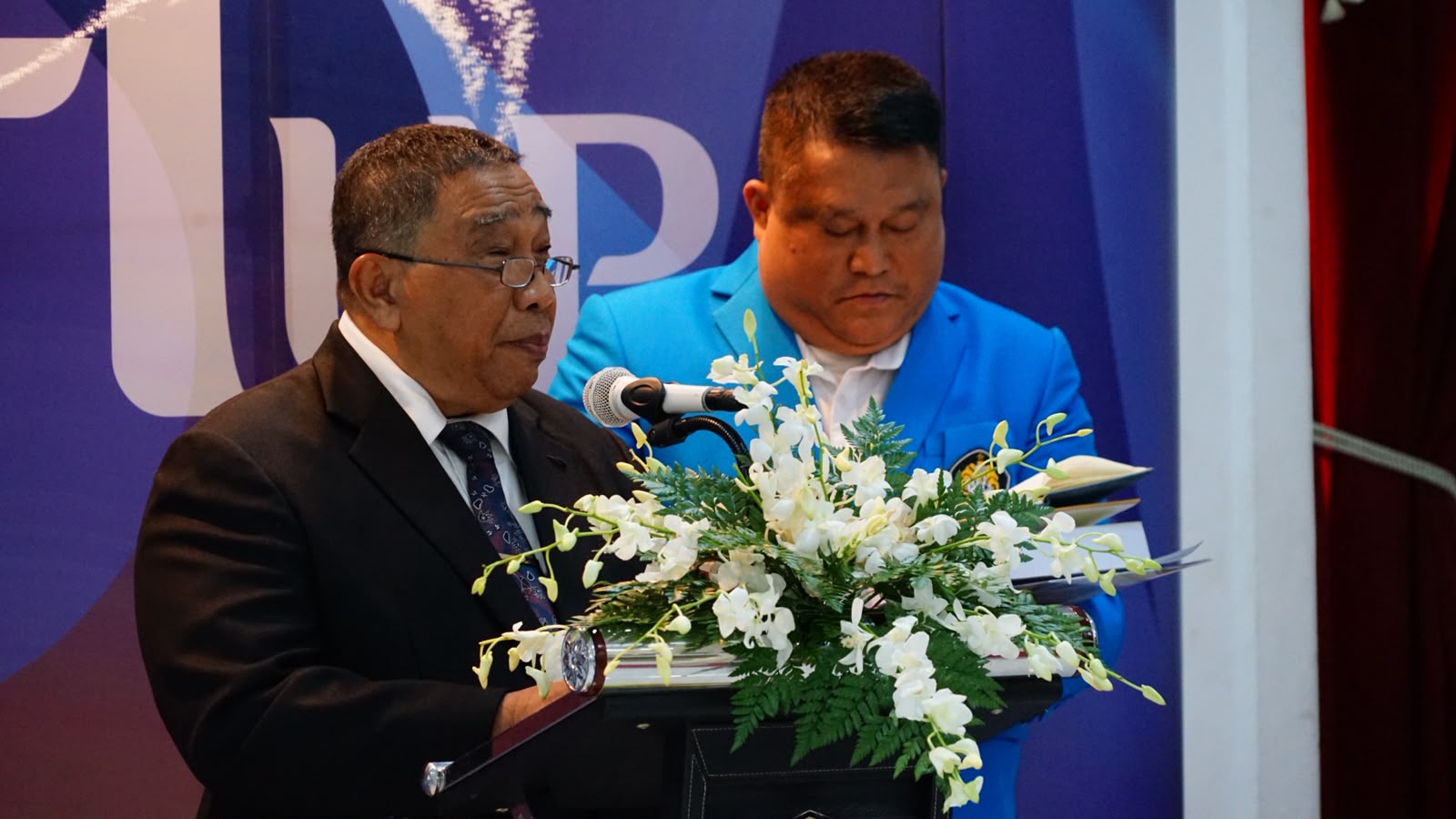
This was conveyed by Sujatmiko during his dissertation defence titled ‘Corporate Criminal Liability in Tax Crimes Committed by Directors of Limited Liability Companies’ at the Faculty of Law, Pancasila University (FHUP), Jakarta, Friday (21/8/2026).
In his dissertation, Sujatmiko put forward three recommendations addressed to lawmakers, the judiciary, and executive tax law enforcement agencies.
‘These recommendations are a direct application of the six elements of the DPD-Tax Model so that the findings do not stop at the conceptual level, but can be realised in legal reform and enforcement practice,’ said Sujatmiko.
He recommended revising the Law on General Provisions and Tax Procedures (KUP) to affirm corporations as subjects of tax crime law. According to him, the position of corporations has so far relied on the interpretation of the phrase ‘every person’ and derivative regulations.
The revision of the KUP Law is also deemed necessary to be harmonised with Article 45 of the National Criminal Code and to regulate the differentiation of roles and a proportional sanction system through the DPD-Tax Model.
A matrix of four variables considering authority, interest, fault, and benefit needs to be codified into norms so that the determination of liability can be carried out systematically. Thus, it can be determined more clearly whether the director, the corporation, or both should be held responsible.
Sujatmiko also proposed a tiered sanction system, ranging from multiplied fines, licence revocation and dissolution as additional penalties, to recovery of state losses. Simultaneous prosecution of directors and corporations also needs a clear legal basis.
‘These regulations must ensure sanctions are proportional to the role, fault, and benefit obtained by each party in tax cases,’ he said.
On the judicial side, Sujatmiko urged the Supreme Court to issue a new circular or revise Supreme Court Regulation Number 3 of 2025 concerning Guidelines for Handling Criminal Cases in the Taxation Sector.
The guidelines are deemed necessary to adopt the six elements of the DPD-Tax Model, including the identification doctrine and corporate culture doctrine, so that judges have a more uniform standard of reasoning in determining the responsible subject.
‘This standard gives judges a uniform reasoning framework to determine the responsible subject and sanctions, and strengthens legal certainty for the parties,’ he said.
Meanwhile, the Directorate General of Taxes and the Attorney General’s Office are encouraged to develop a joint coordination protocol from tax administration audits to criminal prosecution. The protocol is needed to clarify the division of authority, prevent overlap, and ensure the transition of cases from the administrative to the criminal realm is based on measurable criteria.
Sujatmiko also encouraged a tax compliance monitoring system as a filter before criminal enforcement. Criminal law, he said, needs to be positioned as ultimum remedium, while administrative sanctions and recovery of state losses become the main avenue wherever possible.
This approach is in line with the restorative justice principle in the DPD-Tax Model, which is not only oriented towards punishment but also towards recovering state losses and preventing repeat violations through improved corporate governance.
‘This integration of tax administration makes law enforcement not only punitive, but also restorative and preventive of repeat crimes,’ said Sujatmiko.
According to him, the implementation of the recommendations needs to be carried out in stages according to the authority of each institution so that legal reform and tax enforcement practice run in harmony with legal certainty, proportionality, and Pancasila justice. In the session, Sujatmiko was supervised by Promotor Prof Dr Agus Surono SH, Prof Dr Adnan Hamid SH, and Dr Agung Iriantoro SH MH.
Source: jawawa.id (https://jawawa.id/newsitem/strengthening-state-revenue-tax-crime-enforcement-urged-to-be-more-measurable-1787478648)
Originally published by Media Indonesia (https://mediaindonesia.com/politik-dan-hukum/924988/perkuat-penerimaan-negara-penegakan-pidana-perpajakan-didorong-lebih-terukur), translated from Indonesian