
Strengthening Research and Industry, KIST Alumni Initiate Strategic Indonesia–Korea Cooperation
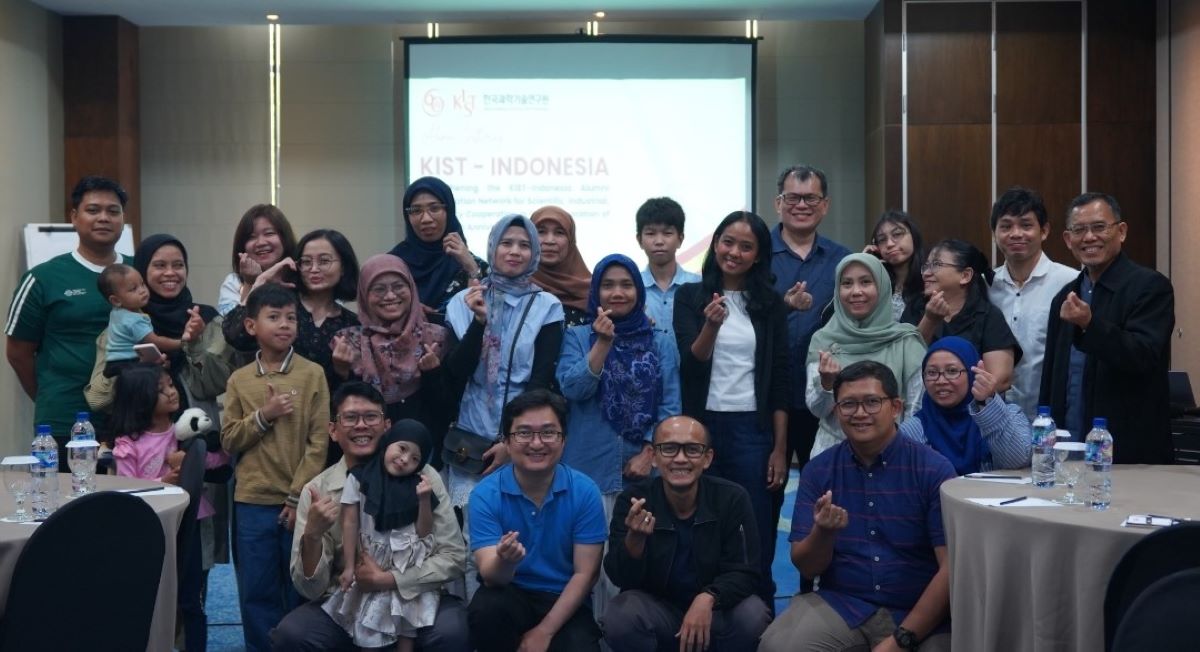
Alumni of the Korea Institute of Science and Technology (KIST) marked the institution’s 60th anniversary by reaffirming their commitment to strengthening research collaboration between Indonesia and South Korea. The commemorative event, titled Strengthening The KIST-Indonesia Alumni Collaboration Network For Scientific, Industrial, and Policy Cooperation in Commemoration of KIST’s 60th Anniversary, was held at Veranda Hotel Pakubuwono, Jakarta, on Friday, 22 May.
The gathering, initiated by alumni, brought together 18 representatives from three key sectors: academia, government research agencies, and industry. The sectors were represented by Agus Ismail (Universitas Jayabaya), Haznan Abimanyu (BRIN), and Bambang Veriansyah (PT Ferron Par Pharmaceuticals).
“This gathering is not just a reunion. It is a first step to build a more structured network of collaboration between KIST alumni in Indonesia and KIST School, so alumni contributions can have a broader impact on the development of science and technology in both countries,” said Muhammad Suhaeri, Chair of the Organising Committee, in an official statement.
Aspirations from the Three Strategic Sectors
In the plenary discussion, Suhaeri expressed that the alumni conveyed a range of strategic aspirations from each sector to reinforce the roadmap for future collaboration.
From academia, Agus Ismail proposed establishing a Sister Laboratory collaboration between KIST School and the universities in Indonesia where alumni are based. This scheme is expected to drive the development of research groups at Indonesian universities with direct mentoring from KIST, including facilitation of grant writing, publications, and patents through a formal MoU.
“From the perspective of research institutes, Haznan Abimanyu highlighted the importance of enhancing human resource capacity through joint training between KIST and Indonesian research institutions, both in research management and technical skills. He also proposed funding for collaborative research through joint proposals between Indonesian and South Korean researchers, as well as short-term researcher exchange programmes to bridge technology gaps,” Suhaeri said.
Meanwhile, Bambang Veriansyah from the industry sector stressed the importance of downstreaming research so that results extend beyond publications and can be implemented to deliver real benefits for society and the market. “Bambang Veriansyah regards KIST alumni as strategic connectors between research institutions and industry players, especially in the adoption of practical technologies relevant to Indonesian market needs,” Suhaeri noted.
New Model of Science Diplomacy
Suhaeri explained that all aspirations gathered from the 60th anniversary would be formally communicated to the KIST School in Korea. The inputs would inform evaluation and formulation to strengthen future international collaboration programs. “The alumni hope this collaboration can become a new model of science diplomacy between Indonesia and South Korea,” he concluded.