
Strengthening Patriotic, Resilient, and Empathetic Character Amid Uncertainty
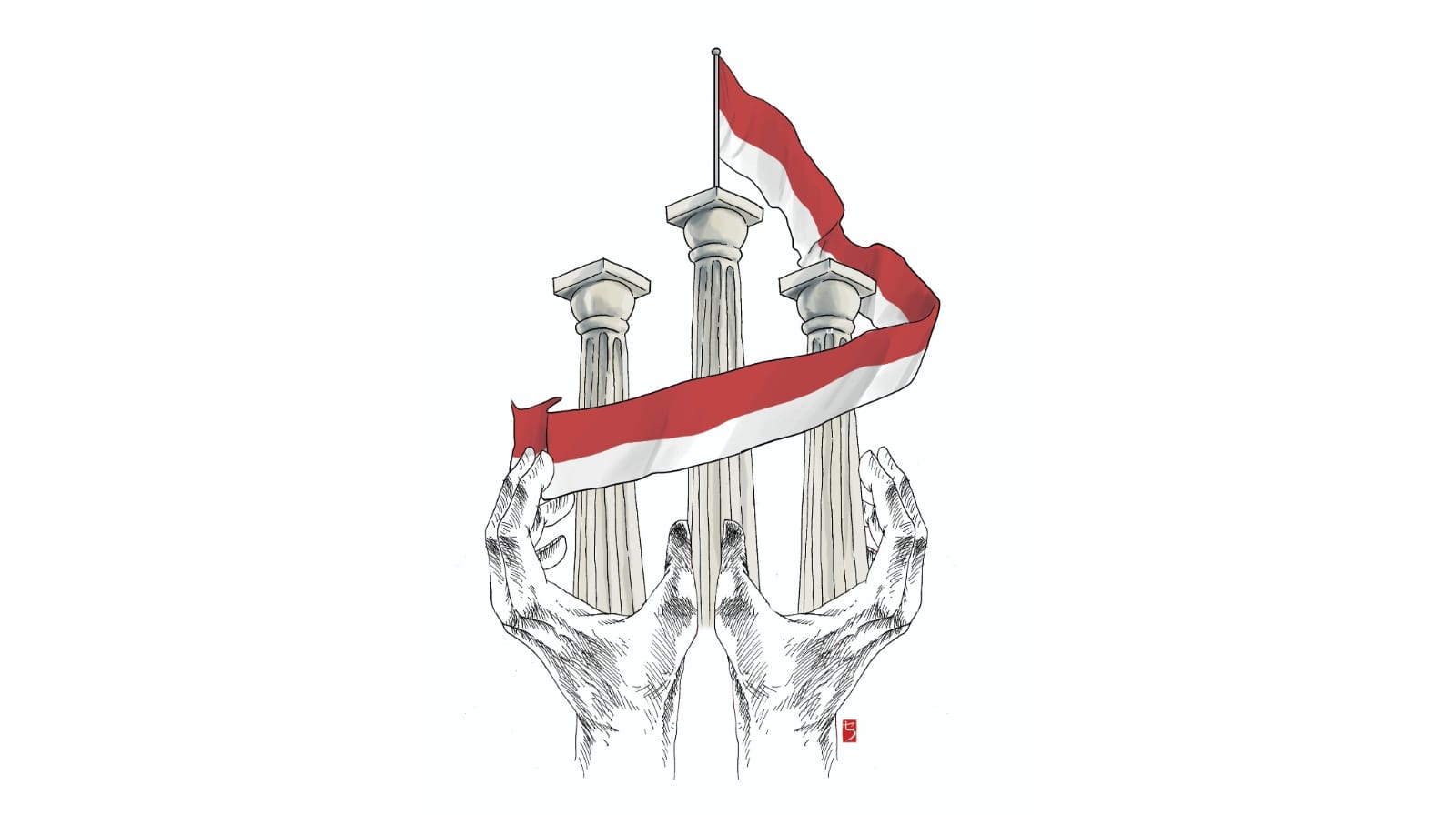
Amid a world of increasing uncertainty marked by geopolitical conflicts, economic crises, and social disruptions, nations are compelled not only to be strong economically and militarily but also robust in character. In this context, three values serve as essential foundations: patriotism, resilience, and empathy. These are not mere normative concepts but tangible qualities that determine a nation’s endurance in facing pressures.
Patriotism, resilience, and empathy do not stand alone but complement each other. Patriotism without empathy can turn into exclusivism. Resilience without empathy can become harsh and inhumane. Meanwhile, empathy without resilience can lead to quick surrender. When these three values are integrated, a strong yet humane character is formed, serving as the key to a nation’s resilience. In human development theory, this aligns with the human development approach, which emphasises that progress is not measured solely by economics but also by the quality of individuals themselves.
The experience of the Iranian people in facing external pressures, including prolonged tensions with the United States and Israel, provides an intriguing example. Regardless of the accompanying political debates, one aspect is hard to ignore: the resilience of its society. They are not easily shaken by threats, do not quickly succumb to pressure, and maintain social solidarity amid limitations. This simultaneously serves as an important lesson on how collective patriotic, resilient, and empathetic character is formed and sustained.
PATRIOTISM: MORE THAN MERE SYMBOLS
Patriotism is often understood narrowly as love for national symbols, including the flag, national anthem, or state ceremonies. In reality, it is far deeper, representing a willingness to place collective interests above personal ones, especially in difficult situations.
The Iranian people embody this character not merely in ceremonial forms. In various conditions of economic pressure due to international sanctions, for instance, they continue to sustain domestic economic activities, support local products, and demonstrate loyalty to their country. This reflects what civic nationalism theory describes as citizens’ attachment to the state through active commitment, rather than mere symbolic identity.
In the Indonesian context, such patriotic character is highly relevant. Our challenges may differ—not open war, but global competition, social inequality, and identity fragmentation. Yet, the essence remains the same: a strong nation is one where its citizens possess a sense of ownership and responsibility towards their country.
RESILIENCE: THE STRENGTH TO ENDURE AND RISE
The second prominent character is resilience or perseverance. In much psychological literature, perseverance is known as grit, a concept popularised by Angela Duckworth (2016). In her book Grit: The Power of Passion and Perseverance, she defines grit as a combination of perseverance and long-term passion in achieving goals.
Iran’s conditions, facing economic pressures, limited global access, and conflict threats, do not halt their society’s progress. On the contrary, these limitations spur domestic innovation, self-reliance, and high fighting spirit. In difficult situations, they do not wait for ideal conditions but adapt and seek solutions.
Resilience theory in psychology also explains this phenomenon. Resilience is the ability of individuals or groups to withstand and recover from stress. In her book Ordinary Magic: Resilience in Development, Ann Masten (2014) describes resilience not as something extraordinary but as ‘ordinary magic’. Resilience, or commonly known as perseverance, is a capability that can be built through experiences, social support, and values instilled from an early age.
For Indonesia, this lesson is vital. Resilience is needed not only in facing major crises but also in daily life. Such crises may arise in education, the workforce, or public services. Without resilience, even the best policies will be difficult to implement consistently.
EMPATHY: A STRENGTH OFTEN OVERLOOKED
Behind firmness and courage lies a character often overlooked: empathy. In situations of pressure, empathy becomes the social glue that keeps society solid. The Iranian people, in various social reports, are known for their high level of solidarity, especially in helping fellow citizens during economic hardships. This shows that a nation’s strength lies not only in bravery against enemies but also in care for fellow citizens.
Empathy in social psychology theory is explained as the ability to understand and feel what others experience. Daniel Goleman (1995) in his book Emotional Intelligence positions empathy as a key component of emotional intelligence. Without empathy, social relationships become fragile, and trust is hard to build.
FOUNDATION OF NATIONAL RESILIENCE
Indonesia currently does not face a war situation like Iran. However, the challenges encountered are no less complex, stemming from technological disruptions, social polarisation, and increasingly competitive global challenges. In such circumstances, character building becomes as important as infrastructure development. Character strengthening programmes must be directed not only towards normative moral aspects but also towards building mental resilience, national sense of belonging, and social care.
For Indonesia, this lesson is relevant for building the future. Amid various cha