
Strengthening Partnerships: Indonesia and Germany Target Cooperation in Renewable Energy and Technology
Indonesia and Germany continue to strengthen cooperation across various sectors, particularly in the fields of energy and technology. Coordinating Minister for Economic Affairs Airlangga Hartarto stated that 2026 serves as a pivotal momentum for the Indonesia-Germany relationship, marked by several high-level visits and meetings.
During the state visit of the President of the Federal Republic of Germany, Frank-Walter Steinmeier, to Indonesia in June 2026, both nations reaffirmed their commitment to strengthening partnerships, specifically in economic cooperation, investment, energy transition, education, and employment.
“For Indonesia, this moment serves as a meaningful reminder of our long-standing and evolving partnership. This year marks 74 years of diplomatic relations between Indonesia and Germany, and next year we will celebrate the 75th anniversary of our bilateral relations,” he stated in a release on Sunday, 4 October 2026.
Furthermore, Minister Airlangga explained that the strengthening of Indonesia-Germany relations is directed towards producing concrete economic cooperation through various bilateral mechanisms. This includes the Joint Economic and Investment Committee, industrial and green cooperation, investment, and human resource development.
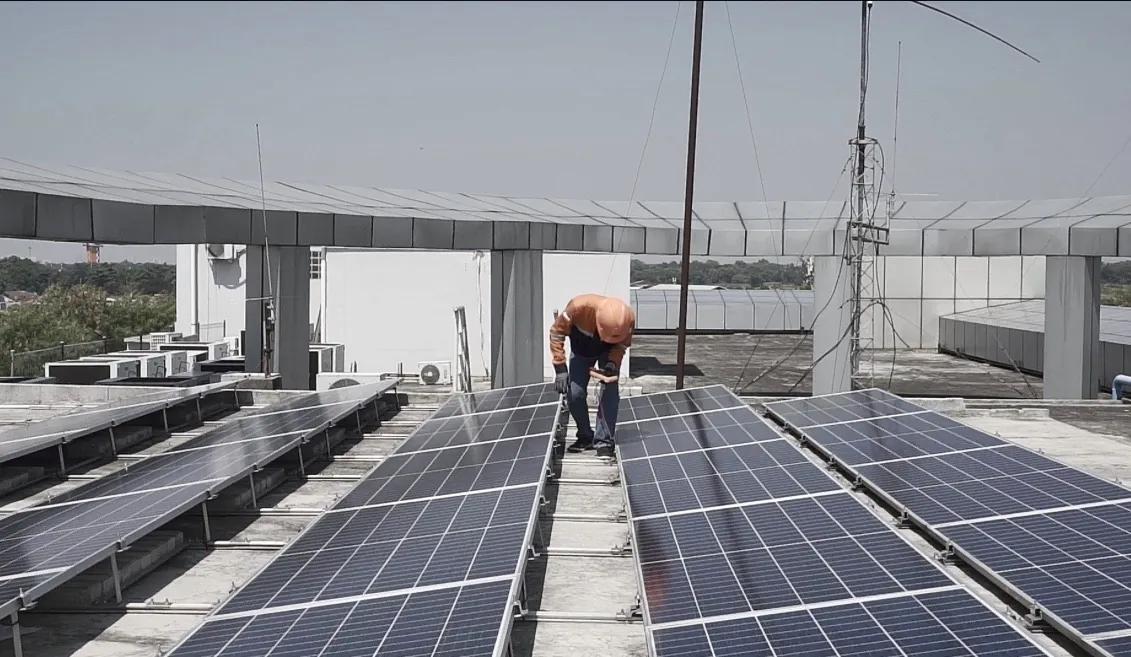
In the energy and technology sectors, Indonesia sees opportunities for cooperation with Germany in the development of renewable energy, electrical infrastructure, the electric vehicle and battery ecosystem, semiconductors, digital infrastructure, and sustainable finance. Germany, alongside Japan as the co-lead of the International Partners Group within the Just Energy Transition Partnership (JETP) framework, remains a vital part of efforts to accelerate investment and financing for Indonesia’s clean energy transition.
Additionally, Indonesia and Germany possess the potential to strengthen vocational education and skills development cooperation. Such collaboration also opens opportunities for skilled Indonesian workers to contribute to the German workforce.
Maintaining the momentum of economic ties, Airlangga noted that Germany is one of Indonesia’s essential economic and industrial partners. Bilateral trade value reached approximately USD 6.11 billion in 2025, while more than 250 German multinational companies are currently operating in Indonesia.
Looking ahead, Indonesia identifies broader opportunities for cooperation in industry and infrastructure, trade and investment, energy and digital transformation, healthcare, life sciences, and human resource development. These priorities can be driven through bilateral mechanisms, including the Indonesia–Germany Joint Economic Commission (JEIC) and JETP.
The Importance of IEU-CEPA
Airlangga also emphasised the importance of the Indonesia–European Union Comprehensive Economic Partnership Agreement (IEU-CEPA) as an instrument to open market access, increase trade, and strengthen the involvement of Indonesian and EU businesses, including Germany. Airlangga expressed hope that the signing of the IEU-CEPA could take place this year, with ratification following so that implementation can begin early next year.
“CEPA creates market access, trade, and stronger business engagement between Indonesia and the EU. We certainly hope this can be utilised by German businesses and German investment,” Airlangga concluded.
Keys to Indonesia’s Economic Growth in 2027
Previously, Airlangga outlined the keys to Indonesia’s economic growth for 2027. Although the global economic outlook for next year is expected to improve, the recovery process still faces various vulnerabilities. In this context, strengthening investment, connectivity, and national logistics efficiency is becoming increasingly important to maintain national economic resilience and competitiveness.
As is known, the government targets economic growth of 6 per cent in 2027, moving towards 8 per cent in the medium term, based on three main requirements. “First, investment must grow faster than GDP; second, productivity and the quality of human resources must increase; and third, exports must become more value-added and logistics more efficient,” Airlangga stated in a release on Wednesday, 23 September 2026.
Airlangga stated that Indonesia possesses a large domestic market, strong natural resources, a demographic bonus, a growing industrial base, and a strategic regional position. “Therefore, future policy direction must remain focused on quality investment, downstreaming, increasing productivity, strengthening competitiveness, and expanding market access.”
Indonesia’s economic fundamentals remain stable. The national economy grew by 5.45 per cent year-on-year in the first half of 2026, with inflation controlled at 3.19 per cent in August 2026, and realised investment reaching IDR 1,010.6 trillion up to the first half of 2026. In terms of welfare, the Gini ratio decreased to 0.368, the poverty rate was recorded at 8.07 per cent, and the open unemployment rate stood at 4.65 per cent.
Furthermore, Indonesia maintains its investment-grade rating, reflecting sustained confidence in the nation’s economic fundamentals and prospects. Moving forward, 2027 economic policy will be directed through fiscal synergy as a catalyst, monetary policy as a guardian of stability, and investment as a driver of production capacity and job creation.
Source: jawawa.id (https://jawawa.id/newsitem/strengthening-partnerships-indonesia-and-germany-target-cooperation-in-renewable-energy-and-technology-1791152456)
Originally published by kabarbursa.com (https://www.kabarbursa.com/makro/perkuat-kemitraan-indonesia-jerman-bidik-kerja-sama-energi-terbarukan-dan-teknologi), translated from Indonesian