
Strengthening National Energy Resilience
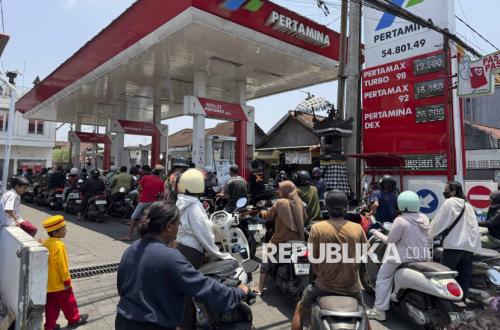
Jakarta — The crisis in subsidised fuel requires strategic action to strengthen national energy resilience. An energy crisis that initially affected Bali and parts of Sulawesi, Kalimantan and Sumatra has now spread to some areas of East Java.
Supply has been unable to keep pace with rapidly rising demand, raising concerns that shortages could spread to other parts of the country. The government must ensure that increased fuel consumption is matched by reliable supply. Energy resilience is called into question when fuel provision is disrupted and fails to meet people’s needs.
These concerns could affect communities across a much wider area. People are anxious that the subsidised fuel quota may run out before the end of 2026. The government needs an effective strategy to address supply constraints as demand for, or consumption of, subsidised fuel rises significantly.
The surge in subsidised fuel consumption has resulted from a large-scale shift: motorists are switching from non-subsidised to subsidised fuel. This shift has been prompted by rising fuel prices, adjusted in response to global energy prices amid the geopolitical crisis.
Geopolitical crises are one of the main drivers of rising global energy prices. Conflict and tensions in the energy-producing Middle East affect oil price stability. Military escalation and tensions between countries in the region pose a serious threat to the stability of global oil production, distribution and prices.
A clear example is the vulnerability of shipping through the Strait of Hormuz to closure or tanker attacks amid conflict between countries. Around 20 per cent of global oil trade passes through this chokepoint each day. When this strategic route is disrupted, global markets panic, fuelling speculation over oil prices.
Conflicts elsewhere are also seriously disrupting oil supplies. Russia’s invasion of Ukraine is one example of an event that can trigger a surge in global energy prices. Supplies of Russian gas and oil to global markets have fallen, pushing energy prices higher.
Domestic factors
Fuel problems are caused not only by geopolitical conflict but also by domestic factors. Shortages of subsidised fuel are not simply the result of distribution disruptions. There is a more fundamental underlying problem: national fuel stocks are considered fragile.
The government should embrace open government and transparency over fuel-stock data. The public has a right to access this information so people can understand the national fuel situation. Transparent stock data are necessary to help the public make informed decisions and are important for the government in addressing the problem.
So far, the public has only been told how much of the subsidised fuel quota remains. But the issue is not just the quota: it is also the level of stocks of both subsidised and non-subsidised fuel. Valid, reliable and open data would provide a fuller picture of the various potential crises communities may face.
Reliable data are essential to establish precisely how much fuel is available. It is not enough for the government to state, for example, that national subsidised fuel stocks will last for around two to three weeks. Such statements should be backed by actual figures showing the volumes of all fuel types.
Broadly qualitative statements without clear figures are unlikely to ease public concern. Nor can they address imbalances in fuel distribution between regions. The government should therefore publish actual stock figures for different areas, as well as estimates of how long supplies will last.
The government needs to continue building its ability to communicate important messages to the public, supported by quantitative data. It should release information on fuel stocks in each region, and on the installed and actual capacity of storage tanks. This would allow the public to assess tank capacity and inventory, and to evaluate government statements about fuel stocks.
The government should also demonstrate its ability to overcome logistical and distribution obstacles. It should inform the public about issues such as shipping routes that delay fuel vessels, loading and unloading at fuel terminals, bad weather and technical problems on open sea routes, and explain how these will be addressed.
Shortages of road tankers delivering fuel from depots to petrol stations in vulnerable areas can also be anticipated. These technical measures require better governance so that distribution problems causing shortages can be resolved as quickly as possible.
Strengthening energy resilience
Good energy governance is the foundation of stronger energy resilience. A range of strategic measures can help Indonesia become more self-reliant and efficient in its energy use.
Energy resilience can be strengthened by prioritising domestic needs while curbing the impulse to export. The government should prioritise supplying the domestic market before exporting, in order to maintain stability in national industry and electricity supply.
The government’s move to revise export allocations deserves commendation. Reducing natural gas exports, including by cutting supplies to Singapore, is a rational choice to strengthen national reserves and meet domestic energy needs.
Developing new and renewable energy (EBT) and biofuels can also reinforce energy resilience. The mandatory use of palm-oil-based biofuel, moving from B35 to B50 and eventually aiming for B100, is an appropriate way to reduce diesel imports and save foreign exchange reserves.
Energy resilience can also be advanced by converting coal into dimethyl ether (DME). This is a strategic way to replace liquefied petroleum gas (LPG) for industry and households while reducing LPG imports.
Energy resilience can be strengthened through community action. The government should encourage energy-saving initiatives and a culture of efficiency in industry, transport and other sectors to curb consumption and give the state greater fiscal room.
Source: jawawa.id (https://jawawa.id/newsitem/strengthening-national-energy-resilience-1793692404)
Originally published by Republika (https://opini.republika.co.id/berita/tnx0ay393/memperkokoh-ketahanan-energi-nasional), translated from Indonesian