
Strengthening National Coordination at UNESCO: Minister of Culture Leads KNIU Plenary Meeting
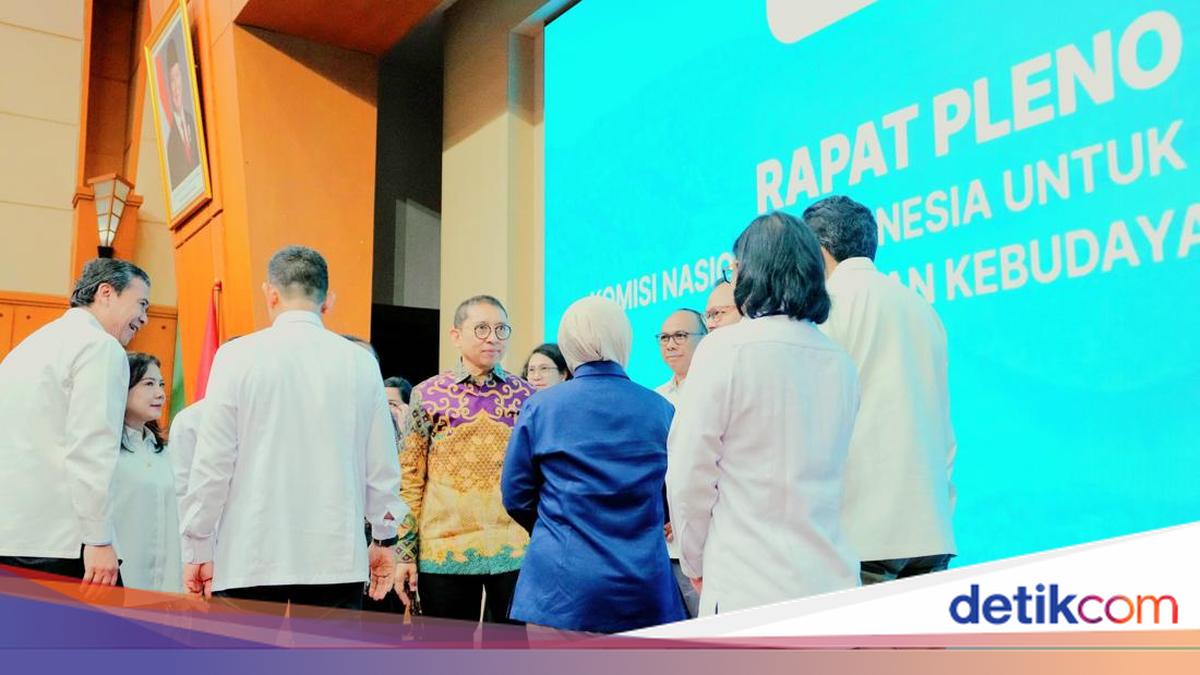
Minister of Culture Fadli Zon personally led the agenda for the Plenary Meeting of the Indonesian National Commission for UNESCO (KNIU). This plenary session serves as a significant momentum for strengthening institutional frameworks following restructuring through the implementation of Presidential Regulation Number 31 of 2026.
The meeting, held at Graha Utama Building A, Ministry of Culture, aimed to consolidate relevant ministries, agencies, and bodies. Fadli Zon emphasised that placing the KNIU Secretariat within his ministry will not alter the technical mandates of other related institutions. This move is purely intended to strengthen national coordination to ensure Indonesia maintains a unified position within the UNESCO arena.
“The KNIU Plenary Meeting strengthens coordination—getting the institution right, getting the intervention right, and getting the coordination right,” Fadli stated in a written statement on Monday (28/9/2026).
This cross-sectoral synergy is believed to be the primary foundation for formulating global-scale cultural policies. All ministries and agencies that have served as UNESCO focal points will continue to exercise their mandates and authority, with the implementation of ongoing UNESCO programmes and conventions remaining the responsibility of the respective agencies. There will be no transfer of substantive authority from ministries/agencies to KNIU, as KNIU functions as a facilitator for coordination, synchronisation, and communication between stakeholders.
The strategic role of this facilitator is expected to accelerate the achievement of various government programme targets on the international stage. The Minister of Culture noted that KNIU has formulated three priority work agendas for the coming year to strengthen Indonesia’s involvement. The first agenda includes comprehensive mapping of priority programmes such as World Heritage, Memory of the World, Global Geoparks, and Biosphere Reserves. The second step focuses on expanding diplomacy by increasing coordination of Indonesia’s position in various UNESCO sessions.
The government is also targeting opportunities for Indonesia’s nomination to several UNESCO intergovernmental bodies to increase its global contribution. The third priority agenda specifically targets the strengthening of coordinated reporting and monitoring systems to ensure periodic reports are submitted on time. This multi-layered supervision will be accompanied by a much more accurate data-sharing mechanism between focal points.
To solidify coordination, the Minister of Culture provided specific directives to immediately activate Working Groups (Pokja). The primary working instruments of KNIU include Working Groups for Education, Science, Culture, Communication and Information, as well as other sectors as required. These cross-disciplinary working groups are expected to operate at maximum capacity as spaces for technical and substantial formulation.
The KNIU Plenary Meeting successfully served as an integration forum for presenting programmes across various ministerial and state agency representatives. Through this substantive meeting, the government hopes to establish a much more effective national coordination mechanism. This mutual agreement is crucial to establishing KNIU as the primary node for national coordination in accordance with UNESCO operational guidelines.
This important agenda was attended by high-ranking state officials, including Coordinating Minister for Human Development and Social Affairs Pratikno, and Deputy Ministers Stella Christie and Fauzan. Also present were the Secretary-General of the Ministry of Primary and Secondary Education Suharti, the Indonesian Ambassador to France Mohamad Oemar, and representatives from the Ministry of Foreign Affairs, Ministry of Communication and Digital, BPS, and BRIN. The Minister of Culture expressed his hope that KNIU could become a home for all stakeholders.
“Indonesia must be present more strongly, more coordinately, and more influentially in UNESCO forums. Therefore, we invite all KNIU members to support the implementation of Presidential Regulation Number 31 of 2026 to strengthen Indonesia’s role in UNESCO,” Fadli concluded.