
Strengthening International Networks through Cultural and Industrial Learning in Vietnam
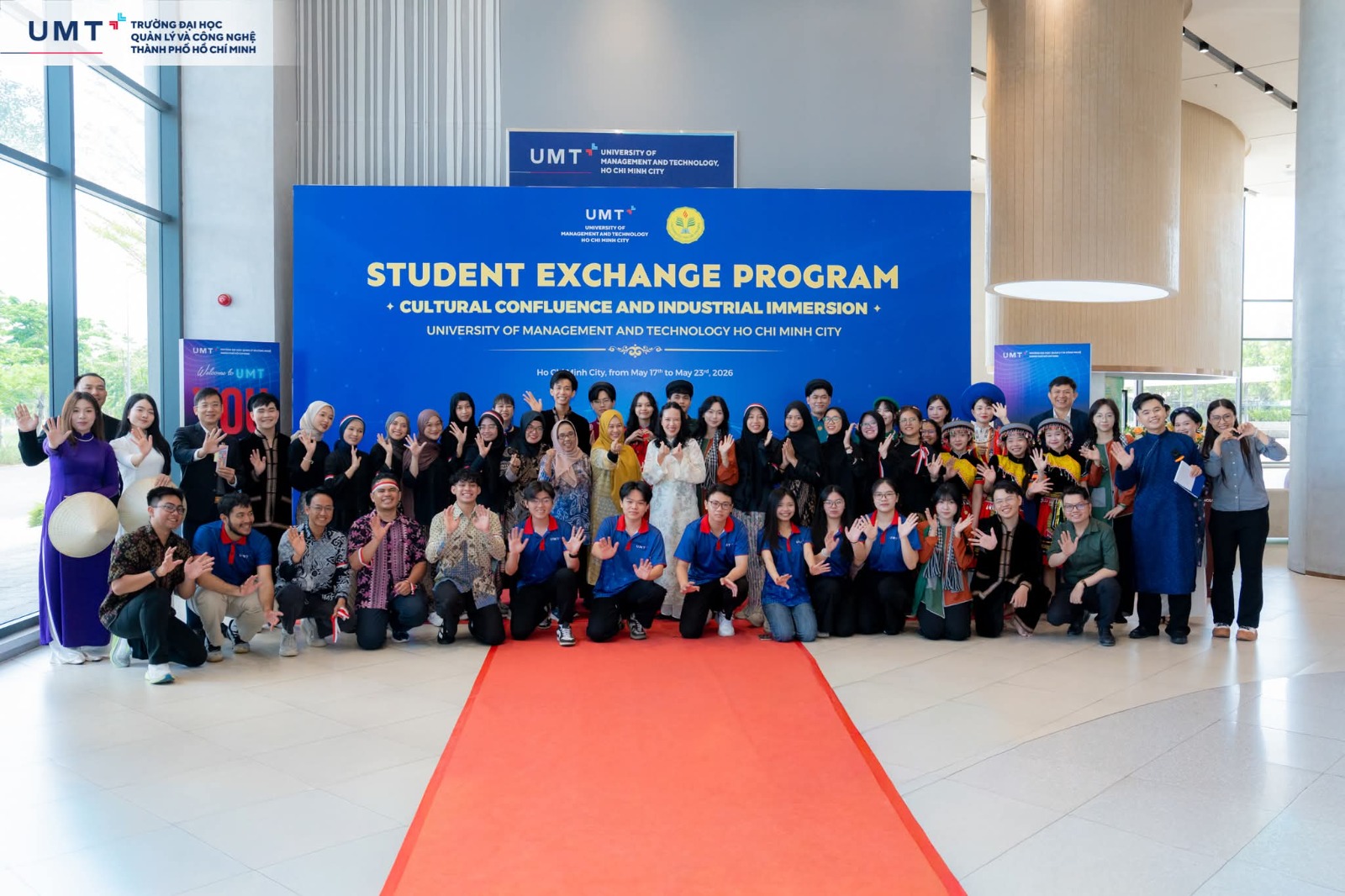
Sixteen students from Universitas Negeri Jakarta (UNJ) participated in the Cultural Confluence and Industrial Immersion 2026 programme, organised in collaboration with the University of Management and Technology (UMT), Vietnam. This programme is part of UNJ’s efforts to strengthen the internationalisation of higher education through academic mobility, cultural exchange, and introduction to the industrial landscape within the Southeast Asian region.
The participants included students from various academic levels, ranging from undergraduate to doctoral programmes, representing diverse disciplines such as Social Studies Education, Mathematics Education, Communication Sciences, Economic Education, Biology Education, Management, Guidance and Counselling, and Sports Science. This diversity turned the programme into a space for cross-disciplinary collaboration and a platform for developing students’ global perspectives.
While in Ho Chi Minh City, participants engaged in various academic and cultural agendas, including opening ceremonies, campus tours, lecture sessions, academic discussions, group work, student presentations, and networking sessions. Students also had the opportunity to familiarise themselves with the academic environment of UMT and build direct interactions with international students and faculty.
The Head of UNJ’s International Office, Sri Rahayu, stated that this programme is a concrete step for UNJ to expand international collaboration and increase student readiness for a global environment. “As part of strengthening UNJ’s internationalisation, this programme is a tangible step in opening spaces for cross-border academic collaboration. Students gain invaluable experience by interacting directly with the UMT academic community, participating in academic activities, learning about the cultural and industrial developments in Vietnam, and building international networks,” said Sri Rahayu on Monday (1/6).
She noted that such international experiences are vital for developing cross-cultural communication skills, adaptability, and a global mindset. Furthermore, participants did not only learn in classrooms but also gained direct insight into the social life and industrial progress of Vietnam.
A highlight for the participants was a cultural visit to several landmarks in Ho Chi Minh City, including the Independence Palace, Minh Long Museum, Saigon Central Post Office, and the Ho Chi Minh City Book Street. Through these visits, students were able to understand the history, culture, and character of the Vietnamese people more closely.
Additionally, the participants undertook an industrial visit to the Tan Cang–Cat Lai Port to study logistics systems, port operations, and international trade, which serves as a pillar of the Vietnamese economy. This experience provided a new perspective on the connection between the world of education and global industrial needs.
On the final day of the programme, UNJ students presented their learning outcomes and experiences during a student presentation session at the UMT campus. This session served as a platform to practice communication skills, teamwork, and the presentation of ideas in an international forum.
Sri Rahayu added that the success of international programmes is determined not only by academic agendas but also by the quality of interaction between students and academics across nations. The support provided by UMT since the participants’ arrival was noted for creating a warm and collaborative learning atmosphere.
Looking ahead, UNJ hopes that similar programmes can continue to be developed so that more students can gain global learning experiences that strengthen their academic, social, and professional competencies at an international level.