
Strengthening Hajj Reform through Healthy Media
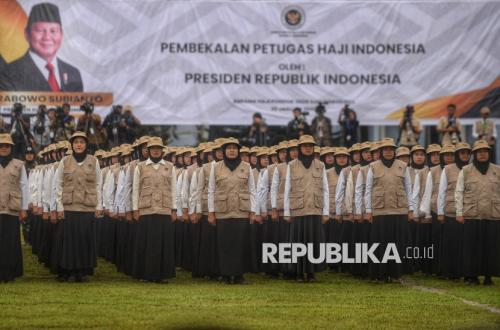
The registration for the selection of Hajj officials for the 1448 H/2027 M season has been open since late August by the Ministry of Hajj and Umrah. As in previous years, one of the available positions is the Hajj Media Centre (MCH), a pathway that offers opportunities for journalists and public relations practitioners to assist in the management of the Hajj pilgrimage in the Holy Land.
This momentum should be viewed not merely as a recruitment process, but as an opportunity to continuously refine public communication management in Hajj administration. Furthermore, the Ministry of Hajj and Umrah is a relatively new institution, born from the spirit of strengthening services to pilgrims and improving the quality of Hajj management to be more focused, professional, and integrated.
The formation of the Ministry of Hajj and Umrah in September 2025 is an institutional step worthy of appreciation. President Prabowo Subianto has shown great attention from the outset to ensure that Indonesia’s Hajj administration enters a new and better era compared to previous years.
Several achievements in the 2026 Hajj operations demonstrate this direction of change. The acceleration of visa issuance, more orderly distribution of Nusuk, improved services in Arafah and Mina, the utilisation of supporting facilities for elderly pilgrims, and various cost-efficiency efforts show a sincere commitment to building better governance.
The Deputy Minister of Hajj and Umrah, Dahnil Anzar Simanjuntak, even proposed that President Prabowo receive an award as the “Father of Indonesian Hajj” due to his commitment to driving major changes in national Hajj governance.
This spirit of change deserves support. It is precisely for this reason that there is one area that, in my view, can be further strengthened in future Hajj administrations: the position and function of the Hajj Media Centre.
Media as a Partner in Reform
For many years, the MCH has played a vital role in delivering information to the Indonesian people. Journalists involved in the centre help ensure that the families of pilgrims in the homeland receive news regarding the pilgrimage journey, conditions in the Holy Land, government services, and the various dynamics faced by pilgrims.
Many MCH journalists have also demonstrated dedication beyond their journalistic duties. In the field, they frequently assist lost pilgrims, guide the elderly, support those facing difficulties, and sometimes even help resolve minor issues that arise in highly crowded situations.
This spirit should certainly be maintained. Hajj is not merely a large-scale administrative operation, but also a humanitarian service to millions of people performing their religious duties.
At the same time, however, the journalistic function of the MCH can be further strengthened. Journalists in the Holy Land should not only be messengers of the successes of the Hajj administration. They can also serve as the eyes and ears that help the Ministry of Hajj and Umrah quickly identify which parts of the service still require improvement.
In this context, critical reporting should not be viewed as an adversary to the government. On the contrary, it can serve as a highly valuable feedback mechanism.
When journalists encounter excessively long queues, elderly pilgrims in need of assistance, transportation delays, catering issues, tent overcrowding, or healthcare obstacles, such information can serve as material for officials to implement immediate corrections. This is where the media can become a partner in reform.
Four Functions of the Media
In communication studies, mass media possesses several important functions. Media conveys information, helps the public understand events, performs educational and value-socialisation functions, and exercises social control.
These four functions can operate in tandem during the Hajj administration. The MCH can continue to report government successes proportionally, provide service information to pilgrims, educate the public regarding Hajj rituals and regulations, and simultaneously report issues that require attention.
With such a pattern, Hajj reporting will become increasingly credible. The public will see that successes are reported when they occur, while problems are communicated when they require improvement. Ultimately, public trust in both the government and the media can be strengthened because the information received feels complete and holistic.