
Strengthening Global Role, AirNav Indonesia Forges Strategic Partnership with ICAO
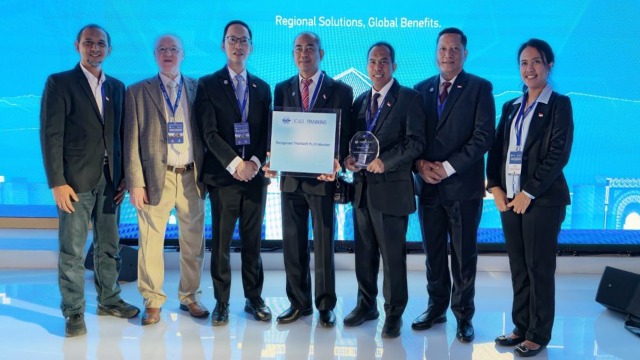
In the modern architecture of aviation safety, which increasingly relies on data precision and human resource integrity, AirNav Indonesia has taken a progressive step by forging a strategic partnership with the International Civil Aviation Organization. This collaboration is aimed at strengthening safety systems based on the Fatigue Risk Management System (FRMS), an advanced approach that positions fatigue management as a crucial element in ensuring operational aviation safety.
As part of the implementation of this cooperation, AirNav Indonesia has assigned some of its top experts to take on the role of Regional Officer for Performance-Based Navigation (P-4) at the ICAO Asia-Pacific Sub-Regional Office in Beijing. This assignment not only reflects international trust in the capabilities of national human resources but also marks a shift in Indonesia’s role from mere participant to active contributor in global air navigation governance.
The President Director of AirNav Indonesia, Avirianto Suratno, emphasised that this partnership is part of strategic efforts to improve the quality of national air navigation services through measurable global standards. He stressed that active involvement in ICAO forums simultaneously strengthens AirNav Indonesia’s position as an adaptive and visionary institution in responding to the dynamics of the international aviation industry.
Furthermore, this step also has a strategic diplomatic dimension, namely strengthening Indonesia’s profile in the global civil aviation landscape, including in the context of its candidacy for ICAO Council membership. Thus, AirNav Indonesia’s presence is not only technical-operational but also contributes to shaping inclusive and future-oriented global policies.
The signing of the cooperation took place at the ICAO Global Implementation Support Symposium 2026, held in Morocco from 14 to 16 April 2026. The agreement, titled Provision of Technical Expertise to Support AirNav Indonesia in Establishing a Sustainable Fatigue Risk Management (FRMS) Framework, was signed by ICAO Secretary General Juan Carlos Salazar and AirNav Indonesia’s Director of Human Resources and General Affairs, Didiet KS Radityo, with full support from the Ministry of Transportation of the Republic of Indonesia.
AirNav Indonesia’s participation in this programme also aligns with the company’s strategy to increase international exposure, strengthen Indonesia’s position in ICAO forums, and promote the adoption of global best practices in Air Traffic Management (ATM). In addition, active involvement in this international organisation is expected to add value through knowledge transfer and personnel experience, in efforts to enhance the company’s internal capabilities.
Through this momentum, AirNav Indonesia not only strengthens institutional relations with ICAO and the government but also affirms its commitment as an Air Navigation Service Provider (ANSP) that plays an active role in supporting the safety, efficiency, and sustainability of the global aviation system. “This step is part of efforts to drive the implementation of the ICAO Strategic Plan 2026–2050, particularly in aspects of aviation safety, efficiency, and sustainability,” stated Avirianto.
It was explained that the implementation of FRMS is expected to enhance safety, operational efficiency, and personnel welfare, which are key factors in delivering reliable air navigation services. In the aviation world, FRMS is a systematic, data-based, and scientific approach to identifying, monitoring, and mitigating risks of physical and mental fatigue among flight crew and operational personnel. The system aims to ensure operational safety by preventing performance disruptions due to fatigue.
Meanwhile, AirNav Indonesia’s Director of Human Resources & General Affairs, Didiet KS Radityo, added that this strategic cooperation will last for three years, with the aim of supporting AirNav Indonesia in building a sustainable FRMS framework. Technically, the agreement regulates the assignment of AirNav Indonesia experts to strategic positions in ICAO.
He detailed that the FRMS framework to be developed includes updating fatigue management policies to align with ICAO Standards and Recommended Practices (SARPs), enhancing institutional capacity, and strengthening human resource competencies in fatigue risk management. “In addition, a national implementation roadmap will be developed with measurable milestones to ensure effective, data-based fatigue management implementation that complies with regulations across all air traffic services,” explained Didiet.
Looking ahead, AirNav Indonesia is expected not only to strengthen its role as an air navigation service provider in international forums but also to affirm its contribution to building a safer, more efficient, and sustainable global aviation system. Through this partnership, AirNav Indonesia is also expected to bolster national human resource capacity through international exposure and experience, while contributing to the development of air navigation policies at regional and global levels.