
Strengthening Global Expansion and Business Efficiency through AI
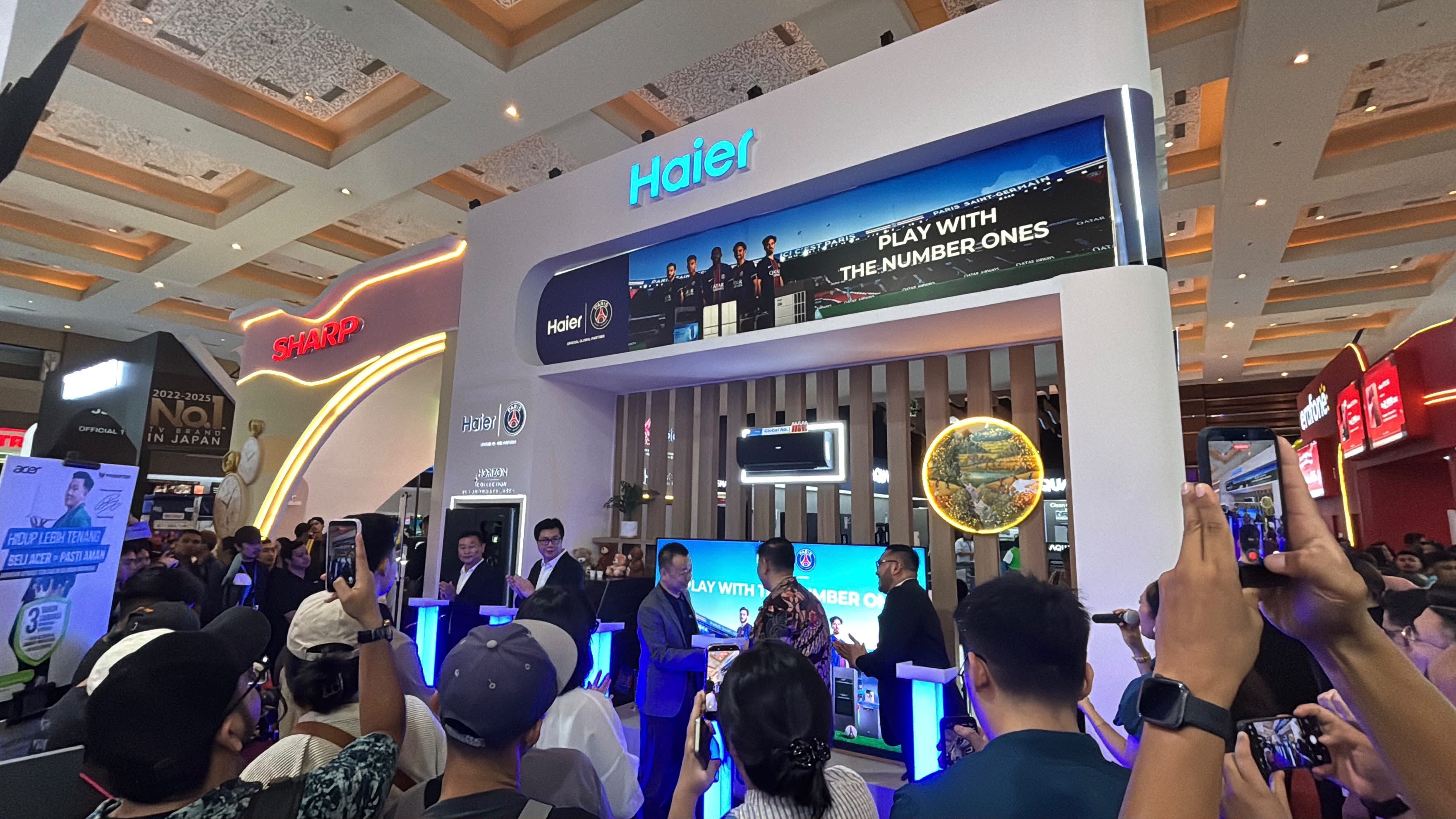
Competition in the global home appliance industry increasingly demands that companies rely not only on production capacity and distribution networks. The ability to understand local market characteristics and utilise technology, including artificial intelligence (AI), has become an important factor in improving efficiency and competitiveness.
This strategy is reflected in the performance of Haier Smart Home, which has again been included in the Fortune Global 500 2026 list released on 28 July. The company climbed 12 places to position 378, extending its presence in the list of the world’s largest companies to nine consecutive years.
The rise also represents the largest annual ranking improvement ever recorded by Haier Smart Home. This achievement demonstrates a combination of global expansion strategy with an approach based on local needs and the integration of AI into various company business processes.
In its global expansion, Haier Smart Home manages a number of brands, including Haier, Casarte, Leader, GE Appliances, Fisher & Paykel, AQUA, and Candy. The strategy is carried out by giving each brand room to adapt products, manufacturing, research and development (R&D), and business strategy to the characteristics of local markets.
In North America, for example, GE Appliances has maintained its position as the No. 1 home appliance company in the United States for four consecutive years. This performance is part of a strategy to maintain local brand strength amid global expansion.
Meanwhile, in Europe, Haier Smart Home implements a more segmented strategy based on the characteristics of each country. The approach is intended to accelerate response to consumer needs while increasing product relevance in the market.
One application of this can be seen in the development of the X11 washing machine through collaboration between R&D teams in Nuremberg, Milan, and China. The product is claimed to consume 70% less energy compared to the highest A-class energy standard in Europe. The product has sold more than one million units in 20 countries.
In Southeast Asia, the localisation strategy is strengthened through the development of manufacturing capacity. Haier Smart Home occupies the No. 1 position in the region and continues to expand its local production base, including through a new air conditioning production facility.
The proximity of manufacturing facilities to markets is considered an important part of maintaining a position as a local player while accelerating response to changing consumer needs.
Internally, Haier Smart Home integrates AI into various company operational processes. Domain-specific AI models and an integrated technology platform are developed to support activities ranging from research and development, procurement, manufacturing, and logistics to office operations.
One of the technologies developed is ZhiXiaoNeng, an AI-based digital assistant launched on 27 January 2026. The technology has been used by more than 60,000 users and functions as a super-agent that can execute workflows independently across various business functions.
In the manufacturing process, for example, ZhiXiaoNeng can compile process plans based on historical data within minutes for work that previously required hours. The application is said to improve accuracy by up to 20% and change the role of engineers from draft compilers to result reviewers.
AI integration has also had an impact on a number of operational indicators. The new product development cycle has been cut by 30%, while manufacturing efficiency has increased by 20%. At the same time, the operating expense ratio, or selling, general and administrative expenses (SG&A), has declined for five consecutive years.
This efficiency is related to the concept of organisational velocity, namely the company’s ability to translate input and signals from consumers into product changes, service adjustments, and the development of new scenarios more quickly.
In an industry facing rapid changes in consumer needs and technological developments, this capability is one of the important factors in maintaining competitiveness.
The integration of market strategy and AI is also applied in the development of the smart home ecosystem. AI is not only positioned as an additional feature on home appliances, but is developed as part of an ecosystem that connects various devices and usage scenarios.
Through an AI Agent-based approach, smart devices are developed to anticipate user needs while coordinating interactions between devices. The concept is then expanded to connect people, vehicles, homes, and communities in a more integrated experience.
The scale of ecosystem usage shows that AI application has developed beyond the experimental stage. Haier Smart Home recorded 130 million registered users worldwide with 86.1 billion scenario interactions each year.
The combination of expansion based on local needs and AI integration shows a change in strategy in the home appliance industry. Competition is now determined not only by production capacity and distribution networks, but also by the company’s ability to maintain brand strength, understand local markets, accelerate innovation, and optimise technology.