
Strengthening Garuda Schools: BRIN Designs STEM Laboratory Governance Framework
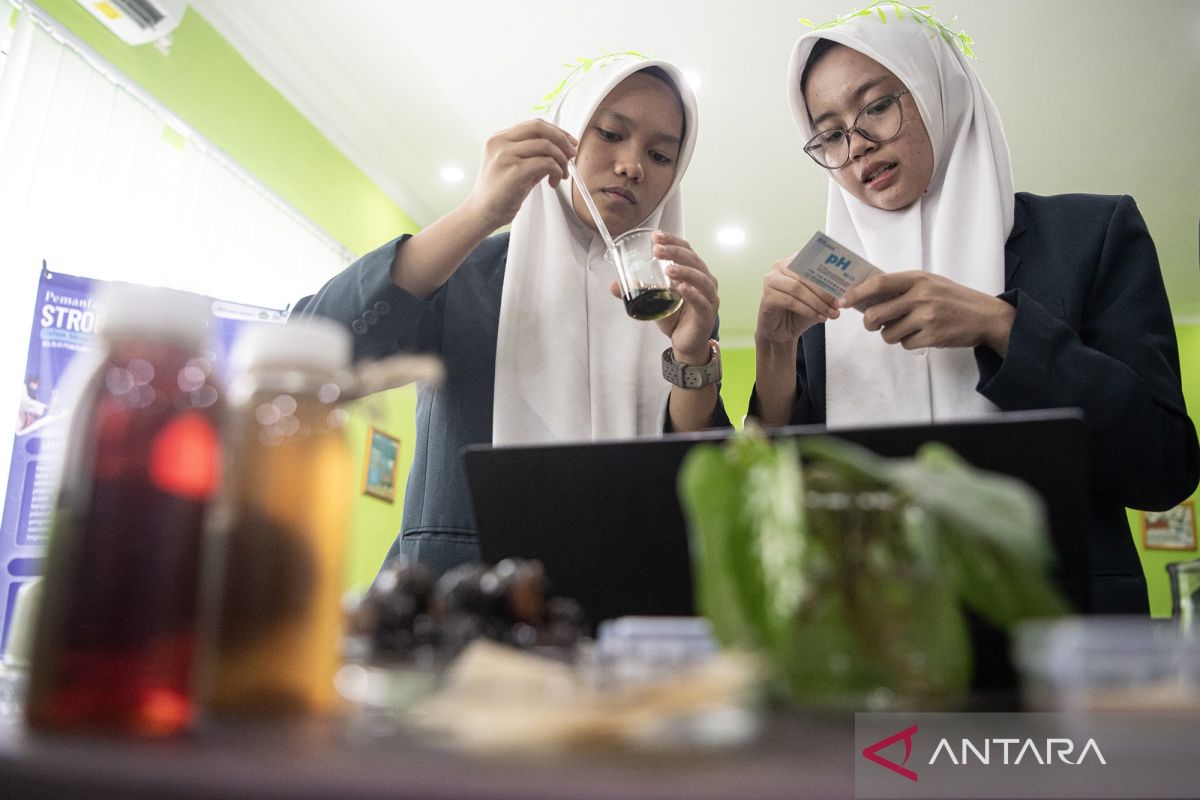
The National Research and Innovation Agency (BRIN) is designing a STEM Innovation Ecosystem Laboratory Governance Framework to support the educational transformation within the Garuda Excellence Schools.
“The model integrates six main components: governance and leadership, inquiry-based learning as well as projects or design, research and development of innovative solutions, professional development for teachers, multi-sector partnerships, and the dissemination of best practices,” said Suharman Halawa, a researcher at BRIN’s Education Research Centre, in a statement in Jakarta on Friday.
Suharman emphasised that the multi-sector partnership within this model includes collaboration between schools, universities, and industry. Meanwhile, the dissemination of best practices is aimed at ensuring that the experiences and innovation outcomes developed in the laboratories can be shared and utilised more widely.
He explained that the design of this governance model was conducted through a study of five schools with diverse characteristics and contexts.
In this regard, the study included SMA Unggul Garuda Timor in East Nusa Tenggara, representing the challenges of frontier, outermost, and least developed regions (3T); MAN Insan Cendekia Gorontalo, to examine cross-ministerial governance; and SMA Del in North Sumatra, to study partnership patterns based on foundations and the private sector.
Furthermore, Suharman stated that the study was also conducted at SMAN Unggulan MH Thamrin Jakarta and SMA Taruna Nusantara as representatives of state schools with different transformation characteristics.
This diversity of locations serves as the basis for observing how STEM laboratory governance can be adapted to the specific needs and contexts of each school.
“Through this diversity of context, we are compiling inclusive governance recommendations so that STEM laboratories in Garuda Schools can truly function as innovation ecosystems that strengthen teacher competence and produce a superior generation capable of global competitiveness,” said Suharman.
According to him, the governance framework positions teachers as a vital element in the sustainability of the STEM laboratory ecosystem.
“The results of our research survey across five provinces—West Java, D.I. Yogyakarta, West Kalimantan, East Nusa Tenggara, and Maluku—show a skills gap. Although teachers’ perceptions and enthusiasm for implementing STEM are very high, the majority of teachers feel that their technical skills are not yet adequate to implement it in the classroom,” said Suharman.
Suharman assessed that this condition indicates the need for laboratory governance that goes beyond the mere provision of facilities and infrastructure.
Therefore, STEM laboratory governance is crucial, as developing student talent within the Garuda Excellence School programme requires more than just the mastery of scientific theory. Students need to understand how knowledge is constructed, how to formulate research questions, and how to design problem-solving approaches based on evidence.
Through this research, BRIN aims to produce STEM laboratory governance recommendations that can be applied according to school characteristics. Consequently, the existence of laboratories will not be limited to being mere learning support facilities, but can evolve into part of an ecosystem that strengthens teacher capacity, student learning experiences, research, innovation, and collaboration within the school environment.