
Strengthening Food Security and Village Economy, Pertamina Holds Grand Jackfruit Harvest in Gunungkidul
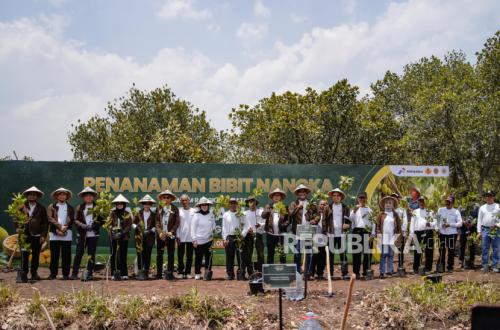
GUNUNGKIDUL — Pertamina, through the Pertamina Foundation as the programme implementer, alongside Gadjah Mada University (UGM) and the Yogyakarta Special Region Environmental and Forestry Service (DLHK DIY), is strengthening food security and the village economy through the Wanaboga Nangka Sustainable Forest programme in the Gunungkidul Regency.
The programme was marked by a grand harvest and further jackfruit tree planting on Saturday (3/10). The development of the 87-hectare forest area is aimed at supporting the supply of young jackfruit (gori) for the Yogyakarta ‘gudeg’ culinary industry, while simultaneously building environment-based food security and community empowerment.
The demand for young jackfruit for the ‘gudeg’ industry in Yogyakarta is currently estimated at approximately nine tonnes per day, whereas local production from the DIY region can only meet about two tonnes per day. Consequently, there remains a deficit of about seven tonnes that must be sourced from outside the region. The optimisation of the forest area in Gunungkidul is expected to be a strategic step in strengthening independent raw material availability and providing economic value to the local community.
Commissioner of PT Pertamina (Persero), Nanik S. Deyang, stated that Pertamina’s involvement through the Pertamina Foundation programme represents the business sector’s commitment to supporting national food security alongside maintaining energy security.
“Yogyakarta is synonymous with gudeg, yet it has lacked an independent raw material source, necessitating imports from other regions. The utilisation of land in Gunungkidul is a tangible part of our food security programme,” said Nanik during the harvest and planting event with local residents.
The development of this food forest area has received support from the Yogyakarta Regional Government and direction from the Governor of DIY, Sri Sultan Hamengku Buwono X, regarding the use of forest areas to improve community welfare. The management involves the Wanaboga Nangka Sustainable Farmer Group, which consists of approximately 400 local farmers.
Ngatimin, a representative of the Wanaboga Nangka Sustainable Farmer Group, expressed appreciation for the ongoing support. He noted that the farmer group has conducted at least three harvests and hopes that capacity-building assistance will continue so that garden produce can be developed into various value-added derivative products.
Corporate Secretary of PT Pertamina (Persero), Arya Dwi Paramita, emphasised Pertamina’s commitment to implementing Social and Environmental Responsibility (TJSL) that delivers real and sustainable impacts.
“Pertamina is committed to ensuring that every TJSL programme we roll out is not merely charitable or momentary, but has a measurable, long-term, and sustainable impact. Through the Wanaboga Nangka Sustainable Forest collaboration, we want to ensure transparency in the socio-economic impacts created, ranging from food sovereignty and farmer economic independence to the consistent preservation of the environmental ecosystem,” Arya stated.
To strengthen agricultural sustainability in the Gunungkidul karst lands, which tend to be dry during the dry season, the programme is developed through an intercropping system supported by clean energy-based irrigation.
In the long term, this area is intended not only to serve as a food granary and a source of culinary raw materials but also to be developed into an educational tourism (edu-tourism) zone.
President Director of Pertamina Foundation, Agus Mashud S. Asngari, asserted that the success of forest management should not be measured by ceremonial activities, but by the sustainability of the impact produced for the community and the environment.
“Our measure of success is how much impact remains five to ten years from now. Through Wanaboga Nangka, we prove that when the government, academics, the community, and the business world work together, forests are not only preserved but also provide food, maintain the climate, and prosper the villages,” said Agus.
Director of Business Support at PT Pertamina (Persero), M. Erry Sugiharto, added that the downstreaming of food products based on local potential is key to strengthening the village economy.
“Downstreaming is not exclusive to the mining sector; we can begin it with a single jackfruit tree to support food self-sufficiency and environmental harmony,” said Erry.
As part of the support for farmers and the surrounding community, the Pertamina Foundation handed over two units of three-wheeled transport vehicles to support the mobility of the farmers’ harvests. Additionally, 20 SESAMA educational assistance packages, containing school bags and stationery, were distributed to children living around the forest area.
The series of activities concluded with the Kembul Bujono tradition—a communal meal featuring jackfruit dishes prepared by local residents—accompanied by the traditional Rinding Gumbeng music of Gunungkidul as an expression of gratitude for the successful harvest.
Source: jawawa.id (https://jawawa.id/newsitem/strengthening-food-security-and-village-economy-pertamina-holds-grand-jackfruit-harvest-in-gunungkidul-1791208428)
Originally published by Republika (https://esgnow.republika.co.id/berita/tmfq4k522/perkuat-ketahanan-pangan-dan-ekonomi-desa-pertamina-gelar-panen-raya-nangka-di-gunungkidul), translated from Indonesian