
Strengthening Fiscal Autonomy Key to Accelerating Development to Eastern Regions
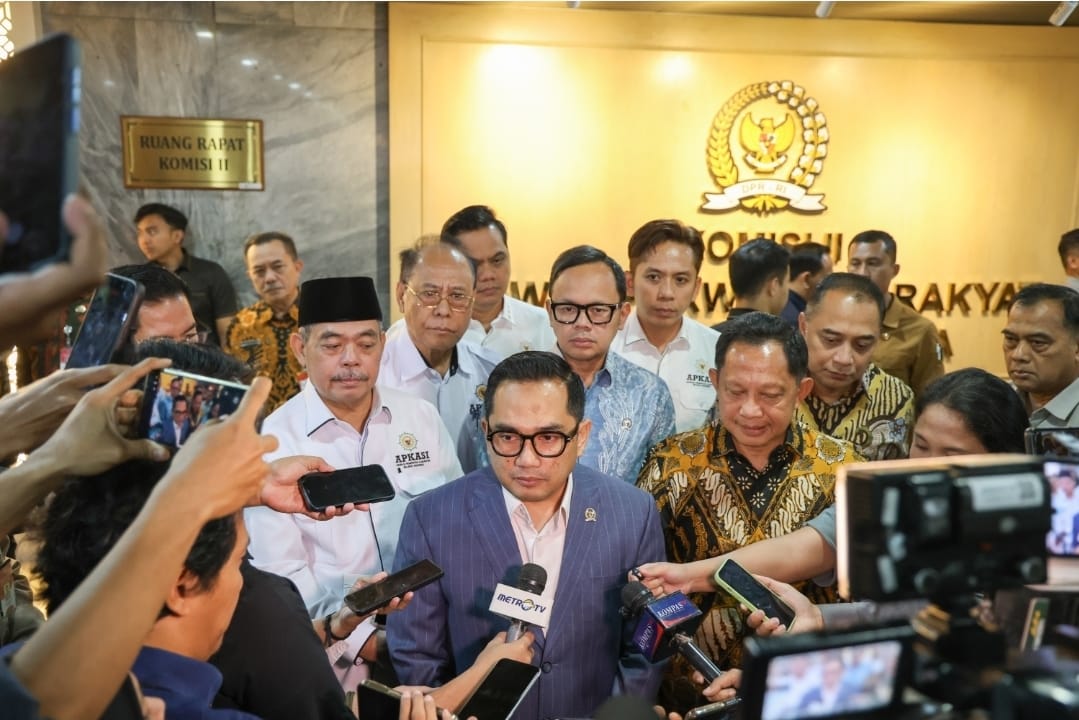
Efforts to strengthen the national economic foundation through fiscal equality have resurfaced. The Association of All Indonesian Regency Governments (Apkasi) is pushing for a total reform of the Revenue Sharing Fund (DBH) scheme for the natural resources sector to ensure producing regions receive a fairer share, thereby accelerating infrastructure development and maintaining sustainable economic growth in the regions.
This commitment was conveyed by Apkasi during a Working Meeting and Public Hearing (RDPU) with Commission II of the Indonesian House of Regencies (DPR RI) in Jakarta on Thursday (30/7/2026). The meeting, led by the Chair of Commission II, was also attended by the Deputy Chair of the House, the Minister of Home Affairs, and officials from the Ministry of Home Affairs and local government associations.
Despite the House being in recess, Commission II held a special session to discuss the financial relationship between the central and regional governments. The Chair of Commission II, Muhammad Rifqinizamy Karsayuda, noted the high urgency of the issue as it directly relates to the effectiveness of regional development.
Apkasi General Chairman Bursah Zarnubi stated that natural resource-producing regions have long borne the burden of environmental damage and infrastructure degradation caused by industrial activities, while the fiscal benefits received are deemed disproportionate. He noted that the calculation and distribution mechanisms for the DBH, particularly from the palm oil and mining sectors, remain non-transparent and frequently subject to delays, impacting the certainty of regional budgets (APBD) and hindering development.
“In our regions, we bear much more of the environmental damage than the economic benefits we receive. The DBH reconciliation is not yet fully accurate. It feels very unfair because communities near production areas still face poverty,” Zarnubi asserted.
To strengthen regional economic competitiveness, Apkasi proposed changing the DBH formula based on commodity production contributions. The organisation suggested a specific allocation from every production unit of palm oil fresh fruit bunches (TBS) as well as mining commodities such as coal, oil, and gas to serve as an infrastructure compensation fund. This fund is intended to repair roads and bridges and restore environments impacted by industrial activities.
Furthermore, Apkasi proposed that Value Added Tax (VAT) collection on strategic commodities be conducted at the point of extraction. This scheme is believed to strengthen regional fiscal capacity and create a more equitable distribution of state revenue.
Apkasi Daily Chairman Dadang Supriantna added that changes in central government transfers, including the DBH and Transfers to Regions (TKD), significantly affect the stability of regional budgets. He noted that a reduction in fiscal transfers impacts the ability of regions to fund public services and employee salaries.
Apkasi’s advocacy received a positive response from Commission II of the DPR RI. In the meeting’s official conclusion, Commission II requested the government to evaluate the DBH formula by providing greater affirmation to natural resource-producing regions, border areas, and archipelagic regions. The House also requested the government to resolve all outstanding DBH payment arrears in full during the 2026 fiscal year.