
Strengthening El Niño Prompts Bappenas Warning on Forest Fire and Water Crisis Threats
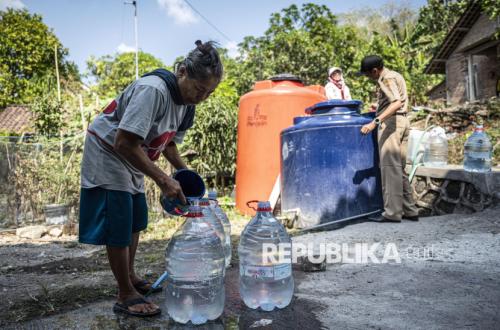
Minister of National Development Planning/Head of Bappenas Rachmat Pambudy has reminded the public that the impacts of the strong 2026 El Nino are beginning to be felt across various sectors. Below-normal rainfall from July through October has disrupted clean water availability, increased hotspots and forest and land fires (karhutla), and raised the potential for a rise in acute respiratory infection (ISPA) cases.
Rachmat said the situation requires a coordinated anticipatory response so that it does not disrupt national stability or development targets. The government is prioritising preparedness in the agriculture, forestry, health, energy, and water resources sectors.
“Rainfall is currently below normal for the period of July through October. In fact, its impacts are already proving true to this day — clean water availability is disrupted, hotspots are starting to appear, ISPA cases will sooner or later emerge, and forest and land fires are beginning to increase,” Rachmat said at a press conference in Jakarta on Tuesday (4/8/2026).
According to Rachmat, government intervention must be focused on the regions and sectors most affected. All ministries and agencies have also been asked to strengthen coordination so that the impacts of El Nino can be mitigated early.
Meanwhile, Head of the BMKG Teuku Faisal Fathani said Indonesia had been anticipating El Nino since the start of 2026. The BMKG began predicting a dry season coinciding with El Nino in March, and the World Meteorological Organization (WMO) declared El Nino active on 2 June 2026. Based on analysis through May, June, and July, the phenomenon has now entered its strong phase.
According to Faisal, El Nino will have its greatest impact when it occurs simultaneously with the dry season, as it makes conditions drier and prolongs their duration.
“The El Nino we need to be wary of is when it occurs alongside the dry season, which makes the dry season drier and longer in duration,” he said.
The BMKG has identified the worst-affected areas as those south of the equator, including East Nusa Tenggara, West Nusa Tenggara, Bali, the island of Java — particularly coastal areas — southern Sumatra, and South Papua. The agency is therefore encouraging adjustments to planting seasons, the use of more drought-resistant crop varieties, and guidance through Climate Field Schools for farmers and Weather Field Schools for fishermen.
In addition, the BMKG continues to coordinate with various ministries and agencies to reduce the impacts of El Nino, including through weather modification operations to add water supplies to reservoirs, maintaining agricultural irrigation needs, supporting hydroelectric power plants (PLTA), and wetting peatlands to suppress the risk of forest and land fires.
Source: jawawa.id (https://jawawa.id/newsitem/strengthening-el-nino-prompts-bappenas-warning-on-forest-fire-and-water-crisis-threats-1785887445)
Originally published by Republika (https://esgnow.republika.co.id/berita/tj91is416/el-nino-menguat-bappenas-wantiwanti-ancaman-karhutla-hingga-krisis-air), translated from Indonesian