
Strengthening Education: School Revitalisation and Digitalisation Expanded
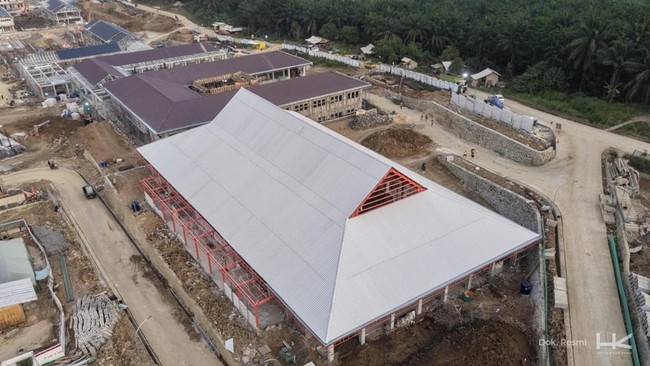
Jakarta, CNBC Indonesia – During the first two years of President Prabowo’s administration, the government has continued to improve the quality of national education through the revitalisation of education units and the digitalisation of learning.
The two programmes form part of efforts to provide better education facilities and make teaching and learning more adaptable to technological developments. Minister of Primary and Secondary Education Abdul Mu’ti said revitalisation and digitalisation were means of achieving higher-quality education.
“Revitalisation and digitalisation are not ends in themselves, but means of achieving quality education,” Mu’ti said, as quoted on Thursday (29 October 2029).
In 2025, the revitalisation programme reached 16,167 education units, exceeding its initial target of 10,440. It benefited more than 4.2 million students across Indonesia.
The programme covered education units in 38 provinces and 514 regencies and municipalities. Improvements to facilities and infrastructure are expected to create safer and more comfortable learning environments for students and teaching staff.
Revitalisation has also had an economic impact on communities. Its implementation has involved micro, small and medium-sized enterprises (MSMEs) and workers, meaning that the construction of education facilities has also created opportunities for local economic activity.
The government is continuing and expanding the revitalisation programme in 2026, prioritising schools in need of facility and infrastructure repairs. These include education units with severe damage, schools in disadvantaged, frontier and outermost (3T) regions, and schools affected by disasters.
The 2026 revitalisation target is 51,744 education units nationwide: 11,744 under the initial allocation and an additional 40,000 to be funded in two phases.
The expansion is intended to ensure that more schools have adequate facilities to support teaching and learning. The government also needs to ensure the programme is implemented according to schedule and local needs.
The 2026 target is expected to improve the safety and comfort of learning for 8,453,369 students across 38 provinces, 514 regencies and municipalities, and 6,481 districts throughout the country. By 28 September 2026, revitalisation assistance had been distributed to 38,586 education units.
Digital Learning Reaches Hundreds of Thousands of Education Units
In 2026, the government is continuing to expand school revitalisation and encouraging the use of technology in classrooms. The aim is to improve education quality not only through building repairs, but also by strengthening the learning process.
The government is bolstering digital learning by providing schools with technological equipment. In a progress report in September 2026, the Ministry of Primary and Secondary Education said that around 289,000 education units had received digital learning equipment since 2025, including Digital Interactive Boards (PID), or interactive flat panels (IFPs), laptops and external storage devices.
The PID is expected to help teachers present material more interactively and give students greater opportunities to participate actively in learning.
“The presence of PID helps everyone acquire knowledge, makes the learning process more engaging and encourages creativity through interactive methods,” Mu’ti said.
The provision of digital equipment needs to be accompanied by electricity and internet access, as well as improvements to teachers’ skills. This will ensure that technology is not merely available in schools, but is used effectively to support learning.
School revitalisation and digital learning are complementary efforts. Revitalisation provides a more suitable learning environment, while digitalisation broadens teaching methods and supports the use of technology in classrooms.
Through the two programmes, the government is seeking to improve the equitable provision of education services across regions, including areas with limited infrastructure.
The programmes’ success will be measured not only by the number of schools repaired or devices distributed, but also by the benefits students and teachers experience in their day-to-day learning. Stronger infrastructure and the use of technology are expected to provide a foundation for improving education quality and expanding learning opportunities for Indonesian children.