
Strengthening Business Through Five Partnerships
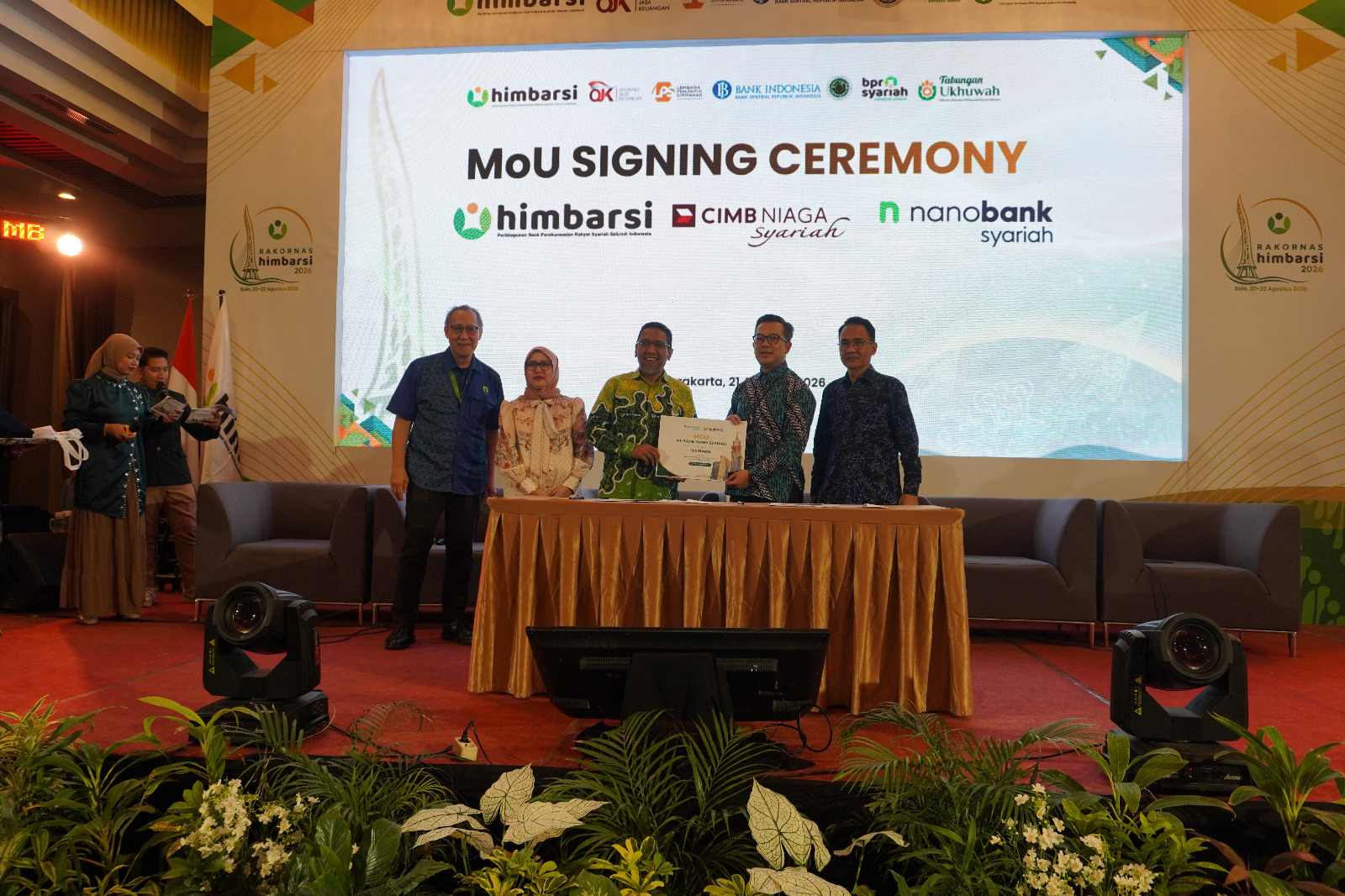
The Indonesian Sharia Rural Banks Association (HIMBARSI) is pushing to strengthen the sharia rural banking industry through cross-sector collaboration. This effort was one of the main outcomes of the HIMBARSI 2026 National Coordination Meeting (Rakornas).
The Rakornas was not only used as a forum for evaluation and consolidation, but also produced concrete agreements in the form of the signing of five strategic partnerships. These partnerships involve three sharia commercial banks, one sharia insurance company, and one precious metals provider.
The collaboration is directed at enlarging business capacity while building a stronger ecosystem for sharia rural banks in various regions. This step is considered important amid industry challenges that include economic conditions, technological developments, liquidity needs, and competition in the financial services sector.
A total of 121 participants from sharia rural banks in several regions attended the HIMBARSI 2026 Rakornas. Carrying the theme ‘Synergising, Achieving, and Inspiring to Strengthen the Sharia Rural Banking Industry in Indonesia’, the forum served as a platform to formulate joint steps in facing the increasingly rapid changes in the financial industry.
HIMBARSI Chairman Alfi Wijaya emphasised that the theme adopted at the Rakornas must be realised in programmes that provide real impact for members.
‘The need for technology development to improve the competitiveness of the sharia rural banking industry as well as liquidity and capital support are challenges that are expected to be resolved through synergistic and collaborative cooperation between sharia rural banks and sharia commercial banks,’ said Alfi, quoted on Sunday (23/8).
One of the collaborative outcomes being prepared by HIMBARSI is the development of a white label mobile banking service. The platform will later be usable by sharia rural banks that are members of HIMBARSI.
According to Alfi, digital transformation is an unavoidable necessity so that sharia rural banks can provide better services while remaining competitive in the face of digital banking developments.
‘It is hoped that this cooperation can begin with a white label mobile banking application that will be implemented in Tabungan Ukhuwah,’ he added.
With this cooperation model, sharia rural banks do not need to develop digital systems separately. Technology support can be obtained collectively, making the process of strengthening digital services more efficient.
The technology development is also directed at supporting the growth of Tabungan Ukhuwah, a product initiated by HIMBARSI that is now used by 61 sharia rural banks.
Since its introduction in 2022, the product has recorded fairly rapid development. As of July 2026, the number of customers or accounts recorded reached 55,908. This figure increased by 356.95% compared with the initial launch period.
In terms of funds raised, Tabungan Ukhuwah has reached Rp417.8 billion. This value increased by 275.92% compared with the achievement in 2022.
This performance serves as a foundation for HIMBARSI to expand joint product development while encouraging saving habits through the sharia rural bank network.
HIMBARSI is also expanding synergy with the sharia insurance industry. The cooperation not only targets the provision of protection for sharia rural bank customers, but also opens opportunities for HIMBARSI member sharia rural banks to manage funds originating from the insurance industry.
‘HIMBARSI’s cooperation with sharia insurance not only fulfils protection services for customers, but also realises a commitment to two-way cooperation in managing funds owned by insurance companies to HIMBARSI member sharia rural banks,’ explained Alfi.
He assessed that the opportunity for fund placement is increasingly open with protection from the Indonesia Deposit Insurance Corporation (LPS) of up to Rp2 billion.
‘With the LPS guarantee value of up to Rp2 billion, it should encourage sharia financial institutions such as sharia insurance and sharia commercial banks to place funds in sharia rural banks while obtaining competitive and safe profit sharing,’ he said.
This synergy is expected to provide additional options in strengthening sharia rural bank liquidity while forming business cooperation that provides benefits for each sharia financial institution.
HIMBARSI’s partnership also covers the precious metals sector through cooperation with a gold supplier vendor.
The collaboration is aimed at improving the quality and competitiveness of gold financing offered by sharia rural banks. This strategy is considered relevant given the high public interest in gold, both as an investment instrument and as an asset to preserve wealth.
Through this cooperation, sharia rural banks have the opportunity to obtain more competitive gold prices as well as supply certainty. These two aspects are important factors in increasing the attractiveness of gold financing among the public.
By uniting steps together, sharia rural banks will have a strong voice and strong input to regulators and stakeholders.
There are three things that sharia rural bank managers must do: improve governance, implement risk management, and carry out digitalisation.
HIMBARSI, as the gathering place for sharia rural banks throughout Indonesia, continues to invite other sharia rural banks that have not yet launched this product to register immediately.
Digitalisation can improve operational efficiency, improve service quality, and help sharia rural banks adapt quickly in the current digital era.
Through this partnership, KB Bank not only provides financing support, but also presents integrated banking solutions that include transaction banking services.
Sumedang is considered to have strong agricultural potential and suitable land conditions for the development of high-quality peanuts.
Indonesia and Pakistan are strengthening the commitment of the two countries’ partnership in the defence sector, investment, and support for the Developing Eight cooperation forum.
While in Indonesia, the delegates demonstrated their capabilities in the agriculture and food industries.
This activity aims to facilitate strategic partnerships between 24 selected Indonesian startups and corporations and startup ecosystems abroad.