
Streamlining State-Owned Enterprises and the Urgent Need to Strengthen Indonesia’s Development Mandate
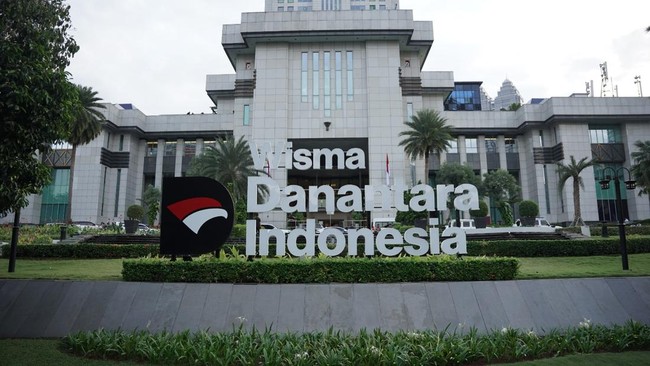
Danantara Indonesia aims to reduce the number of state-owned enterprises (SOEs) and their subsidiaries from 1,074 to around 200 by the end of 2026. It plans to do so through consolidation, mergers, liquidation, divestment and restructuring.
As of early October 2026, 354 companies had been listed for reduction. This is undoubtedly a decisive, swift and bold step, given that SOE governance has long tended to be overlapping and inefficient, while many businesses have made losses.
Nevertheless, several points should be considered to ensure the streamlining is done well—not merely to achieve a numerical reduction, but to create high-quality surviving entities. Just as importantly, the process should not diminish SOEs’ role as drivers of the economy or turn them simply into profit-generating machines for state revenue.
For years, SOEs have operated with bloated, overlapping structures that are difficult to oversee, with hundreds of subsidiaries and sub-subsidiaries whose mandates are not always clear. Cutting their number has long been seen as politically costly, so the government’s willingness to carry it out now deserves recognition.
Attention to the details is also evident in the differentiated approach. For example, four relatively healthy state-owned construction companies are due to be merged by the end of November 2026 at the latest, while two with much heavier debt burdens are being handled separately.
This tiered approach is more rational than the old practice of repeated state-capital injections that had little impact on financial performance. S&P Global Ratings has also said Danantara could drive major reform in the SOE sector.
Even so, cutting the number of SOEs is only the first stage of streamlining. The second stage, which still needs attention, is deciding what the leaner, healthier SOEs are for and how they will be used.
The analogy is simple: a healthy team is only meaningful if it is designed to carry out its tasks. Indeed, the reverse often applies: the task determines the ideal shape of the team. Work requiring heavy lifting may call for a large organisation, while work demanding agility needs a lean one. In other words, a mandate determines an SOE’s size, grouping and the way its health should be assessed.
At this point, public information remains limited. The groupings of SOEs communicated so far have focused mainly on speed, scale and product lines. A vision for the ultimate role of each group has yet to emerge clearly.
Yet profit is not the only reason for the state to own companies. SOEs are also established to provide public services, pioneer sectors and regions unattractive to private businesses, support micro, small and medium-sized enterprises and cooperatives, manage strategic sectors, act as a counterweight and address market failures. Without this orientation, the SOE streamlining programme would be no different from ordinary corporate restructuring.
Consequently, post-streamlining success indicators should continue to take these mandates into account. In telecommunications, success should not be measured solely by higher margins, but also by expanded access in Indonesia’s frontier, outermost and least-developed regions.
In fertiliser and food, there should still be measures of timely delivery and affordable distribution to marginal agricultural centres, where needs are seasonal and risks may deter private businesses. Streamlined entities that have improved their balance sheets cannot yet be deemed successful if they have not demonstrated their performance as drivers of the economy.
The manner of consolidation also requires attention, as it can determine the performance of the surviving entities. Studies by Christensen et al. (2011), Ismiyanti et al. (2026) and others show that consolidation outcomes vary, and many fail to achieve their synergy targets, particularly during integration. Horizontal mergers bring together similar units, while vertical mergers maintain the proximity of units within their value chains.
For example, the consolidation of state-owned insurers grouped by product line should be tested against this question: might each insurer’s value derive from its close relationship with its respective parent bank? If that relationship is lost, the result could be a larger entity with less market depth.
There are also governance requirements. First, transparency. Danantara’s target of publishing its financial statements this October should be met promptly, so that the Audit Board of Indonesia (BPK) can then audit Danantara and all the SOEs under it.
Second, fiscal risk. In any case, financial failure at an SOE or Danantara would affect the state budget (APBN). Weak governance and continued needs for state-capital injections could weigh on credit ratings, while S&P has noted that Danantara’s financial capacity depends heavily on SOE dividends.
Third, patience over the investment horizon. Temasek is often cited as a model not merely because of its size, but because of the clear separation between the state as owner and as regulator, as well as its long investment horizon. This question needs an honest answer: will Danantara be given that time, or will it continue to be judged by quarterly and annual performance metrics?
These points are, of course, standard considerations for ensuring sound governance and a measurable roadmap, and should not delay the streamlining programme. The risks are worth taking, because there is a greater risk if Danantara maintains the status quo and manages SOEs in the same way as before.
The end-of-2026 deadline creates discipline around reaching the target of 200 SOEs, but this pressure should not lead to rushed decisions. The public needs a roadmap explaining the role of each group of SOEs that remains, protecting their public-service mandates as streamlining proceeds, and allowing adequate time for due diligence and integration.
Ultimately, the programme’s success will not be measured only by how many entities are eliminated, but by the institutional quality of the surviving entities and the contribution they make to driving development.
Source: jawawa.id (https://jawawa.id/newsitem/streamlining-state-owned-enterprises-and-the-urgent-need-to-strengthen-indonesias-development-mandate-1793274725)
Originally published by CNBC Indonesia (https://www.cnbcindonesia.com/opini/20261029175524-14-780706/perampingan-bumn-dan-urgensi-penguatan-mandat-pembangunan-indonesia), translated from Indonesian