
Streaming and Royalty Disparities: Indonesia Demands Fairness on Digital Platforms
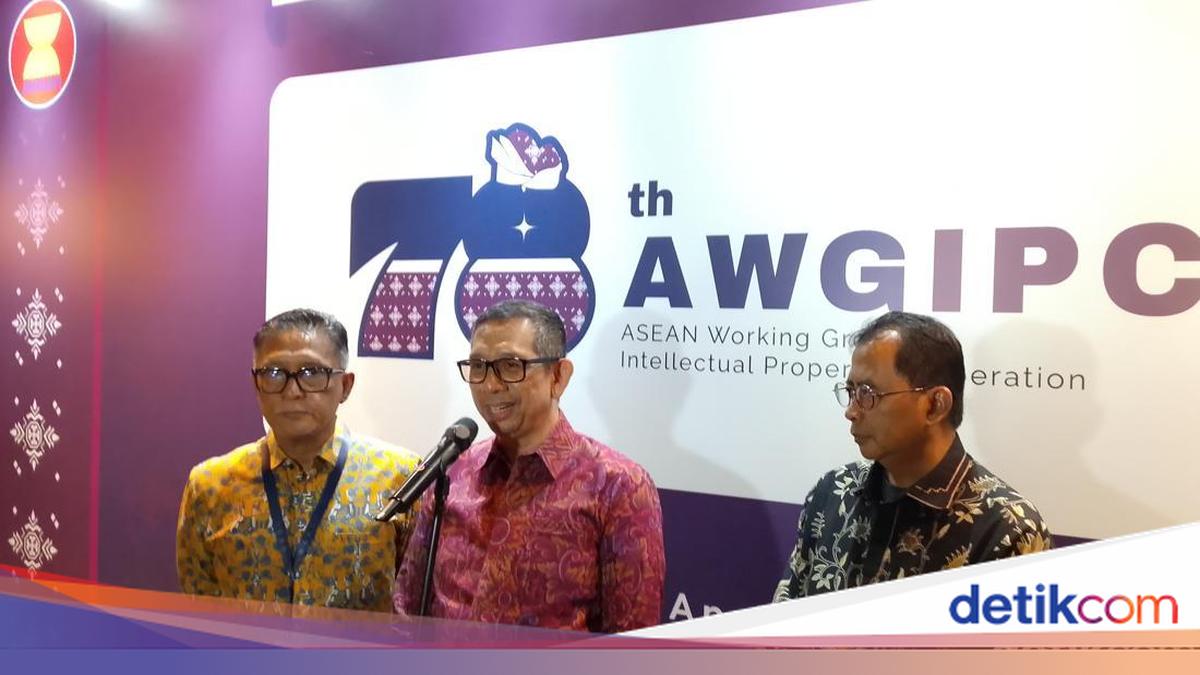
The Indonesian government is spotlighting disparities in royalties on global digital platforms, where the same number of streams does not necessarily yield equivalent payments for creators. This issue was a focal point at the 78th ASEAN Working Group on Intellectual Property Cooperation (AWGIPC) in Bali from 6 to 10 April 2026.
Director General of Intellectual Property at the Ministry of Law, Hermansyah Siregar, stated that this situation is commonly experienced by creators from developing countries, including Indonesia.
“When Indonesian creators have a song on a digital music platform, and the number of live streams, for example, drops to 5,000, while in another part of the world, a creator also has 5,000 live streams, the royalties received by our creators are not the same. So, the same number of streams but unequal royalties, because the standards of these music platforms differ regarding royalties for each country,” he explained on Monday (6/4/2026).
“This issue is what we want to fight for, so that the governance of digital music platforms becomes more equitable, and we demand transparency regarding cross-border CMOs, cross-border royalty collections, to be regulated more orderly,” he added.
According to him, differences in standards across digital platforms often result in Indonesian creators receiving lower royalties compared to those in other countries, even when the consumption level of their work is equivalent.
Therefore, Indonesia is pushing for transparency in cross-country royalty management, including strengthening the role of collective management organisations (CMOs) and global metadata regulation.
Indonesia also proposes the establishment of a binding international legal instrument so that royalty governance does not solely rely on the private mechanisms of digital platforms but has fair and uniform global standards.
“The goal is clear: so that our creators receive more decent economic benefits. In the future, we do not want to hear anymore about song creators living in hardship, even though their works are widely enjoyed,” he emphasised.
In addition to royalty issues, developments in artificial intelligence (AI) technology are also a concern. The Indonesian government is currently formulating policies to ensure that AI utilisation still protects intellectual property rights.
“AI is a tool to assist, not replace humans. There must be clarity between works purely created by humans and those produced with AI assistance,” he said.
On the other hand, ASEAN has launched the ASEAN Patent Examination Cooperation Plus (ASPEC+) to accelerate and improve the quality of patent examinations across countries.
Indonesia is also urging the acceleration of the implementation of the ASEAN IP Action Plan 2030, including enhancing intellectual property services, protection for MSMEs and the creative industry, as well as strengthening human resource capacity.
In regional evaluations, ASEAN countries currently rank between 30 and 50 in the Global Innovation Index. Therefore, collective steps are needed to enhance innovation competitiveness at the global level.
During the forum, Indonesia showcased intellectual property-based products from Bali, from geographical indications to MSME products, as evidence that IP protection directly impacts the local economy.
This push marks the increasing pressure from developing countries on the global digital economic system, which is deemed not fully supportive of creators.