
Strategies to Counter the Onslaught of Artificial Intelligence
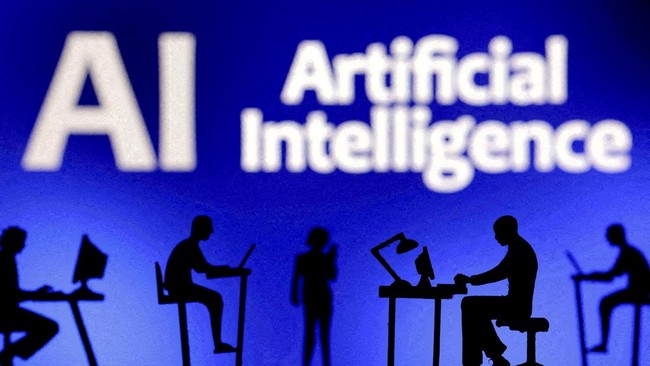
Artificial Intelligence (AI) is no longer a future concept. It has entered our workspaces: processing data, summarising documents, generating content, and supporting decision-making. The question is no longer whether AI will change the world of work, but what makes humans remain valuable as machines become increasingly intelligent.
This fundamental question emerged during the Indonesia Human Capital & Beyond Summit (IHCBS) 2026, held on 15-16 September 2026 at NICE PIK 2, Tangerang Regency, Banten Province. Carrying the theme “Harnessing Human-Centric AI and Digitalization to Unlock Next-Level Productivity”, this forum reinforced a key message: AI is not designed to replace humans, but to strengthen the capacity of the workforce to become more productive and highly competitive.
Job Transformation and the Boundaries of Wisdom
During the forum, the Minister of Manpower, Yassierli, emphasised the importance of a People-Centric AI approach. This approach includes strengthening worker capabilities, involving them in transformation, maintaining human control, and preparing for changes in competency structures.
This view aligns with research from the International Labour Organization (ILO, 2025), which notes that one in four global workers is exposed to Generative AI. The greatest impact is not the massive elimination of jobs, but rather the transformation of job types.
This is supported by findings from PricewaterhouseCoopers (PwC) in the Global AI Jobs Barometer (2026), which recorded that business sectors with high AI adoption actually experienced an increase in labour productivity of up to 40 per cent. AI is not killing jobs, but rather demanding higher standards of competence.
The challenge for workers today is not to compete against artificial intelligence, but the necessity to learn how to collaborate with it. This is where human strategic value lies. AI is capable of processing big data and providing precise predictions, but humans possess dimensions unbound by algorithms: consciousness, values, empathy, intuition, and responsibility.
Human resource management expert Dave Ulrich (2026) highlighted the importance of human ingenuity; humans possess future vision, innovation, relational empathy, and the wisdom to make decisions.
McKinsey & Company’s (2026) research on The State of Organizations also revealed that 86 per cent of global leaders view emotional leadership and human management as increasingly vital in the AI era. AI can answer “what can be done?”, but humans determine “what should be done?”.
Three Strategies to Become an Augmented Worker
To remain relevant amidst the tide of digitalisation, workers need to execute three strategic steps:
First, Strengthening the Human Core. The World Economic Forum (WEF, 2025) in the Future of Jobs Report places analytical thinking and creative thinking as the most sought-after core skills. While machines handle repetitive technical tasks, emotional skills such as leadership, flexibility, and integrity become the primary determinants.
A manager may rely on AI data to view performance charts, but still requires human empathy to understand the reasons behind a decline in team motivation and productivity.
Second, Becoming an Augmented Worker. Research from the Organisation for Economic Co-operation and Dissemination (OECD, 2024) shows that jobs with high levels of AI exposure still require the integration of socio-emotional skills, business process governance, and digital literacy.
Workers do not need to be programmers to utilise AI; rather, they need AI literacy, the ability to provide precise prompts, verify data, and understand ethics correctly. As stated by Paul Choo (2026), CHRO of Bridgestone Asia Pacific, AI must be positioned as a co-pilot, not an autopilot. Thus, humans remain the primary controllers, not the other way around.
Third, Building Career Agility. The WEF (2025) projects that approximately 39 per cent of job skills will be disrupted between 2025 and 2030. Upskilling and reskilling should no longer be viewed as occasional agendas, but as a continuous necessity (lifelong learning). Workers are required to be agile in adopting new technologies while continuously expanding cross-functional networks and competencies.
Humanising Productivity
Ultimately, efficiency and speed are not the only measures of success in digital transformation. The Managing Director of Human Capital at Danantara Aset Manajemen, Agus Dwi Handaya (2026), introduced the “PeopleMath” approach, which places human capacity development and the leaving of a legacy as key components of performance assessment.
If AI adoption succeeds in increasing work speed but erodes creativity and the workers’ sense of belonging, then the direction of that transformation needs to be reviewed. Technology should make humans more productive without losing their humanity. The future of work is not about artificial intelligence displacing human roles, but human intelligence being augmented by artificial intelligence.
The best strategy to survive in this era is not to attempt to become as fast as a machine, but to become a human who is increasingly adaptive to technology, possesses high integrity, and is technologically literate. Machines can accelerate the execution of tasks, but humans are the ones who provide direction and determine the value of the work’s results.
Source: jawawa.id (https://jawawa.id/newsitem/strategies-to-counter-the-onslaught-of-artificial-intelligence-1789966670)
Originally published by CNBC Indonesia (https://www.cnbcindonesia.com/opini/20260921105940-14-769481/strategi-melawan-gempuran-kecerdasan-buatan), translated from Indonesian