
Strategies for Islamic Boarding Schools in the Digital Era
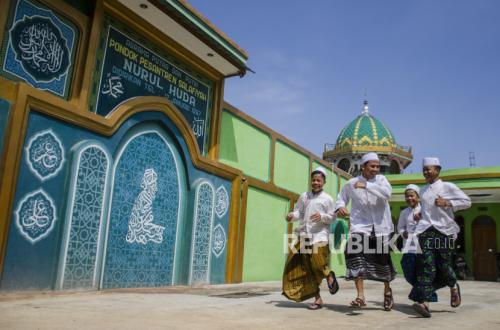
Previously, Islamic boarding schools (pesantren) were known through distributed brochures. They featured photos of new buildings, multi-storey school blocks, dormitories, canteens, multipurpose halls, fee lists, and bold claims of ‘complete facilities’. For prospective parents, seeing these was enough to register. Today, the method has changed.
Nowadays, in any remote area, a mother opens Instagram before bed. She is not looking for a brochure; she is looking for a feeling. She types the name of a pesantren and scrolls. She wants to know what her child will be like if they study there. Are the teachers loving? Is the environment safe? Is there enough joy and struggle to make her confident in entrusting her child to the institution?
This is where pesantren are tested. It is not about how magnificent the buildings are, but about what stories we dare to write. For a long time, many educational institutions have relied on one-way communication: boasting about thousands of students, affordable fees, complete facilities, global student achievements, and alumni attending prestigious universities locally and abroad. While true, these facts can be claimed by any other school. Numbers do not move people; numbers only allow for comparison.
What moves people is story. The story of a new student crying from homesickness in the first week, but being able to memorise verses by the fourth week. The story of a teacher staying up late to tend to a sick student. The story of the atmosphere during pre-dawn meals, when the lights are dim but the sound of recitation is already audible. That is what creates a magnet. It does not shout; it attracts.
To find these stories, we do not need to wait for major events. Their strength lies in routine. Behind that routine lies the meaning of life in a pesantren. There is the struggle of learning, when a student repeats memorisation until they are fluent. There is the habituation of worship, when the dawn call to prayer sounds and the entire dormitory moves towards the mosque together. There is the dedication of teachers, which does not end at classroom hours but continues through midnight guidance. There is social interaction, where students learn empathy through community service, responsibility through chores, and character through how they advise their peers. These spaces must be the home for our content. Not to appear busy, but because that is where the evidence of education is real.
Delivering this also requires different approaches. Today’s youth do not read long texts; they watch fifteen-second clips. Therefore, we need micro-stories—quick, honest, and impactful snippets. However, there are also parents who wish to save something to read again, so we need carousels—a series of messages that serve as a resource. And there are those who simply want to feel close, requiring behind-the-scenes footage from the kitchen, the classroom, or the courtyard. When these elements work together, the pesantren is no longer distant; it is held within one’s grasp.
Naturally, the style cannot be the same for everyone. To prospective students, we speak their language; this is more trusted than an official speech. To parents, we speak to the heart. Show the struggle, show the results, and show why their entrusted children are well-protected. To the wider public, we speak through beauty—a single shot of dawn, a single call to prayer, a single light from a dormitory window. Without many words, people will understand.
Of course, this path is not always smooth. Some pesantren have weak signals. Some teachers have no time left after teaching. Some teams are confused about where to start. But none of these are reasons to stop. Start small. Form a small team. Perhaps sit for thirty minutes every Monday to decide on three stories for the week. Assign tasks to students: create a one-minute video for a lesson. Pick the two best, polish them, and upload. Review progress next month. The metric is not how many ‘likes’ are received, but how many people ask questions, how many save the post, and how many eventually visit because they feel they already know the school.
Ultimately, the measure of success is not momentary popularity. The success of a pesantren is when a father or mother in another village watches a video and says, ‘This is where my child must learn.’ That is the conversion of trust, and it is not born from numbers, but from honest narratives.
However, this honesty must be maintained with proper etiquette (adab). We must not sacrifice student privacy for the sake of going viral. We must speak truthfully without exaggeration. We must ensure every image and every caption continues to reflect dignity. Technology may be sophisticated, but character (akhlak) must remain at the forefront.
In the end, it all returns to one sentence: a good narrative in the digital era is the most relevant form of dawah (missionary work). In the past, pesantren guarded tradition behind walls. Now, pesantren are called to lead moral transformation outside those walls, through the screen.
If we remain silent, the algorithm will fill that space with something else. If we tell our stories, we are inviting people back to goodness. Therefore, the question is no longer whether we need content, but rather: what good story will we write today?
May the pesantren across the nation become digitally literate, so that if every pesantren can massively produce positive content regarding student activities, it can colour the digital dawah space in every corner, both domestically and abroad. Say with confidence: we can do this.
Source: jawawa.id (https://jawawa.id/newsitem/strategies-for-islamic-boarding-schools-in-the-digital-era-1789959361)
Originally published by Republika (https://analisis.republika.co.id/berita/tloz43483/strategi-pesantren-era-digital), translated from Indonesian