
Strategic Philanthropy Steps to Address Economic Challenges
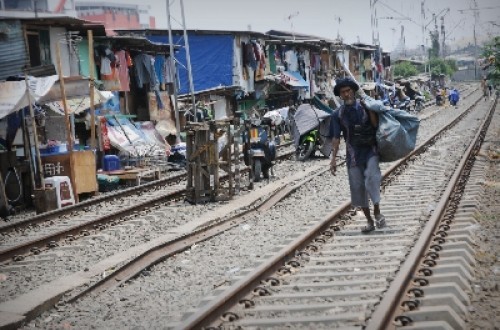
Indonesia’s socio-economic landscape in mid-2026 presents challenging dynamics. Beyond macro statistics attempting to remain stable and good economic growth, the reality on the ground shows increasing pressure on society: the weakening of the Rupiah against the US Dollar, rising fuel prices, eroded purchasing power, and the threat of extreme drought looming over the agriculture and forestry sectors.
This condition is further exacerbated by waves of layoffs in the industrial sector, persistent stunting and unmet nutritional needs among children, and the proliferation of online loans and online gambling, which further worsen the economic pressure on parts of Indonesian society.
In such a situation, the government through development activities, the private sector through business activities, and society through the philanthropic sector are required to engage in overcoming these economic problems and challenges. Philanthropic activities, encompassing the management of social-religious funds, humanitarian activities, corporate social responsibility grants, and independent donations, must take strategic steps to address these issues.
Philanthropic activities can no longer operate in the old style. Assistance that is merely charitable or limited to distributing emergency aid will not be sufficient to overcome these structural economic problems. Indonesian philanthropy must transform into a transformative and empowering force, capable of integrating aid programmes with sustainable economic empowerment.
Here are several strategic steps that the philanthropic sector needs to take in responding to Indonesia’s main economic challenges today.
First, fulfilling basic needs. In this step, philanthropic activities can distribute basic food packages in cooperation with minimarkets and courier services, provide free eateries offering ready-to-eat meals, establish digital-based food banks in dense and impoverished urban areas, provide digital mobile clinics, temporary guest houses, and free schools. Infrastructure philanthropy needs to prioritise the construction of proper family sanitation facilities, the provision of independent renewable energy access, and the procurement of community internet facilities in isolated villages, along with various other social safety net activities and the fulfilment of other basic needs.
Second, increasing purchasing power. In this step, philanthropic activities can provide financial assistance for poor families, hold cheap basic food bazaars, operate subsidised grocery stores, and provide discount or subsidy cards for poor families usable at shops partnering with philanthropic institutions. Philanthropic institutions can also buy up local farmers’ harvests at fair and proportional prices. These food products are then redistributed as nutritional aid packages for food-insecure regions and stunting pockets, thus creating a mutually beneficial double value chain, along with other activities that give poor families opportunities to obtain financial assistance or purchase subsidies for daily needs.
Third, job creation. In this step, philanthropic activities can carry out cash-for-work programmes providing jobs for public benefit with wages or honorariums, job skills training, professional certification, holding job fairs, entrepreneurship training, business incubation activities, providing business capital assistance (including qardhul hasan financing), providing scholarships for bonded study programmes, and various other forms of activities enabling the poor to work or become entrepreneurs.
Fourth, business scale-up. In this step, philanthropic activities can assist with BPOM registration, halal certification registration, the formation of cooperatives or business associations, training and facilitation for business digitalisation, training accompanied by international product standardisation, and export facilitation support. Philanthropic activities also include support for the establishment of communal industries, support for access to funding from the government, microfinance institutions, and banks, and various other activities enabling ultra-micro, micro, and small enterprises to scale up their businesses.
Fifth, creating a conducive environment. In this step, philanthropic activities can carry out reforestation of barren forests, mangrove planting on coastlines, allocation of climate intervention funds for community clean water infrastructure (such as deep wells and water purification installations), and procurement of solar-powered water pumps for emergency irrigation. For areas prone to forest and land fires, philanthropic activities can strengthen the capacity of Fire Care Community Groups through the provision of emergency firefighting equipment and disaster mitigation training. Philanthropic activities can also conduct waste recycling that yields economic benefits for beneficiaries, as well as carry out various activities to enhance environmental protection and support for life sustainability.
Facing these various economic challenges, Indonesia’s philanthropic sector cannot work in isolation. The key to success lies in multi-stakeholder partnerships involving the government, the private sector, academics, the media, and civil society. By utilising evidence-based data, transparent governance, and the use of digital technology, the philanthropic sector will be able to transform the challenges of the mid-2026 crisis into a momentum for building a more resilient, inclusive, and sustainable society.
Source: jawawa.id (https://jawawa.id/newsitem/strategic-philanthropy-steps-to-address-economic-challenges-1786078305)
Originally published by Republika (https://analisis.republika.co.id/berita/tjds1b368/langkah-strategis-filantropi-menjawab-tantangan-ekonomi), translated from Indonesian