
Strategic Lessons from Malaysia and Turkey for Indonesia's Hajj Economic Ecosystem
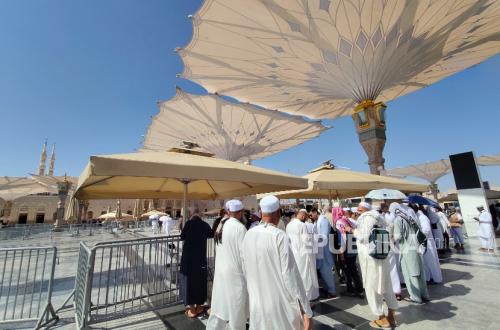
Every year, more than 221,000 Indonesian Hajj pilgrims and nearly two million Umrah pilgrims travel to the Holy Land, carrying with them prayers, hopes, and massive spending estimated at between Rp50 trillion and Rp65 trillion. Yet, behind this immense spiritual and financial movement, Indonesia remains merely the largest consumer in Saudi Arabia, not a nation that captures added value from the Hajj economic ecosystem. In contrast, countries like Malaysia and Turkey have successfully mastered the service supply chain and utilised Hajj funds for efficiency and industrial diplomacy. Indonesia continues to grapple with passive capital dependency, delayed real investment, and service quality issues that recur year after year.
A model of integrated Hajj ecosystem management is clearly demonstrated by Malaysia through the Lembaga Tabung Haji (TH). With total managed funds reaching RM80–90 billion (approximately Rp260–300 trillion), Tabung Haji does not merely collect pilgrims’ savings. It actively engages in direct investment in real asset sectors such as hospitality, property, and agribusiness. This ownership of strategic hotels in Makkah and Madinah provides Tabung Haji with strong bargaining power against local service providers. Remarkably, Tabung Haji implements a fair financial assistance scheme based on income levels: B40 (low-income) pilgrims pay only RM15,000, while the M40 (middle-income) group pays RM23,500, and the T20 (high-income) group pays the full cost of RM33,000. These targeted subsidies are covered by sustainable investment returns, not by depleting the pilgrims’ principal savings.
Meanwhile, Turkey adopts a different but equally effective approach through its religious authority, Diyanet. Sending between 84,000 and 85,000 pilgrims annually, Turkey sets the Hajj cost between 20,000 and 30,000 Saudi Riyals. Diyanet does not rely on direct cash subsidies but instead applies an ‘indirect subsidy’ by fully controlling the supply chain. All operational aspects are integrated with national assets: pilgrims fly exclusively with Turkish Airlines, stay in hotels managed by Turkish entities, and consume food and products sourced from Turkey’s domestic industry. This strategy ensures that every Rupiah spent by pilgrims circulates back into the national economy, strengthening Turkey’s industrial and export sectors.
The contrast with Indonesia is stark. The country’s Hajj financial management remains dominated by a ‘cost-based’ approach, where the Hajj Travel Cost (BPIH) is set based on expenditure projections without significant value-added components. The potential of the Hajj Financial Management Fund (BPKH), which has reached Rp167 trillion, is largely placed in low-yield Sharia securities, while direct investments in Saudi Arabia’s hospitality sector remain minimal. Consequently, Indonesia’s bargaining position is weak, and it is often forced to accept accommodation and catering prices dictated by local providers. The author argues that Indonesia must learn from Malaysia’s targeted subsidy model and Turkey’s supply chain nationalism to transform the Hajj from a mere ritual journey into a strategic driver of national economic growth.
Source: jawawa.id (https://jawawa.id/newsitem/strategic-lessons-from-malaysia-and-turkey-for-indonesias-hajj-economic-ecosystem-1784767894)
Originally published by Republika (https://analisis.republika.co.id/berita/tikzsy451/pembelajaran-strategis-dari-malaysia-dan-turki-bagi-haji-indonesia), translated from Indonesian