
Strange Phenomenon Hits Cipinang Rice Wholesale Market, Traders Cry Out
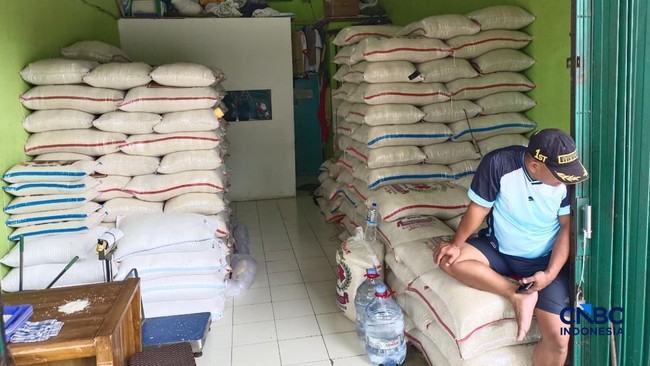
Jakarta - Economic pressures are beginning to spread into the rice supply chain. After numerous warteg (small food stalls), coffee shops, and Padang restaurants complained of falling turnover due to increasingly frugal customers, the impact is now being felt by rice traders at the Cipinang Rice Wholesale Market (PIBC) in East Jakarta. Based on monitoring at PIBC on Wednesday (24/6/2026), trading activity appeared quieter than usual. The number of rice transport trucks typically moving in and out was visibly reduced. Several porters were seen idle, some even asleep between stacks of rice sacks. Meanwhile, traders’ warehouses remained full of rice stock.
Dedy, Chairman of the Cipinang Rice Wholesale Market Traders Cooperative (KOPIC), said one suspected cause of the quiet market is weakening demand at the downstream level, from traditional markets to culinary businesses. “It certainly has an impact. So, why is the wholesale market quiet? If we dissect and analyse it more deeply, there are many factors. A significant factor is that this wholesale market supplies partners who trade here to traditional markets, small markets, and food stalls,” Dedy told CNBC Indonesia at the location. “It is likely that traditional markets are also experiencing reduced purchasing power, so demand to the wholesale market automatically decreases. That’s how it is,” he continued.
According to him, the decline in consumer-level demand creates a domino effect reaching rice production centres. “So our demand to the regions also decreases. The regions suffer losses, a domino effect. I think that’s the case,” he said. Dedy acknowledged that rice trading conditions at PIBC are currently sluggish, even though supply from the regions remains normal. “As for rice sales now, the wholesale market, as you can see, is somewhat weakening. The market is rather quiet,” Dedy stated. He said the market weakening has been visible since the beginning of the week. Some rice sent from the regions is even difficult to sell and must stay overnight at the wholesale market. “That’s how it is. Why is there a decline in purchasing power? The reality is like that. Look at the market now, it’s weakening. Since Monday it hasn’t been very busy, Tuesday was the same, and even today it’s quiet,” he said. “In fact, for several days now, rice supplied from the regions has been somewhat difficult to sell. They have to struggle again the next day, so the goods from the regions are forced to stay overnight,” he added.
Nevertheless, D edy confirmed that supply and stock at PIBC remain secure. The abundant stock condition is even causing rice prices at the wholesale market to tend to weaken. “Stock is safe, safe. I think it’s safe. It’s simple with rice, or any commodity for that matter. When supply is plentiful, over, prices tend to fall. That’s the gist of it. Prices also tend to fall because of the excess stock,” Dedy explained.
A similar sentiment was conveyed by one rice trader at PIBC, Zulkifli, who said the decline in public purchasing power is now increasingly felt. According to him, this condition is visible from the reduced activity of restaurants and warteg that have been regular PIBC customers. “There is clearly a decline in purchasing power, consumption, the decline is clear, that’s why this is happening,” said Zulkifli. He explained that Padang restaurants and warteg are regular bulk buyers of rice at the wholesale market. “Yes. Padang restaurants all buy from the wholesale market rather than retail markets. Padang restaurants generally use premium rice. Warteg can use premium or medium,” he clarified. According to him, fewer restaurant customers automatically cuts rice demand. “It’s certain. Purchasing power is certain. The point is, if a place usually feeds 100 people, but now only feeds 60, it means there is a decline in rice purchases,” he said. Zulkifli added that the main issue currently is not stock or rice prices, but weak demand. “There’s no problem. Stock and price are not the problem. It’s just purchasing power. Our purchasing power is weak. That’s all,” he stated. He estimated rice sales have fallen by around 30%-40% in the last two to three months.
However, this condition has not yet been fully felt by all retail rice traders in Jakarta. Rice trader Yanto at Pasar Rumput admitted his sales were still relatively stable, although he is beginning to see a slowdown in purchases from the public. “Sales are stagnant, yes, it seems like there is a reduction in people buying rice. But I notice, if people are still receiving KJP (Kartu Jakarta Pintar), they still buy rice. (KJP is like a kind of stimulus) from the DKI Jakarta provincial government. But I don’t know later if that is gone. So far it’s still normal, maybe people are still receiving KJP,” said Yanto, met separately. Yanto believes social assistance programmes are still helping to maintain public consumption. But he does not deny that purchasing power is currently under pressure. “Indeed, it cannot be denied that people’s purchasing power has fallen, the effects of the rupiah, war, fuel price hikes, all sorts of things. So it impacts us (rice traders), but as far as I can see, my sales are still normal,” he mentioned.
A similar situation was expressed by rice trader Tini in the Menteng area. She admitted buyers still come, though not as many as usual. “Alhamdulillah, there are still people buying. Maybe there is a decline in purchases, for example, usually by morning there are already 10 people shopping, now it has to be a bit later in the day to reach 10 people. But it depends. Maybe people are using their money for other things first, later at the beginning of the month people might shop a lot again,” said Tini. According to her, the market condition does tend to be quieter than usual.