
Strange Phenomenon Emerges in China: Retailers Suffer While Industry Profits
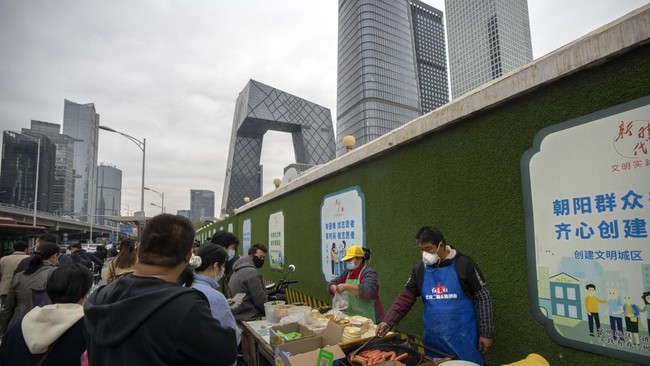
China’s retail sales are increasingly plummeting due to weakening domestic demand, yet the country is simultaneously enjoying export growth that is delivering high profits to the industrial sector. This divergence is exacerbating imbalances in the world’s second-largest economy, with retail sales falling for the first time in more than three years and investment declining, even as industrial output accelerates. The result is a ‘two-speed growth’ phenomenon, where the factory sector is buoyed by unexpectedly resilient export performance, but domestic demand weakens amid a years-long property market downturn. Data from the National Bureau of Statistics (NBS) showed retail sales, a key consumption indicator, fell 0.6% in May, reversing a 0.2% rise in April and missing the 0.0% forecast in a Reuters poll. This marks the first monthly decline since December 2022. The fragility of the economy is underscored by the automotive sector, where domestic car sales fell for the eighth consecutive month in May, confirming loosening demand in the world’s largest car market that could persist through year-end. Tourist spending during the five-day Labour Day holiday in May also failed to provide a boost, and the impact of the government’s consumer goods trade-in programme is fading. A high base of comparison from last year also contributed to the decline. Bar managers, who typically profit during World Cup season, are also feeling the pinch. Jie’ao Feng, a bar manager in Shanghai’s financial district, said his business has been hit by cuts in corporate entertainment budgets. He has offered group packages to attract more visitors, but this strategy has eroded his profit margins. Screening World Cup matches has not helped much either, he said, due to late-night schedules, resulting in fewer customers in June than in May, when sales had surged thanks to the long holiday. ‘Consumers are not as impulsive as they used to be,’ Feng said. Zhiwei Zhang, chief economist at Pinpoint Asset Management, said the weak retail sales data puts pressure on the government to consider policy measures to stabilise consumption. ‘I still expect a policy adjustment in July after the second-quarter GDP data is released,’ he said. In contrast to the domestic consumption woes, China’s industrial output surged 4.5% in May from a year earlier, up from 4.1% growth in April and beating expectations of a 4.3% rise. A global surge in AI investment and related technology demand has helped the world’s largest manufacturer offset export impacts previously feared by many. High-tech manufacturing output jumped 15.1% in May. ‘Several gaps characterised the economy in May: the gap between domestic and external demand, the gap between AI and traditional industries, and the gap between goods retail and services consumption,’ said Xu Tianchen, senior economist at the Economist Intelligence Unit. Services consumption grew 5.5% in the January-May period, significantly outperforming goods sales and becoming a growing driver of household consumption, though this also slowed from 5.6% in the first four months. Xu expects economic growth in the second quarter to slow to 4.5% from 5% in the first quarter. ‘For the full year 2026, achieving the 4.5-5% growth target will not be difficult, but weak domestic demand still requires policy intervention in the second half.’ Investment data was also much weaker than expected. Fixed asset investment fell 4.1% in the first five months of 2026, following a 1.6% decline in January-April. Economists had forecast a 2% drop. NBS spokesperson Fu Linghui attributed the decline partly to high temperatures and heavy rainfall in some regions, as well as a transition from old to new growth drivers. He added that China still has ample room for future investment, with new urbanisation, rural revitalisation, the development of ‘new quality productive forces’, and improvements in public services all requiring support. Property investment extended its decline, plunging 16.2% in the first five months compared to the same period last year, after a 13.7% drop in January-April. Property sales and new construction also fell more sharply. On a month-on-month basis, new home prices fell at a slightly faster pace in May, although major cities showed tentative signs of stabilisation. Weak household loan data released last week indicates the public remains cautious about taking on debt to buy homes amid sluggish income growth and job uncertainty. The labour market also remains under pressure, with around 12.7 million graduates leaving schools and universities over the summer.