
Stranded in Ceuta, Thousands of Children Vulnerable to Becoming Victims of Violence
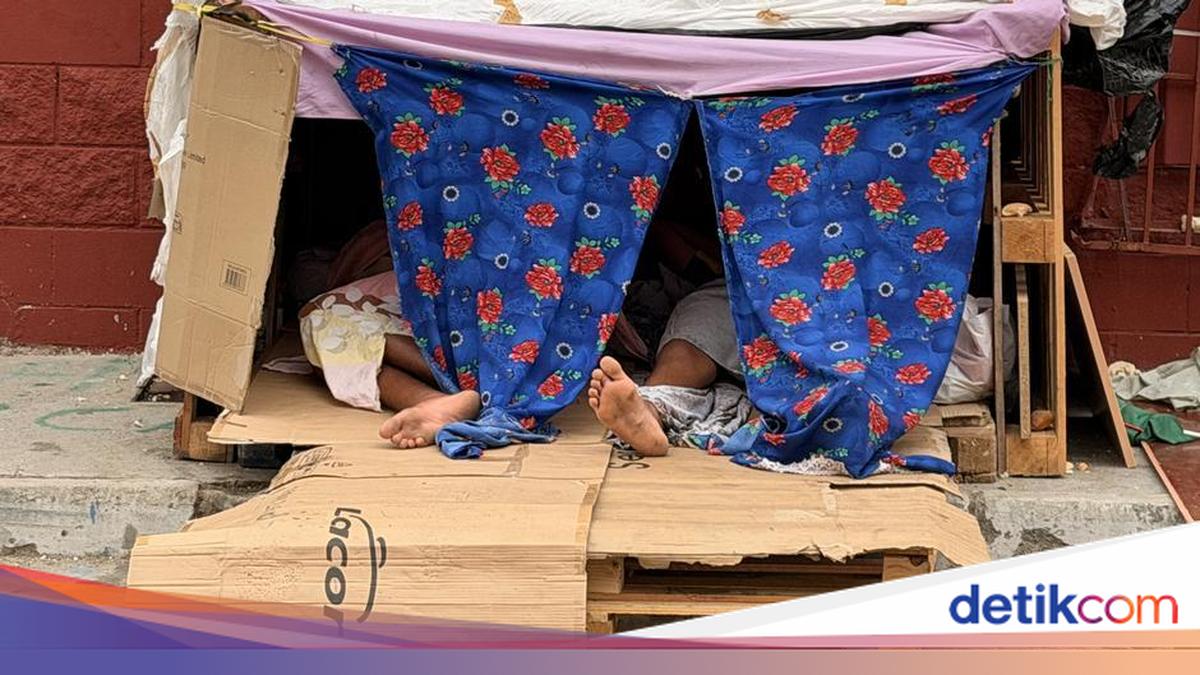
At 8 a.m. in the Tarajal industrial area of the autonomous city of Ceuta, Spain, there are no workers or lorry drivers near the warehouses today. Instead, there are emergency tents, some made of cardboard, with children and teenagers sleeping under dirty blankets.
According to several estimates, there are between 3,000 and 5,000 unaccompanied children in Ceuta. Some are forced to live on the streets because they cannot get a place in overcrowded shelters.
Amina, a 14-year-old Moroccan girl, and her brother were among the 80,000 people who crossed the Spanish border from Morocco at the end of July. According to local authorities, around 9,000 people remain, although most have already left Ceuta and many of them are children.
“The worst thing is that there are no toilets,” said Amina. “We have to go into the bushes, but I don’t dare go alone.”
Nearby, a Moroccan woman named Malika had laid out some blankets for herself and her four children. She told DW that her income as a domestic worker in Morocco was not enough, only around 7 euros per day.
“It is not enough to support everyone,” she said. “School will start again soon, and I have no money for books, or even proper clothes for the children.”
That is why Malika decided to join the mass crossing to the Spanish border last month after reading about it on social media. Now she does not know what to do.
“One child is sick. He has a high fever, but I cannot get help anywhere,” she said. In the end, she made a compress with water and vinegar for first aid.
She is now very worried about her daughters aged 12 and 14, because the number of sexual abuse cases has risen sharply in the past week. Police are currently investigating at least 15 alleged rape cases. Local authorities suspect the real number is much higher.
Conditions are hardest for women and children. Susana Ascaso, an emergency doctor at Ceuta University Hospital, said she has treated several young women in recent days.
“Just yesterday, a 12-year-old girl came to A&E,” she said. “She said that another migrant had harassed her and touched her inappropriately. She arrived very frightened and crying. She was with a woman who found her on the street. That woman rescued the child.”
Ascaso said conditions are especially difficult for “women under 18” who are “at very high risk.” She also noted the large imbalance between the number of male and female migrants. “That certainly does not help.”
Several senior officials in Ceuta have called for more support from the central government in Madrid. Nabila Benzina, the regional minister for health and social affairs, told DW that the current crisis is “the worst moment in Ceuta’s history” and urged for more police in the Spanish territory in North Africa. “Especially to protect young women, but also for the general protection of the public.”
Ceuta President Juan Jesus Vivas called it a “high-risk situation” in which it is becoming increasingly difficult to maintain public services. “For children, we are currently 5,000% above capacity,” he said. “That means no one can care for them properly.”
“One day I want to be an architect”
The Spanish government has announced plans to move unaccompanied children to the mainland, but no concrete timetable has been set. Some regions whose governments include the far-right Vox party have said they refuse to accept migrants.
Vivas told DW that the children should preferably be “reunited with their families. If not, Moroccan social services should take over responsibility.” He called that the only solution, and urged Madrid to pursue “proper legal procedures.”
Many children in Ceuta say they do not want to return to Morocco or elsewhere in Africa, despite the very difficult conditions in Ceuta.
Ibrahim, a 7-year-old boy from Sudan, said he will not give up until he can provide “a better life for his parents back home.” Amina, 14, also said she does not want to return to Morocco.
“School here is really bad. But I want a different future for myself. One day I want to be an architect,” she said.
Source: jawawa.id (https://jawawa.id/newsitem/stranded-in-ceuta-thousands-of-children-vulnerable-to-becoming-victims-of-violence-1787140531)
Originally published by detikcom (https://news.detik.com/dw/d-8625937/terdampar-di-ceuta-ribuan-anak-rentan-jadi-korban-kekerasan), translated from Indonesian