
Strait of Malacca, Dumai, and Indonesia's Bet to Escape the 'End Destination Port' Curse
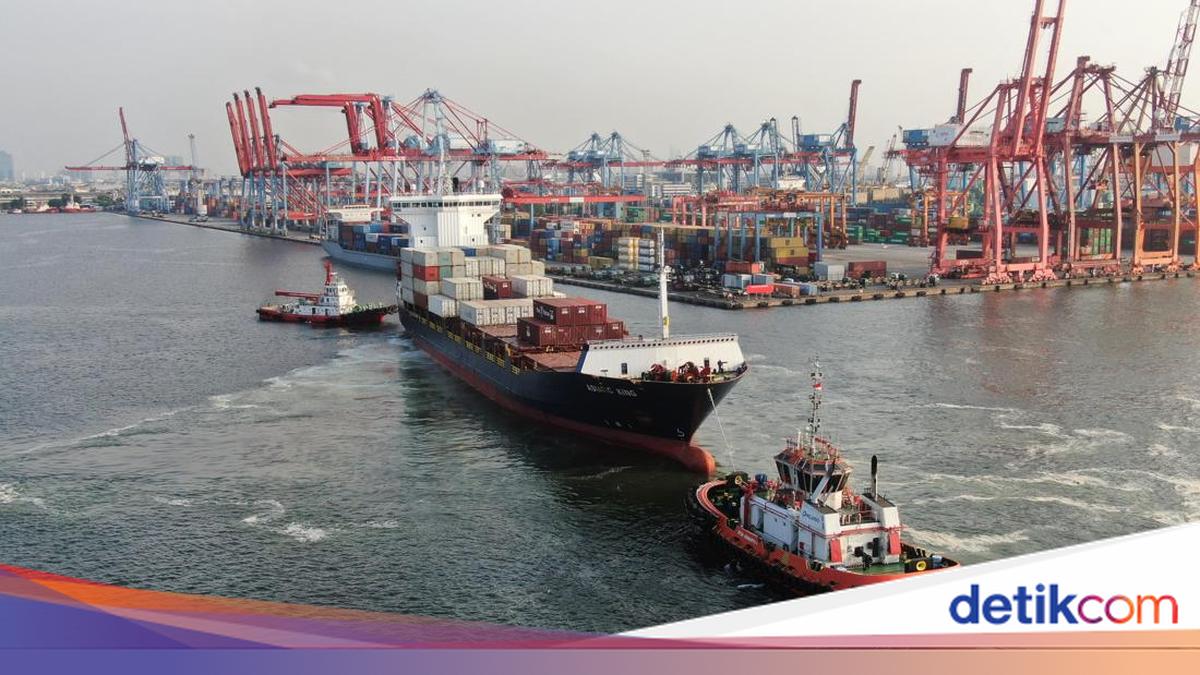
In this context, the plan to develop the Dumai Transshipment Hub by PT Pelabuhan Indonesia (Persero) together with the Ministry of National Development Planning/Bappenas has become a strategically significant move worthy of serious attention. The project is not merely about building a new port; it is an effort to reposition Indonesia’s geopolitical and economic standing in the heart of maritime trade in the region.
If successful, Dumai could become an instrument for transforming Indonesia from a mere gateway port or end-destination port into a regional transshipment hub with leverage in the global supply chain.
However, history has shown that maritime ambitions cannot be built merely with concrete quays, massive cranes, and modern terminals. The failure of transforming Kuala Tanjung Port into an international hub port provides an important lesson that the logic of 21st-century port development is no longer infrastructure-led alone; it must be network-led and market-driven.
A modern port does not live by its physical grandeur, but by its ability to be an efficient node in the global logistics network.
Therefore, the most fundamental question about Dumai is not how large the port is built, but whether Dumai can become an organic part of the international maritime ecosystem.
From Infrastructure to Logistics Ecosystem
The fundamental mistake at Kuala Tanjung was a development approach overly reliant on the classic build-and-they-will-come assumption. Infrastructure is built first, while the market is assumed to follow.
In practice, however, global shipping companies do not make decisions based on government optimism or nationalistic sentiment; they base decisions on calculations of cost and time efficiency.
In the modern port economy, efficiency is the primary currency. A port’s competitiveness is determined by operational efficiency, network connectivity, and supply chain resilience. A port that fails to meet any one of these elements will struggle to win regional competition.
Kuala Tanjung failed to build a network effect. The port was not close enough to main sailing routes, did not have a mature industrial hinterland, its intermodal connectivity was not optimal, and it failed to secure commitments from global shipping alliances. Consequently, the cost of diverting ships to Kuala Tanjung was deemed higher than the economic benefits.
In the container shipping industry, which is highly time- and fuel-consumption sensitive, a difference of only a few hours can determine a port of call choice.
Dumai appears to be avoiding that trap with a more realistic, market-based approach. Pelindo is no longer building on the assumption that the market will come on its own, but is ensuring that markets and cargo flows are available before the port operates at full capacity.
Strategic Advantage of Dumai
The greatest advantage of Dumai over Kuala Tanjung is the existence of captive cargo. Dumai has long been one of Indonesia’s largest crude palm oil (CPO) export hubs, with very large export volumes every month.
In shipping economics, cargo certainty matters far more than just berth capacity.
In other words, Dumai did not start from scratch. The city already has a real industrial hinterland, especially palm oil and its downstream industries. In port economics theory, the hinterland is the fundamental foundation of a hub port’s sustainability. Without a robust base of production and distribution on land, a port will merely be a logistically commemorative monument with limited activity.
Moreover, Dumai benefits geographically from being relatively close to the main route of the Strait of Malacca. In terms of deviation time, this proximity is crucial because it determines international shipping efficiency. Modern hub ports must be as close as possible to the main routes of mother vessels so that shipping lines do not incur extra costs from route deviations.
But geographic advantage and cargo availability alone are not enough. The current global port competition is no longer a competition of location alone, but a competition of service ecosystems.
Indonesia’s Big Bet on the Supply Chain
The most important lesson from Kuala Tanjung’s failure is that building a port is far easier than building a logistics ecosystem.
Business players will not relocate solely because there is a new port. They will relocate if total logistics costs are cheaper, faster, and more certain.
Here, the concept of a smart and green port designed by Pelindo becomes critically important. Digitalising services, automated cargo handling, integrated customs systems, and reduced dwelling time are no longer add-ons; they are minimum requirements to compete in the global logistics industry.
In the modern shipping industry, time is money. Each hour a vessel waits translates into additional fuel costs, crew costs, and opportunity costs that continue to accrue.
Therefore, the success of Dumai will be heavily determined by the ability to build multi-dimensional efficiency: berth efficiency, yard efficiency, gate efficiency, and hinterland connectivity efficiency.
If one chain is disrupted, the entire system loses competitiveness.
This explains why the integration of logistical toll roads, industrial park connectivity, and terminal modernisation must be done in parallel. Many ports fail not because their sea side is poor, but because land-side congestion destroys total supply chain efficiency.
Indonesia and The Race for Asia’s Supply Chains
The development of Dumai also carries a very important geopolitical dimension. For a long time, Singapore’s dominance in the Southeast Asian transshipment system has concentrated most regional logistics value-added within the country.
Indonesia has long been