
Strait of Hormuz Shipping Resumes After US-Iran Talks in Switzerland
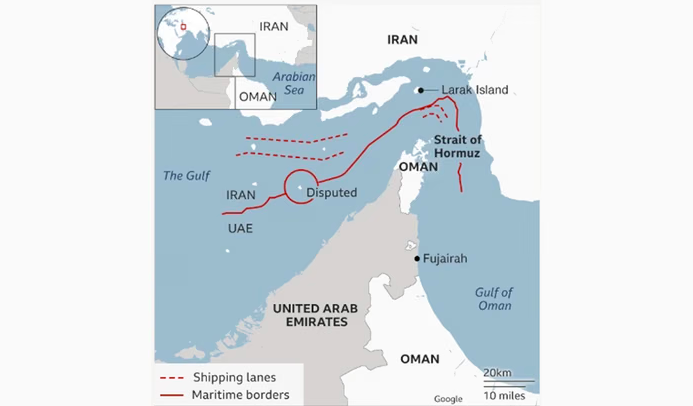
Shipping activity in the Strait of Hormuz is beginning to show signs of normalisation after the United States (US) and Iran reached an agreement during negotiations held in Switzerland. Several supertankers and liquefied natural gas (LNG) carriers that had previously been held back are now transiting the strategic shipping lane once again. According to vessel tracking data from LSEG and Kpler, two crude oil supertankers successfully passed through the Strait of Hormuz on Tuesday (23/6), a day after the deal between Washington and Tehran was struck. One of the vessels to exit the strait was the Dubai Energy, a Very Large Crude Carrier (VLCC) chartered by Taiwanese energy company CPC. The ship was carrying approximately 2 million barrels of crude oil sourced from Abu Dhabi and Saudi Arabia. After leaving the Strait of Hormuz, the Dubai Energy was recorded heading towards Kaohsiung, Taiwan. Another VLCC, the Universal Glory, chartered by South Korean refiner GS Caltex, also transited the strait on the same day, carrying around 2 million barrels of Saudi Arabian crude oil. Meanwhile, two Suezmax tankers, the Sobar and Sarak, were reported to be moving towards the Strait of Hormuz on Tuesday. Each vessel has a carrying capacity of up to 1 million barrels of oil. In addition to oil tankers, several LNG carriers linked to Qatar have also resumed operations through the strait. Seven unladen LNG tankers operated by QatarEnergy were reported to be heading towards the Gulf for reloading between 11 and 22 June. This journey marks the first passage of Qatari LNG vessels since the US and Israel launched airstrikes against Iran on 28 February. Vortexa reports noted that the first three vessels—Al Hamla, Al Areesh, and Al Khuwair—had switched off their automatic tracking systems while entering the Strait of Hormuz. Kpler data showed these three ships were last detected outside the strait in mid-June before reappearing on tracking systems between 19 and 23 June. Four other vessels—Wadi Al Sail, Mekaines, Al Sadd, and Mesaimeer—were also recorded entering the Strait of Hormuz on Monday (22/6). The presence of seven empty LNG carriers represents the largest volume of unladen LNG tankers to transit the strait since the regional conflict began. Commonwealth Bank of Australia analyst Vivek Dhar assessed that the fleet movement is a positive signal for the global energy industry. “Vessel tracking data reinforces hopes that QatarEnergy will meet their LNG production ramp-up schedule,” Dhar said, as quoted by CNN on Tuesday (23/6). The resumption of oil and LNG tanker traffic through the Strait of Hormuz is viewed as an important indicator of improving security conditions in the shipping lane, which serves as a vital artery for global energy trade. For months, the strait has been a focus of international market attention due to heightened tensions between Iran, the US, and Israel, sparking concerns over disruptions to global energy supplies.