
Strait of Hormuz Opens, Rupiah Strengthens Sharply to Rp 17,708 Level
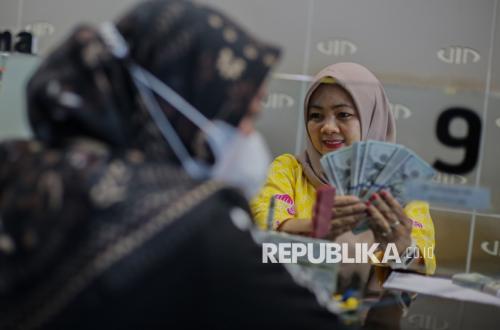
The exchange rate of the rupiah against the US dollar continued to strengthen following a peace agreement between the US and Iran, indicating an easing of escalation in the Middle East. Citing Bloomberg, the rupiah strengthened by 151.5 points, or 0.85 percent, to the level of 17,708.5 per US dollar at the close of trading on Monday (15/6/2026). In previous trading, the rupiah was at Rp 17,860 per US dollar.
Currency and Commodity Observer Ibrahim Assuaibi said the external sentiment was driven by US President Donald Trump and Iran’s Deputy Foreign Minister stating they had reached a preliminary agreement to end the war and resume traffic through the Strait of Hormuz.
The US and Iran are reportedly set to sign a memorandum of understanding in Switzerland on Friday, according to the prime minister of Pakistan, whose country has acted as a mediator. Trump said on Sunday that the Strait of Hormuz would be opened ‘free of charge’ and that the US naval blockade of Iranian ports would also end.
Iran’s semi-official Mehr news agency reported the draft agreement calls for the reopening of the Strait of Hormuz within 30 days under Iranian arrangements. The world has lost millions of barrels of oil and gas supply since the war closed the Strait of Hormuz, a critical point for a fifth of the world’s oil and liquefied natural gas supply, for more than three months.
Investors are also watching carefully how quickly Middle Eastern producers can resume oil production and exports after war damage and whether more ships will enter the region. Iran’s Deputy Foreign Minister Kazem Gharibabadi said a broader agreement would be negotiated during a 60-day ceasefire period.
The E4 countries, comprising the UK, France, Germany, and Italy, said on Sunday they are ready to lift sanctions on Iran in response to steps related to its nuclear programme.
This week, market attention will focus on the latest policy announcements from several central banks, with the main focus on the monetary policy decision of the Fed, the first led by its new Chairman Kevin Warsh. Ibrahim noted that central banks such as the Reserve Bank of Australia and the European Central Bank have raised interest rates by 75 and 25 basis points respectively this year. However, the rapid resolution of the conflict may prevent other central banks, such as the Reserve Bank of New Zealand, the Bank of England, and the Federal Reserve, from tightening policy.