
Strait of Hormuz Heats Up Again
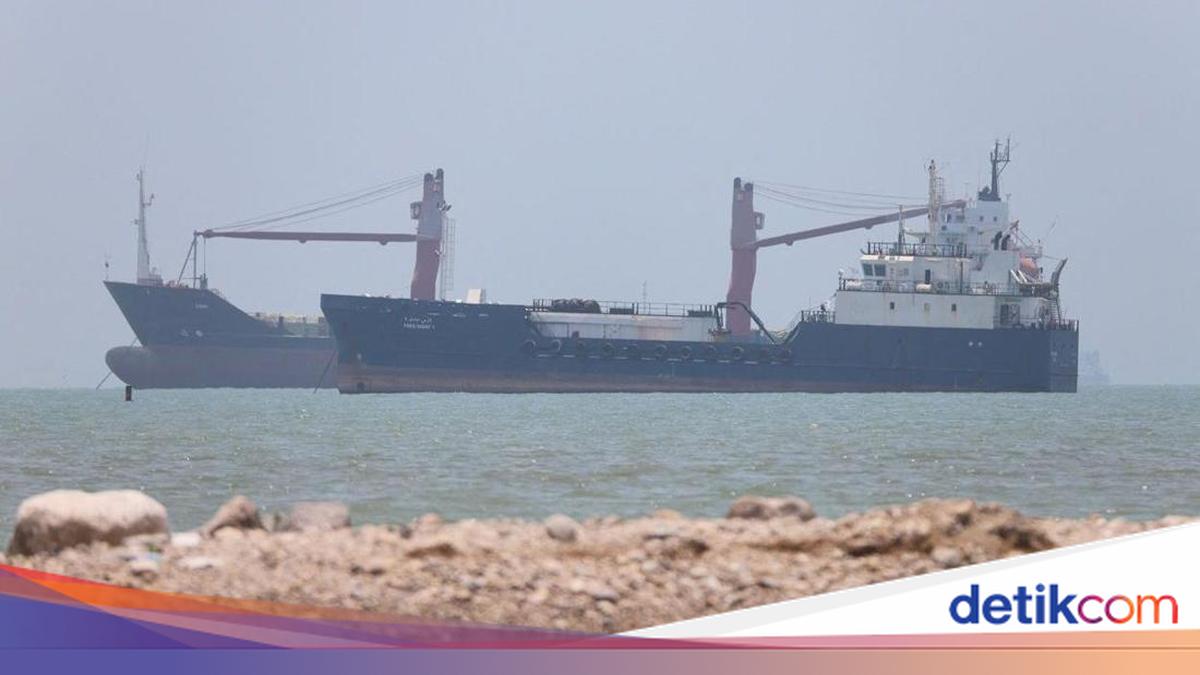
The Strait of Hormuz is heating up once again amidst the US-Iran ceasefire agreement. Most recently, the Iranian Revolutionary Guard Corps (IRGC) fired two missiles towards commercial ships passing through the strategic strait. The incident occurred on Monday (6/7) night, with two ships reported to have sustained damage.
Information regarding Iran’s latest attack in the Strait of Hormund, as reported by Reuters on Tuesday (7/7/2026), was first detailed by the US media outlet Axios, citing two US officials who requested anonymity. Tehran authorities have not yet issued an official statement.
However, according to reports from the prominent US media outlet Wall Street Journal (WSJ), the IRGC had warned several ships via maritime radio over the weekend that “our missiles and drones are ready to fire at you.”
Axios reported that two commercial vessels, of unspecified nationality and ownership, suffered severe damage due to the attack. No casualties have been reported so far. According to the WSJ, one of the targeted vessels appears to be the Al Rekayyat, an liquefied natural gas (LNG) tanker owned and operated by Nakilat, the Qatar Gas Transport Company.
The WSJ reported that the vessel was hit on the port side, just above the engine room. “Fire in the engine room and full of smoke. Unable to further assess the damage. All crew members are safe and gathered on the starboard side,” the WSJ report stated. The report noted the ship was attacked at the edge of the Strait of Hormuz, in the Gulf of Oman area.
Tanker On Fire After Hit by Projectile
Separately, the UK Maritime Security Agency reported that a tanker caught fire after being hit by an unidentified projectile in an incident in the waters east of Limah, Oman, on Tuesday (7/7) local time. The UK Maritime Trade Operations (UKMTO) stated that the tanker was hit on its port side while sailing south, approximately 15 kilometres east of Limah, causing a fire. There were no reports of casualties or environmental impact from the incident.
Reuters could not immediately verify the Axios report or confirm whether the vessels mentioned in that report include the tanker reported by the UKMTO. US Central Command (CENTCOM) has not yet responded.
These reports underscore the risks to navigation around the Strait of Hormuz, a narrow waterway between the Iranian and Omani coastlines through which approximately one-fifth of the global oil supply passes. Commercial vessels have been subjected to waves of attacks during the ongoing conflict between Iran, the US, and Israel, despite a temporary agreement including safe passage provisions.
Trump and Iranian Camp Exchange Threats
Amidst ongoing negotiations, threats continue to be exchanged between US President Donald Trump and the Iranian government. Iranian Foreign Minister Abbas Araghised a warning that negotiations to reach a final agreement with the United States will not commence if “threats continue.”
This warning follows Donald Trump’s threat to “finish the job” if an agreement with Tehran fails to materialise. Araghchi, in a statement via the social media platform X, as reported by Anadolu Agency on Tuesday (7/7/2026), reminded the US that final agreement negotiations would not begin if threats persisted, referring to Article 13 of the Memorandum of Understanding (MoU) signed by both nations.
“Article 13 of the MoU is clear: negotiations regarding the final agreement will not begin if threats continue,” Araghchi stated. “Respect your signature,” he added, directed at Trump.
The MoU between Iran and the US, known as the Islamabad MoU, was electronically signed by President Masoud Pezeshkian and Trump in mid-June. The 14-point agreement initiated a 60-day diplomacy period through indirect negotiations mediated by Pakistan and Qatar, aiming for a lasting peace agreement.
Araghchi’s warning came hours after Trump warned that the US is prepared to use military force if diplomacy with Iran fails. Trump also reiterated that Tehran must not possess nuclear weapons.
“We will reach a deal, or we will finish the job. Okay, and it will not be difficult to finish the job,” Trump said while speaking to reporters in the White House Oval Office on Monday (6/7). “I prefer to reach a deal, because I do not want to impact 91 million people,” the US President added, referring to Iran’s total population.
Trump subsequently warned that the US possesses the capability to strike Iranian infrastructure if necessary. “We could destroy their bridges in one hour, we could disable their energy supplies… They do not have them now. We have not given them anything,” he remarked.