
Story of a Former Wood Carver in Bali Who Now Successfully Breeds Sangkuriang Catfish
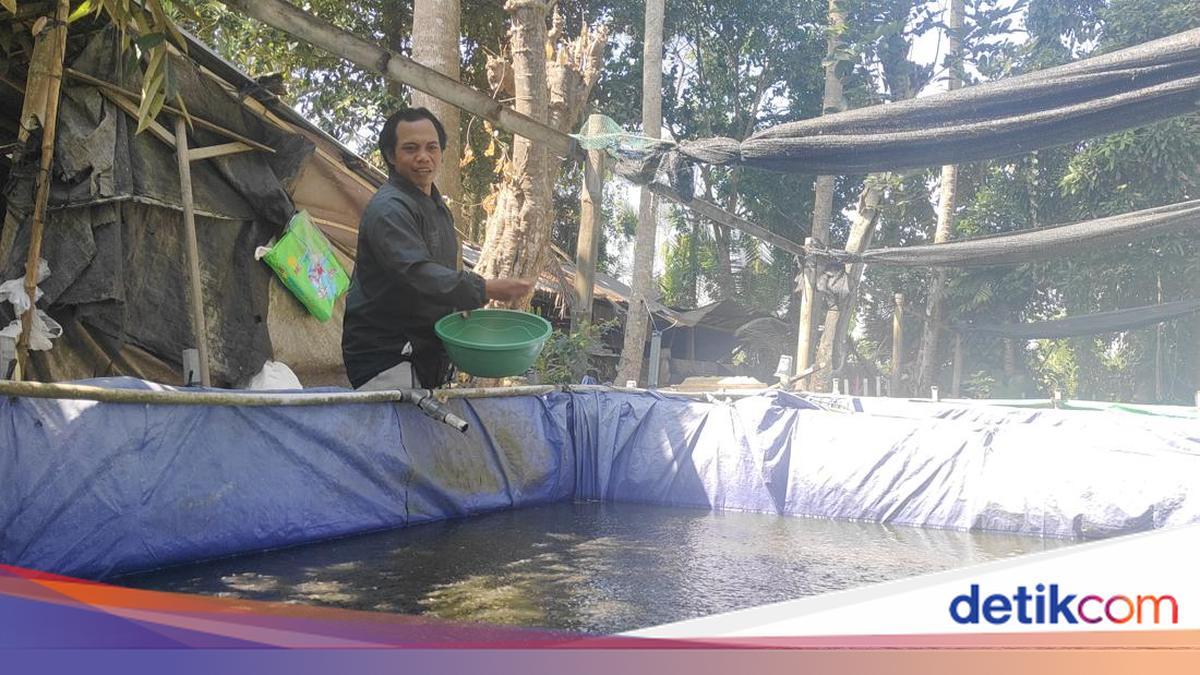
Draining pond water is one of the routines for I Nyoman Miasa (35) in the Banjar Panglan Delodan area, Kapal Village, Mengwi District, Badung, Bali. Miasa drains half the pond water every five days. This routine is part of his efforts to care for Sangkuriang catfish fingerlings, a pursuit he undertook after deciding to quit his old profession as a wood carver entirely. Miasa has now successfully changed his life’s direction to become a Sangkuriang catfish farmer. The hatchery business he started in 2017 now generates a turnover of up to tens of millions of rupiah each month. Miasa chose the Sangkuriang catfish variety because of its longer body shape and stronger resistance to disease. “I was interested in catfish farming because the profits are quite good. Starting with the hatchery, I began in 2017,” Miasa said when met at his farm on Sunday (9/8/2026). Miasa’s journey to building a catfish hatchery business began unintentionally in 2012. At that time, he was just trying his luck at growing catfish to size. As time went on, Miasa chose to focus on producing his own fingerlings with initial capital of tens of millions of rupiah. “Initially, I tried raising 3,000 fish for grow-out, and eventually tried fingerling production. The initial capital was Rp17 million,” M said. With that capital, Miasa built four simple ponds capable of accommodating an initial production of around 70,000 fingerlings. He obtained superior quality broodstock through the help of a friend who brought them directly from West Java. The self-taught learning process was not without obstacles. In the early trial period, Miasa failed due to a lack of experience. Now, he manages ten active ponds with a capacity ranging from 40,000 to 50,000 fingerlings per pond, or a total of up to 315,000 fingerlings. From this capacity, Miasa is able to supply the needs of grow-out farmers in various regions of Bali. “The market covers almost all of Bali, from Badung, Gianyar, Klungkung, to Singaraja and Tabanan. Each month we can fulfil 160,000 fingerlings,” said the man born in 1989. Miasa’s catfish fingerling sales system is calculated based on length per fish, starting from sizes of 4 centimetres (cm) to 9 cm. The price set applies a multiple of Rp 50 per cm, starting from a base price of Rp 200 for a 4 cm size. Although considered successful, Miasa’s catfish hatchery business is not free from the threat of seasonal diseases, such as white snout and stunting. These skin and curled whisker disease attacks usually become rampant during extremely hot weather. “Usually, white snout disease starts with curled whiskers, then the mouth becomes reddish. It usually happens during very hot weather seasons,” Miasa explained. Besides disease factors, another obstacle Miasa faces is changes in pond water quality during the rainy season and transitional cold weather. Unstable water acidity (pH) levels demand extra care to keep the pond temperature stable. “Water control must not let it become too dark green; every 5 days, drain 50% and add fresh well water,” Miasa explained. The challenges for farmers are increasing along with the soaring prices of factory-made pellet feed and silkworms on the market. The increase in feed prices by around Rp 10,000 to 15,000 from the normal price automatically drives up monthly operational costs. For consumption, fingerlings aged 0 to 20 days rely on natural feed in the form of silkworms, whose price has now risen to Rp 10,000 per bowl. Total monthly feed expenditure can reach tens of millions of rupiah. “Last month I spent Rp 8.7 million on silkworms, and then Rp 15 million on pellets. Per day, we use 15 kilograms of feed,” Miasa explained.