
Stories of Change from the Regions: PLN's TJSL Programme Delivers Benefits for Communities and the Environment
The seawater off the coast of Tanjung Seloka Village, Kotabaru Regency, South Kalimantan, is once again a source of hope for its residents. Amid the activities of fishermen preparing crab traps, a story of gradual change is unfolding. Where once catches were simply sold as they were for modest prices, the crabs are now cultivated and fattened before being marketed. Their value has increased, incomes have become more stable, and the coastal ecosystem that sustains their livelihoods is being preserved.
This transformation has been felt directly by Irhamsyah, Head of the “Seloka Crabs” Fishermen’s Group. According to him, the community no longer relies solely on daily catches but has begun managing marine resources in a more sustainable manner. Through PLN’s Desa Berdaya TJSL Programme, the community has received assistance in cultivating and fattening soft-shell crabs, utilising fly ash and bottom ash (FABA) for artificial reefs and fish houses (bioreef blocks), environmental education, tree planting, and support for production facilities for Micro, Small, and Medium Enterprises (MSMEs).
“We used to just sell the crabs as they were, small in size and low in price. Now, after being cultivated and fattened, their value is much higher and the yield is more predictable,” Irhamsyah explained. For him, the biggest change is not only seen in the increased income of the fishermen’s group. The community’s awareness of the need to protect the sea and coastal areas as a source of life has also grown. “If the sea is preserved, we are confident that the community’s livelihood will continue. Now we are not only thinking about today’s catch, but also how marine resources will remain for our grandchildren later,” he said.
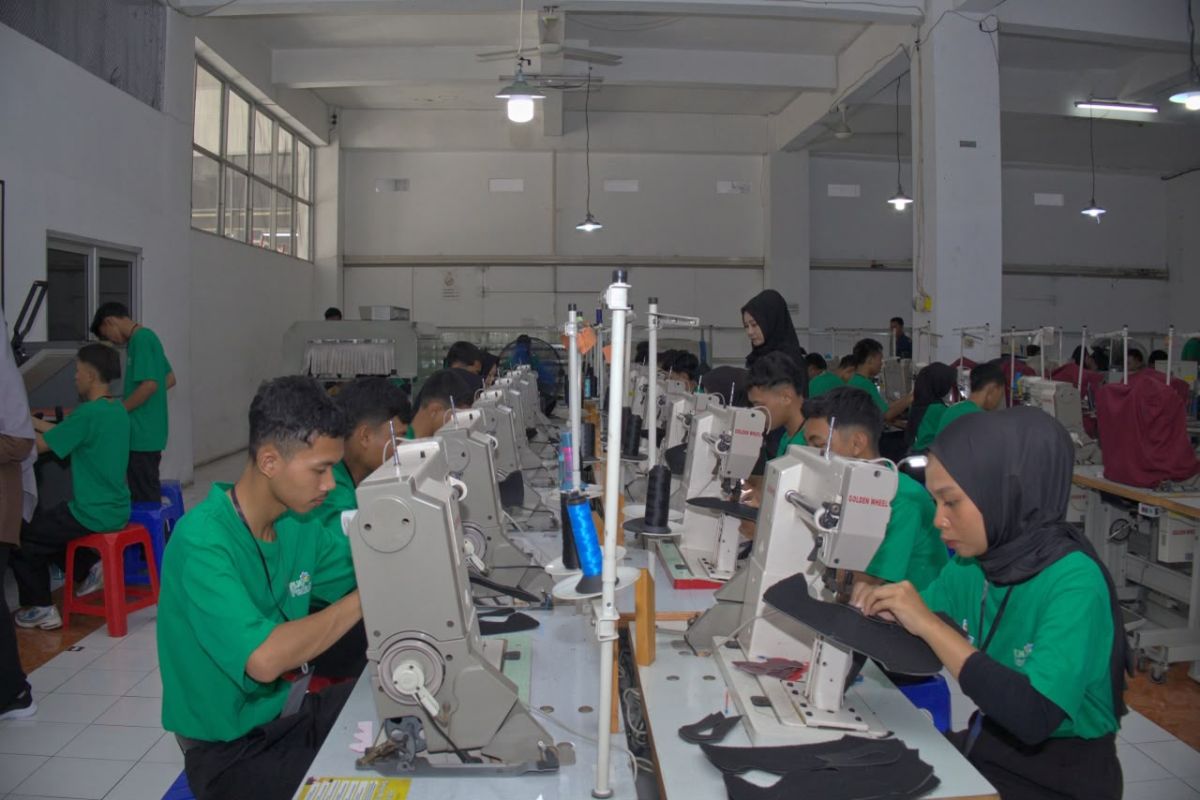
A similar story of change is unfolding in Semarang, Central Java. For many vocational high school (SMK) graduates and people from underprivileged families, finding a job is often no easy matter. The skills they possess do not always match industry needs, while job opportunities are increasingly competitive. Through PLN’s Textile and Footwear Industry Human Resources Training Programme, hundreds of participants have received industry-based training and the opportunity to be directly placed into jobs at a number of large-scale textile and footwear companies in Central Java.
“This programme gave me the chance to prove that we are also capable of competing if given access to learning and opportunities. After attending the training, I am more optimistic about the future because I now have a job and an income to help my family,” said Nawang Dwi Prasasti, one of the programme participants. Central Java Governor Ahmad Luthfi also appreciated the collaboration and PLN’s initiative in expanding job opportunities for the community. “This synergy between PLN and the Central Java Industry and Trade Office is a concrete example of the collaboration we need. This programme does not just provide skills training, but also guarantees job placement. This has a very positive impact on economic growth and community welfare, especially in Central Java,” he said.
These two stories are part of various community empowerment efforts carried out by PLN through its TJSL programme. Throughout the first half of 2026, a total of 696 programmes were realised, reaching 301,779 beneficiaries across various regions through activities focused on education, environmental conservation, and the development of Micro and Small Enterprises (MSEs).
PLN President Director Darmawan Prasodjo stated that the TJSL programme is designed not merely to carry out social activities, but to deliver a sustainable impact that can be felt by the community through a Creating Shared Value (CSV) approach. “PLN’s TJSL programme is designed based on Creating Shared Value to produce real, measurable, and sustainable impacts. Therefore, we design each programme to provide broad benefits for the community, improve quality of life, strengthen economic independence, while supporting the national development agenda,” Darmawan said.
PLN Director of Legal and Human Capital Management Nurlely Aman explained that PLN prioritises three programme sectors in implementing TJSL: education, environment, and MSE development. Throughout the first half of 2026, PLN implemented 215 programmes in the education sector, reaching 41,517 beneficiaries. In the environmental sector, 245 programmes were also carried out to support ecosystem protection, reforestation, and improved access to clean water and sanitation. Meanwhile, in the MSE development sector, 214 programmes involved 4,316 business actors, created 9,148 jobs, and provided benefits to 46,520 community members through the development of State-Owned Enterprise Houses (Rumah BUMN), electrifying agriculture, electrifying marine, and business mentoring to help enterprises scale up. “Ultimately, the success of a programme is not only seen from the number of activities carried out, but from the growing number of people who have the opportunity to develop, an environment that is increasingly preserved, and the birth of sustainable economic independence,” Nurlely concluded.
Source: jawawa.id (https://jawawa.id/newsitem/stories-of-change-from-the-regions-plns-tjsl-programme-delivers-benefits-for-communities-and-the-environment-1786679657)
Originally published by Antara (Indonesian) (https://www.antaranews.com/berita/5693724/cerita-perubahan-dari-berbagai-daerah-program-tjsl-pln-hadirkan-manfaat-bagi-masyarakat-dan-lingkungan), translated from Indonesian