
Stop Photocopying ID Cards: Such Practice Violates Data Protection Law
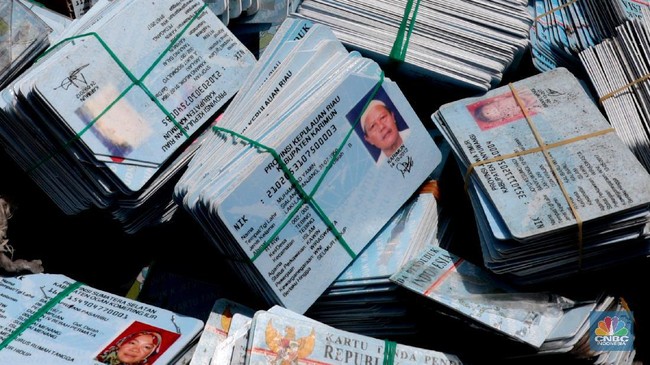
The long-standing habit of the public and various institutions requesting photocopies of electronic ID cards (e-KTP) for administrative purposes is now under intense scrutiny. Through the Directorate General of Population and Civil Registration (Dukcapillary) of the Ministry of Home Affairs, the government has issued a firm appeal for all agencies, both public and private, to immediately stop the practice of physical duplication of e-KTPs.
This directive is based on the fact that photocopying population documents is considered a violation of the provisions within the Personal Data Protection Law (UU PDP). The Director General of Dukcapil, Teguh Setyabudi, explained that the electronic identities of Indonesian citizens are designed with a sophisticated system. Each e-KTP contains a specialised chip that securely stores the owner’s data, which can only be accessed using a card reader device.
“The utilisation of e-KTP cannot be done solely by our side from agencies related to Dukcapil. There are certainly user agencies involved. The e-KTP is equipped with sophisticated technology, a chip. The data is stored within that chip,” Teguh stated recently.
Consequently, Teguh emphasised that the data verification process should be conducted digitally through a system-to-system mechanism, rather than manually, which poses a risk of data leaks. He added that photocopying e-KTPs is no longer necessary and constitutes a violation of the PDP law, as card readers are available to read the chip directly.
To ensure the success of this initiative, Dukcapil continues to encourage commitment from all user institutions to perform digital data matching. This effort is part of a massive acceleration of digitalisation being prepared by the central government. Currently, cross-sectoral coordination is being tightened, involving various strategic committees and ministries, including the Government Digital Transformation Acceleration Team, the National Executive Board (DEN), the Ministry of Communication and Digital, the Coordinating Ministry for Maritime Affairs and Investment, Bappenas, and the National Cyber and Crypto Agency (BSSN).
Tegu hopes this extensive inter-agency collaboration will create a much safer, modern, and optimal ecosystem for utilising population data for all public and private service needs.
Regarding the threat of sanctions, it is important to note that Indonesia possesses a strong legal framework for data security via Law Number 27 of 2022 concerning Personal Data Protection (UU PDP). Article 65 of this law clearly prohibits the illegal dissemination of citizens’ personal data. For parties—whether corporations, agencies, or individuals—who persist in violating these rules, the criminal sanctions are significant. Referring to Article 67 of the UU PDP, violators face a prison sentence of up to five years and/or administrative fines reaching a maximum of Rp 5 billion.
Source: jawawa.id (https://jawawa.id/newsitem/stop-photocopying-id-cards-such-practice-violates-data-protection-law-1780814725)
Originally published by CNBC Indonesia (https://www.cnbcindonesia.com/tech/20260605145033-37-740451/jangan-lagi-fotokopi-ktp-ternyata-melanggar-undang-undang), translated from Indonesian