
Stimulating Investment and Business in Two Regions
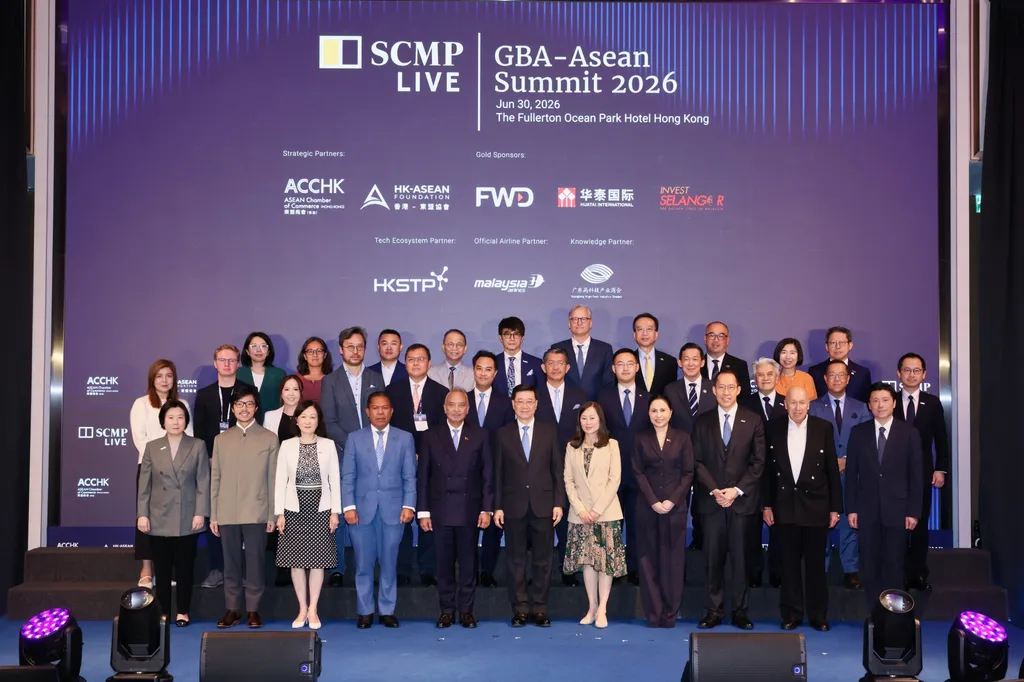
Economic cooperation between China’s Greater Bay Area (GBA) and Southeast Asian nations has continued to advance since its launch in 2025. The establishment of the ASEAN Chamber of Commerce Hong Kong (ACCHK) is part of this progress in relations. The chamber is expected to serve as a bridge to strengthen trade and investment ties between the GBA, Hong Kong, and ASEAN. For Indonesia, the formation of the chamber means not only closer economic relations with Hong Kong but also opens opportunities to attract a more diverse range of investors from the GBA. The Greater Bay Area, located on the southern coast of mainland China, comprises the Hong Kong Special Administrative Region (SAR), Macau SAR, and nine cities in Guangdong Province. The GBA is estimated to be home to 90 million people by 2030, and its economy was valued at 25 trillion US dollars last year. The development of the GBA is part of a national strategy proposed and implemented by President Xi Jinping, focusing on innovation-based development and a commitment to reform and openness. Initially designed to enhance cooperation between Guangdong, Hong Kong, and Macau, the area has evolved into one of China’s most dynamic business and economic centres and one of the world’s largest hubs for manufacturing, technology, and innovation. Speaking at the opening of the GBA-ASEAN Summit 2026, Hong Kong Chief Executive John Lee noted the innovation cluster spanning Hong Kong, Shenzhen, and Guangzhou, which is ranked among the top global innovation clusters. Suwito, Chairman of the Bilateral Committee for Hong Kong and Macau at the Indonesian Chamber of Commerce and Industry (Kadin), highlighted that the GBA’s strengths open opportunities for Indonesia to attract a wider variety of investors, supported by the establishment of the ACCHK. In the manufacturing sector, Indonesia is targeting investment in electric vehicles and related battery ecosystems from the GBA. Digital sector investment is also being pursued, which may take a different form from manufacturing. Suwito explained that digital investments could involve a small office in Indonesia managed from a headquarters in Shenzhen. He stressed the importance of promoting Indonesia in Shenzhen, highlighting the country’s status as the largest ASEAN nation with a large, young population and approximately 220 million internet users. Kadin also expects investment from Hong Kong, which is already among the top three sources of investment for Indonesia. Investment from Hong Kong-registered legal entities is reportedly higher than from those registered in mainland China, despite China’s much larger economy. Proactive efforts are needed to boost investor and market confidence in Indonesia to attract more investment. The opportunities extend beyond Indonesia to the entire ASEAN region. John Lee stated that Hong Kong is keen to strengthen cooperation with ASEAN, its second-largest trading partner for the past 16 years, with plans to incorporate this into the government’s five-year work plan. Sectors of focus include technology, innovation, finance, investment, and human resources. In 2025, merchandise trade volume between ASEAN and Hong Kong reached 214 billion US dollars, a 29 percent increase from 2024, while services trade was valued at 20 billion US dollars in 2024. Investment has also risen, with Hong Kong’s outward investment to ASEAN increasing by 54 percent since the signing of a free trade and investment agreement nearly a decade ago. Lee cited Hong Kong’s advantages, including a simple tax system, free flow of capital, goods, information, and people, and strong intellectual property protection. In innovation, Hong Kong, together with Shenzhen and Guangzhou, excels, while in fintech, it offers expertise in smart city solutions and digital infrastructure that can be shared with ASEAN for mutual benefit. Daryl Ng, Chairman of the Hong Kong-ASEAN Foundation and founder of the ACCHK, added that ASEAN, home to nearly 700 million people, plays an increasingly important role in global supply chains, advanced manufacturing, and the green energy transition.