
Still a Mystery: Why Kim Jong Un Keeps His Mother a Secret
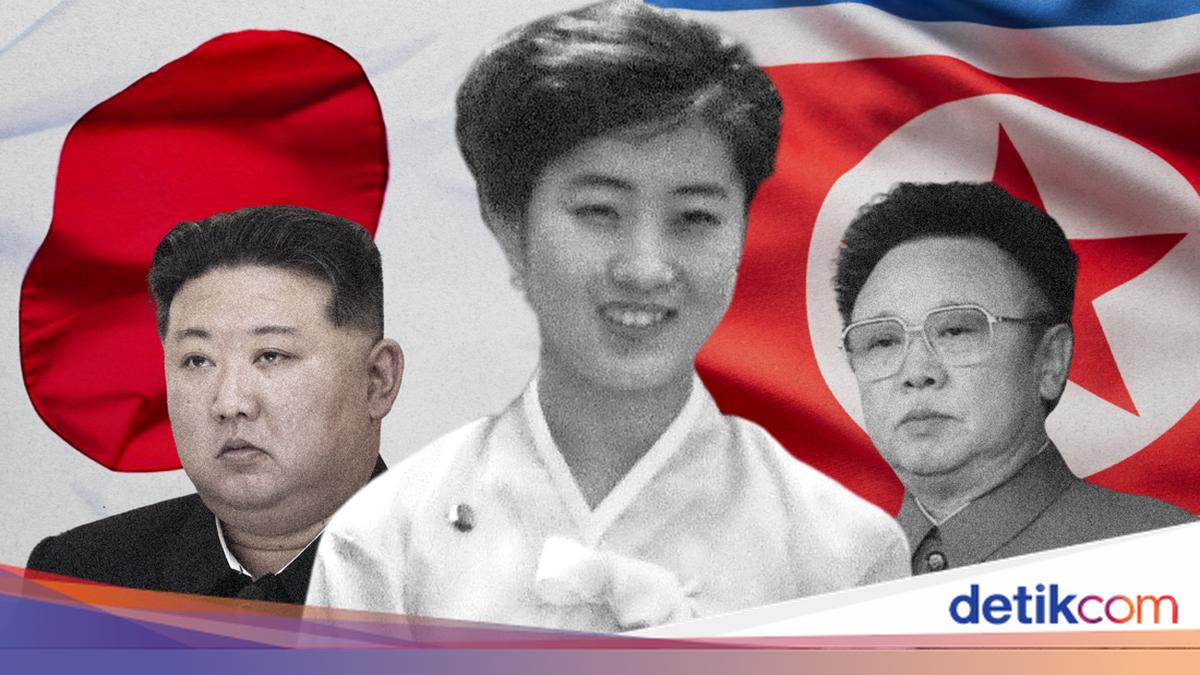
Ko Yong Hui, the mother of Kim Jong Un, remains largely unknown to the public, with no formal honours or commemorations dedicated to her memory. This stands in stark contrast to Kang Pan Sok, the mother of North Korea’s founder Kim Il Sung, and Kim Jong Suk, the mother of Kim Jong Il, both of whom are revered as ‘Mothers of Korea’.
The differing treatment of Ko Yong Hui is believed to be due to her perceived low social class and her status as a concubine. Analysts suggest that revealing these facts could jeopardise the stability of the regime. Her name is notably absent from North Korean state media.
Ko was born in Osaka, Japan, in 1952. Her parents originated from Jeju Island in South Korea, a territory classified as enemy territory by the North. Her family belonged to the ‘Zainichi Korea’—ethnic Koreans residing in Japan, many of whom were descendants of labourers brought to the peninsula during the Japanese occupation from 1910 to 1945. In North Korea’s rigid social hierarchy, the Zainichi Korea are classified as the ‘wavering class’, positioned between the core and hostile classes, and are subject to intense state surveillance.
Upon returning to North Korea, such individuals were often viewed with suspicion and envy, as they were perceived to bring wealth and goods from a capitalist neighbouring nation. They were often labelled ‘jjaepo’, a derogatory term for those considered tainted by dangerous foreign ideologies. Her family was part of the approximately 93,000 Koreans who moved from Japan to the communist state between 1959 and 1984 under the ‘Heaven on Earth’ campaign.
Dr Jeung Young-tae of Dongyang University explains that North Korea employs a ‘system of responsibility based on relationships’, where citizens can be punished for the actions of their family members. Furthermore, analysts note that North Korean society operates under a caste-like system known as ‘songbun’, where one’s status, rights, and life opportunities are determined by their family’s loyalty to the regime.
As she matured, Ko reportedly escaped the hardships facing the Zainichi Koreans due to the interest of then-leader Kim Jong Il. While Kim never publicly introduced his partners, intelligence suggests he was married to Kim Young Sook, the daughter of a high-ranking military official, in an arranged marriage sanctioned by Kim Il Sung. However, Yoji Gomi, a Japanese journalist, notes that Ko, a member of the Mansudae Art Troupe, captured Kim Jong Il’s affection through her natural beauty and dancing talent. Although her relationship was not officially recognised, Gomi describes her life as a ‘Cinderella story’.
While Kim’s official wife resided in Pyongyang, Ko and her three children were stationed approximately 210 km away in the coastal city of Wonsan. Kim Hyung-su of the Northern Research Association suggests that Kim Jong Un is essentially the ‘illegitimate child’ of Ko Yong Hui, noting that since the ‘Paektu bloodline’ is considered sacred, the idea of the leader being the son of a ‘jjaepo’ is unthinkable. Furthermore, children born out of wedlock face severe stigma in North Korea due to deep-seated Confucian values regarding legitimacy and filial piety.
Some experts believe Ko Yong Hui played a role in helping her son ascend to power. Her placement in Wonsan provided proximity to Japan, allowing her to utilise ferry routes to obtain goods from Japan. Gomi also notes that Ko frequently travelled to Japan privately and taught her children the Japanese language. Kenji Fujimoto, a former sushi chef for Kim Jong Il, wrote that Kim Jong Un is proficient in singing Japanese songs and admires Japan’s advanced economy.
Defector Ryu Hyun-woo, in his book ‘Kim Jong Un’s Secret Vault’, states that Ko Yong Hui was never recognised as a daughter-in-law by Kim Il Sung. Nevertheless, she gained Kim Jong Il’s trust, acting as a de facto First Lady by accompanying him on military inspections and influencing his inner circle. Dr Cheong Seong-chang of the Sejong Institute notes that a documentary regarding her was only shown to senior party officials in 2012, but after it leaked via smuggled USB drives, the regime moved quickly to suppress the information to prevent questions regarding the regime’s legitimacy.