
Still a Mystery: Where Is Aung San Suu Kyi?
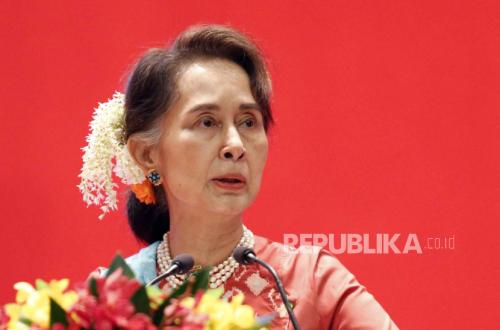
Where is Aung San Suu Kyi? The question may sound simple. Yet, to this day, no one outside Myanmar’s ruling circle can answer it with certainty. Aung San Suu Kyi, who was born on 19 June 1945 and is now 81 years old, is known to remain in the custody of the Myanmar military junta. However, there is no independent evidence regarding her health, her location, or even whether she is still alive. The issue for the world is not merely the fate of a Nobel Peace Prize laureate and former civilian leader of Myanmar, but why the answer to such a fundamental question cannot be independently verified.
Aung San Suu Kyi was last seen in public at the conclusion of her trial in 2022. Since then, she has practically vanished from the world’s view. Her lawyers are no longer permitted to meet her. Her family has lost direct contact. Foreign diplomats, the United Nations, ASEAN, and independent media have all been denied access. For nearly four years, all information regarding her has come solely from the Myanmar military government and cannot be verified by any other party.
This lack of information has driven her son, Kim Aris, to launch an international campaign. In recent months, he has met with heads of state, foreign ministers, diplomats, and various international organisations with one simple request: that the Myanmar government provide proof that his mother is alive or allow independent access to ascertain her condition. For him, the uncertainty itself has become an immense burden.
Amidst various speculations, the Myanmar government has stated that Suu Kyi has been moved from prison to house arrest on humanitarian grounds. The junta has also conveyed that her condition is good and that she will be properly cared for. However, to date, there is no photograph, video, or direct meeting that can confirm this claim. Even a photograph that was once published has been questioned for its authenticity, and it cannot be determined when it was taken.
This situation has once again drawn the attention of the international community. Reuters reported on 12 July 2026 that during an informal meeting of ASEAN Foreign Ministers with the Myanmar Foreign Minister in Bangkok, the ASEAN Special Envoy, Maria Theresa Lazaro, requested direct access to verify Aung San Suu Kyi’s condition. However, by the meeting’s end, the Myanmar government had still not granted access. ASEAN has stressed that dialogue with Myanmar is not intended to legitimise the junta, but rather is part of efforts to push for the implementation of the Five-Point Consensus agreed upon by ASEAN leaders after the 2021 military coup. This consensus calls for an end to violence, inclusive dialogue, the appointment of an ASEAN special envoy, the provision of humanitarian assistance, and access for the ASEAN envoy to meet all concerned parties.
More than five years after the coup, however, the implementation of the Five-Point Consensus remains far from expectations. Several pro-democracy groups in Myanmar have even criticised ASEAN’s approach, arguing it has yet to produce tangible progress. Regardless of these differing views, one fact remains unchanged: to this day, no one outside the Myanmar government’s circle can independently ascertain Aung San Suu Kyi’s condition.
Why does the uncertainty surrounding Aung San Suu Kyi matter to the world? The answer is not solely because she is a Nobel Peace Prize laureate or a former head of government. In its 1 July 2026 edition, the Wall Street Journal even used the question ‘Where Is Aung San Suu Kyi?’ as its headline. The question reflects the reality that her whereabouts and condition still cannot be independently verified. Thus, the issue has shifted from a purely humanitarian concern to a matter of information credibility and international diplomacy.
The absence of verifiable information has given rise to various speculations. Some suspect the junta cannot show Suu Kyi because her health is extremely poor, with some even speculating she may have already died. Conversely, some Myanmar experts argue that if Suu Kyi had indeed passed away, it would be very difficult for the junta to conceal that fact in the long term. To date, both views remain in the realm of conjecture, as there is no independent evidence to confirm or refute either.
Interestingly, The Economist, in its 18 July 2026 edition, did not conclude that Aung San Suu Kyi has died. Instead, the magazine highlighted the absence of verifiable proof of life for nearly four years. Furthermore, The Economist raised the possibility that the secrecy surrounding Suu Kyi is not solely related to security or health factors, but is also part of the junta’s political calculation. The logic is understandable. If Suu Kyi were to reappear in public in good health, she could potentially revive a symbol of resistance against military rule. Conversely, if her condition turned out to be very poor, international sympathy for her could surge again and increase pressure on the junta. By granting no one access, the military government retains full control over information about her. In such a situation, uncertainty is not merely a consequence of secrecy, but can be a deliberate part of the junta’s political calculus.