
Stepping Down for the Sake of the Law
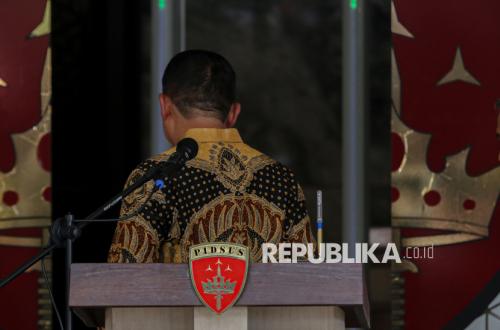
In the middle of the sea, a captain sometimes makes decisions that are not easily understood by the passengers. He steps down from the bridge, not because the ship is certain to sink, but so that the entire crew can work to save the ship without being overshadowed by debates about him. If the ship eventually survives, everyone will be grateful. If it turns out the ship was indeed leaking, the cause will be investigated later. But in the world of seafaring, keeping the ship sailing is often more important than keeping a captain standing on the bridge. That metaphor came to mind when I read the news that Febrie Adriansyah had resigned from his position as the Junior Attorney General for Special Crimes (Jampidsus). He assumed this position on 10 January 2022, five months after serving as the Head of the DKI Jakarta High Prosecutor’s Office (Kajati) on 29 July 2021. Febrie’s resignation was announced by the Head of the Attorney General’s Office Legal Information Centre in the early hours of Saturday with very carefully chosen words: ‘accepting the resignation’, ‘maintaining integrity’, ‘objectivity’, and ‘neutrality’. The choice of words itself is a message. In institutional communication, diction often speaks louder than lengthy sentences. Over the past few days, public attention has been focused on the search of Febrie’s private residence in Sentul, the seizure of cash and gold bars by National Police investigators, and various speculations filling social media. Now, amid the ongoing investigation, he has chosen to relinquish his position. Interestingly, the Attorney General’s Office did not announce that Febrie had been dismissed. The official statement instead said that the Attorney General had accepted his resignation. In the language of state administration, this choice of words is no small matter. It indicates that to this day, there has been no official statement naming Febrie as a suspect or declaring that he has committed a criminal act. Legally, the presumption of innocence remains in effect. Even more interesting is the reason given by the Attorney General’s Office. The resignation was described as a form of commitment to maintaining the integrity, objectivity, and neutrality of the legal process while the police investigation is ongoing. That sentence deserves to be underlined. What is being safeguarded, according to the Attorney General’s Office, is not primarily an individual’s reputation, but the honour of the legal process itself. For if the process is trusted, the final verdict will be more easily accepted, regardless of who is later found right or wrong. In a state of law, justice must not only be upheld but must also be seen to be upheld without the shadow of a conflict of interest. The Attorney General’s Office’s stance is also interesting because it chose not to enter into the substance of the case. There was no statement that Febrie was guilty. Nor was there any denial of the police investigation. What was conveyed was instead an invitation to respect the legal process and continue to uphold the principle of the presumption of innocence. A day before resigning, Febrie himself appeared before journalists. Interestingly, he did not begin by defending himself, but rather spoke about the institution he led. Almost the entire opening of his press conference contained an affirmation that the Round Building continued to work, that investigations, prosecutions, and the execution of evidence were proceeding according to procedure, and that the quality of every case must be testable, both materially and formally, before the court. In fact, he said, that morning he had still received orders to expedite the case files for several matters with limited detention periods that were of public concern. In other words, the first message he wanted to convey was not ‘me’, but ‘the Attorney General’s Office is still working’. Those sentences now feel like a pause before a major decision. Only after speaking about the institution did Febrie touch on himself. He confirmed that the house in Sentul searched by investigators was indeed his private residence and asserted that the history of its ownership could be traced from the beginning. However, regarding the cash, gold bars, and various items found in the house, he stated that those items did not belong to him.