
Steering Tradition into the Creative Economy Stream
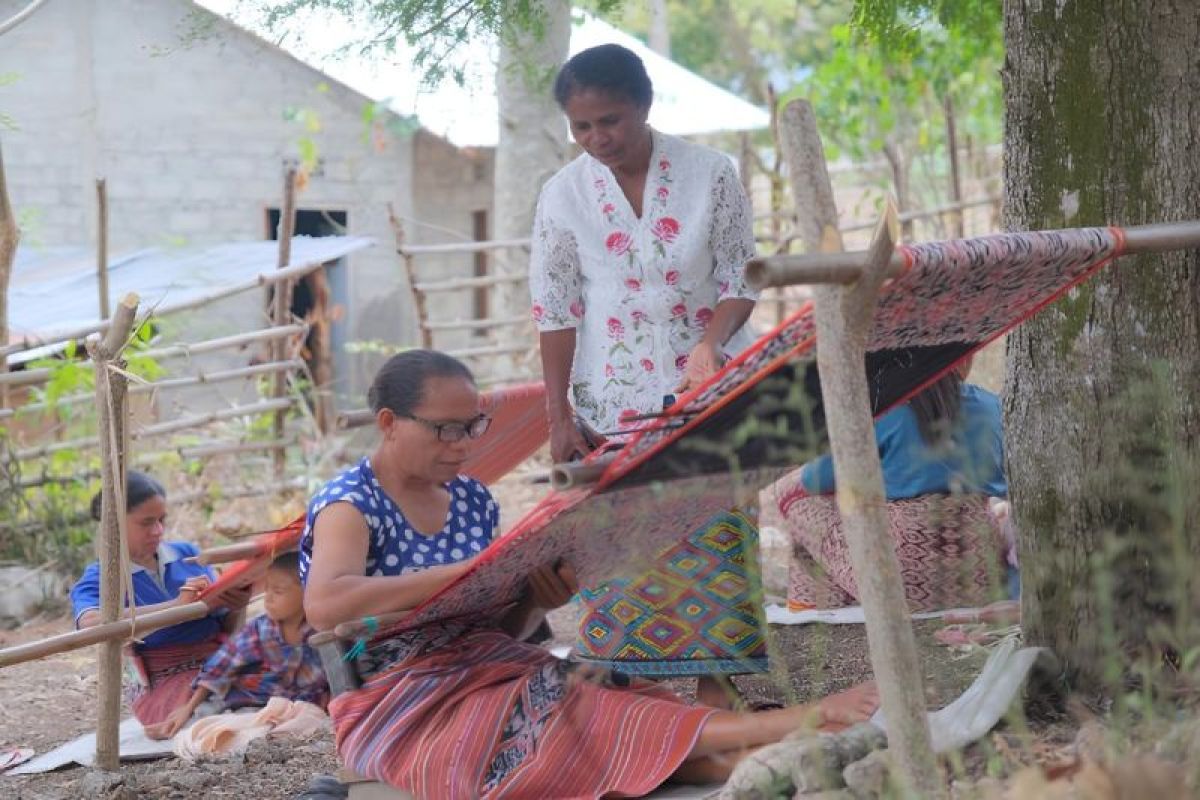
Tradition should not survive solely on the romance of the past or public pity.
There is a recurring paradox in how we treat traditional products. We often demand that artisans maintain the absolute purity of ancestral heritage without compromise, even though surrounding consumption patterns have changed entirely. Batik, weaving, wickerwork, and pottery are treated like sacred relics, where any innovation in form is considered taboo. Grand festivals are held, craft exhibitions are crowded with ceremonies, and awards are distributed to village maestros. However, a fundamental question almost always escapes policymakers: Who will buy these works when their physical form no longer meets modern living needs?
This issue is increasingly urgent because traditional products are not dead artefacts used merely to decorate museum displays. Behind every piece of woven cloth or earthenware bowl lies the lifeblood of a real economy involving fibre farmers, thread spinners, natural dye artisans, labourers, and middlemen in remote villages. When traditional products lose market absorption, it is not just a treasury of local motifs that vanishes. The far more damaging loss is the disruption of livelihoods for thousands of families, the fading of rural employment, and the cessation of artisan regeneration. A tradition that loses its economic function will inevitably lead to natural extinction.
Therefore, it is time to end the obsolete view that positions modernisation as the arch-enemy of tradition. Modernising the function and appearance of products is actually the most rational step to preserve the very life of that culture. Tradition should not live on nostalgia or pity; instead, it must stand tall as a competitive, high-value-added creative industry entity that is sought after for its utility.
Capturing Real Demand
The economic opportunity for products based on local wisdom is vast. Social-Cultural Statistics from the Indonesian Central Bureau of Statistics (BPS) show that almost 90 per cent of Indonesian households have purchased or used traditional products. This finding confirms that domestic purchasing power and appreciation have never waned. However, there is a sharp shift in usage preferences. The data shows that functional traditional products, such as household furniture and herbal remedies, are used by more than half of households. Conversely, purely symbolic or ceremonial crafts are only absorbed by a small fraction of consumers.
On a macro level, the Ministry of Creative Economy notes that the craft and fashion subsectors consistently contribute more than one-third of the national creative economy’s GDP, generating hundreds of trillions of rupiah in exports annually. The market potential is real. The main problem lies in the mismatch of supply. Many regional artisans are still directed to produce goods that are only seasonally relevant or merely decorative souvenirs. Contemporary consumers may be reluctant to wear full traditional attire to the office, but they are enthusiastic about buying blazers with ikat weaving accents, laptop bags made from natural fibres, or ceramic tableware with ethnic nuances.
The key to the sustainability of tradition lies in the courage to preserve its essence while renovating its vessel. The philosophy of motifs, the wisdom of materials, and the precision of techniques are the soul that must be maintained, but the final product form must yield to ergonomics and contemporary tastes. Community empowerment efforts must no longer be trapped in ceremonial approaches that only train production techniques without a clear market absorption map. Training that ignores consumer tastes will only result in piles of unsold goods in village halls.
Transforming the Supply Chain
Another fundamental criticism that needs a structured response is the issue of value chain inequality. For too long, artisans in remote areas have borne the heaviest workload with the thinnest profit margins. The largest economic value-add is instead sucked into major cities where brand owners, fashion designers, and digital platforms operate. Villages are merely used as producers of raw materials or cheap labour, while the monetisation of intellectual property rights is enjoyed by others. This structural inequality makes the artisan profession no longer a promising future for the youth in rural areas.
To reverse this situation, the intervention strategy of the government and creative industry stakeholders must rely on three concrete steps. First, developing integrated design assistance programmes that directly bring industrial designers or professional fashion curators together with village artisan groups. This collaboration aims to translate traditional motifs into wearable goods that meet global minimalist aesthetic standards. Second, establishing business aggregators at the regional level tasked with maintaining quality consistency, size standardisation, and integrating the supply chain into modern retail networks and cross-border marketplace platforms. Third, transforming business financing schemes. Banking institutions and local governments need to facilitate the protection of communal intellectual property rights for unique regional motifs and techniques, which can then be used as collateral for working capital financing. Through the ownership of registered brands and designs, artisans will have a solid legal bargaining position and the right to fair royalties or profit-sharing from every product marketed by national brands. Thus, capital accumulation can flow back into the pockets of village artisans, rather than being exhausted through intermediary distribution channels.
Culture is never static. What we admire today as a masterpiece of ancestral heritage is essentially the best technological innovation and social adaptation of its time. Saving tradition requires the courage to step out of the nostalgia trap.