
Steering the Free Nutritious Meals Programme in the Right Direction
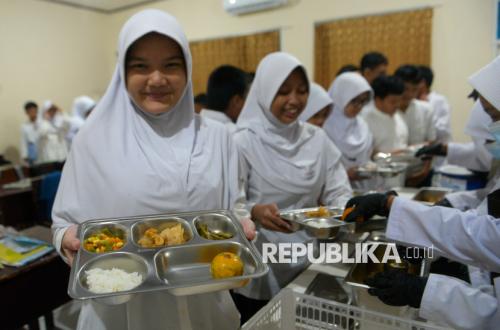
Less than three months after taking office, Indonesian President Prabowo Subianto swiftly launched the Free Nutritious Meals (MBG) programme.
The programme began on 6 January 2025 at 190 locations across Indonesia. Its launch marked a new chapter under Prabowo’s administration and embodied an ambitious vision to build national nutritional resilience and strengthen Indonesia’s human resources in pursuit of the Golden Indonesia 2045 vision.
In practice, however, implementing MBG has proved far from straightforward. Over nearly two years, a range of problems has emerged at every level.
At the top, senior officials at the National Nutrition Agency (BGN), which was entrusted with delivering MBG, have been implicated in corruption.
Former MBG head Dadan Hindayana and his deputies, Sony Sanjaya and Lodewyk Pusung, were arrested by the Attorney General’s Office. Military officials assigned to the BGN were also arrested, including personnel involved in procurement.
The alleged corruption involved substantial sums. In the electric motorbike procurement case, state losses are estimated at Rp863.8 billion.
An audit by the Finance and Development Supervisory Agency (BPKP), released by the Attorney General’s Office in late 2026, recorded total losses of around Rp10 trillion in the management of the MBG programme.
At the grassroots level, MBG operations at numerous locations have been marred by food-poisoning incidents. The Indonesian Education Monitoring Network (JPPI) recorded 43,838 suspected victims across 36 provinces from the programme’s launch in 2025 to the end of August 2026. Of these, 15,735 cases occurred between January and August 2026, including 3,079 in August alone.
The National Agency of Drug and Food Control (BPOM) said that food-poisoning incidents connected to MBG were generally caused by meal-preparation standard operating procedures not being properly followed by Nutrition Fulfilment Service Units (SPPGs).
Some procedures were neglected, including ensuring that food was served soon after cooking; long delays increase the risk of spoilage. In one instance, an SPPG kitchen cooked meals at night but did not distribute them until nearly midday.
“There was a gap of almost 12 hours. Why does failing to meet the standards cause food poisoning? Because the food undergoes denaturation,” BPOM head Taruna Ikrar said.
Cases have also involved unhygienic food storage and preparation. In one example, tempeh was placed next to a toilet.
According to Health Ministry data presented by the National Commission on Human Rights (Komnas HAM), by 12 May 2026 there had been 449 extraordinary food-poisoning events linked to MBG, involving 38,023 victims across 36 provinces and 221 regencies and municipalities.
The carelessness of some SPPGs points to institutional failures. How could unfit SPPGs have been allowed to distribute meals?
The BGN has acknowledged problems at SPPGs. By August, it had closed 504 SPPG kitchens for failing to meet sanitation and hygiene standards.
By September, a further 1,999 SPPG kitchens had been temporarily closed because they had not registered for a Certificate of Eligibility for Sanitation and Hygiene (SLHS) with their local Health Office.