
STB Director: Manage spending to avoid reliance on paylater
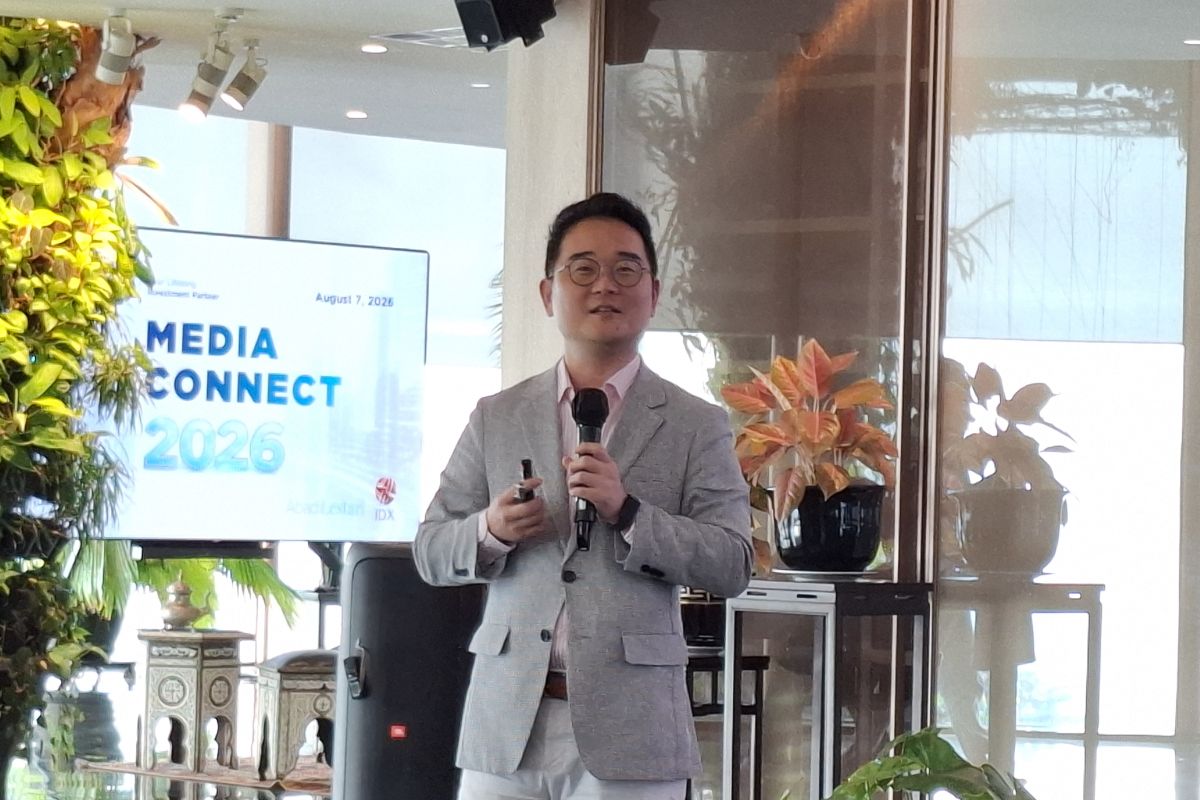
Jakarta (ANTARA) - Tae Yong Shim, Managing Director of investment holding company and financial services provider PT Samuel Tumbuh Bersama (STB), has said that managing expenditure is key to preventing the public from becoming dependent on consumer debt, including paylater services, to meet monthly needs.
Shim advised the public to ensure that spending does not exceed income as one of the basic principles of personal financial planning.
“First of all, in terms of financial planning, you must ensure that your expenditure is within the limits of your income,” Shim said at the Samuel Sekuritas Indonesia Media Connect event in Jakarta on Friday.
According to him, debt should not be continuously used to cover the gap between income and monthly consumption expenditure.
If a person decides to borrow, he continued, the use of those funds should ideally be balanced by the formation of assets that have economic value and are capable of generating income.
“If you decide to borrow money, there must be a commensurate asset and that asset must generate income,” he said.
These views were expressed as the use of buy now pay later (BNPL) services in Indonesia continues to rise.
The Financial Services Authority (OJK) recorded that the outstanding BNPL balance in the banking sector reached Rp30.1 trillion in May 2026, growing 37.72 percent year-on-year, with the number of accounts reaching 31.76 million. Its share remains at 0.34 percent of total banking credit.
Meanwhile, in the financing company industry, BNPL financing reached Rp13.18 trillion in May 2026, growing 53.78 percent year-on-year. The gross non-performing financing (NPF) ratio was recorded at 3.44 percent.
Shim assessed that expenditure is one of the financial elements that individuals can control more readily than investment return movements.
For this reason, in the material presented, he cited the need to evaluate various expenditure items, ranging from housing, daily necessities, transport, food, communications, insurance and entertainment to loan interest payments.
The simulation in the material used an example of monthly income of Rp20 million and expenditure of Rp16 million, leaving a difference of Rp4 million that could be allocated for monthly investment.
According to Shim, the public also needs to determine financial goals based on their time horizon, namely short, medium and long term, then adjust expenditure and investment to the needs at each stage of life.
He also emphasised the importance of building income-generating assets while maintaining investment consistency over the long term.
The need to improve financial management skills is also reflected in the 2025 National Survey of Financial Literacy and Inclusion (SNLIK) conducted by OJK together with Statistics Indonesia (BPS).
The survey recorded a national financial inclusion index of 80.51 percent, while the financial literacy index stood at 66.46 percent. Thus, the public’s level of access to financial products and services remains higher than their level of understanding.
Furthermore, Shim advised the younger generation to get to know various financial instruments gradually, from bonds, shares and mutual funds to protection products, so that they understand their characteristics and risks before placing funds in larger amounts.
“Because at a young age, trial and error, the lessons learned are sometimes more valuable than the investment results themselves,” Shim said.
According to him, such experience can help young people find instruments that suit their respective needs and financial conditions.
He noted that as age and asset values increase, financial decisions also need to be taken with increasingly mature consideration.
Thus, Shim assessed that financial planning is not only about choosing investment instruments, but also about discipline in managing expenditure, using debt in a measured way, building productive assets, and preparing for long-term financial needs.
“Everyone has different goals, but the basic principles are the same. Understand your needs, control your spending, start investing as early as possible, and prepare protection. In financial planning, time is one of the most important assets,” Shim said.
Source: jawawa.id (https://jawawa.id/newsitem/stb-director-manage-spending-to-avoid-reliance-on-paylater-1786121587)
Originally published by Antara (Indonesian) (https://www.antaranews.com/berita/5685136/direktur-stb-kelola-pengeluaran-kunci-agar-tak-bergantung-paylater), translated from Indonesian