
State to Cover Medical Costs for Workers Victimised in Central Jakarta Confinement Case
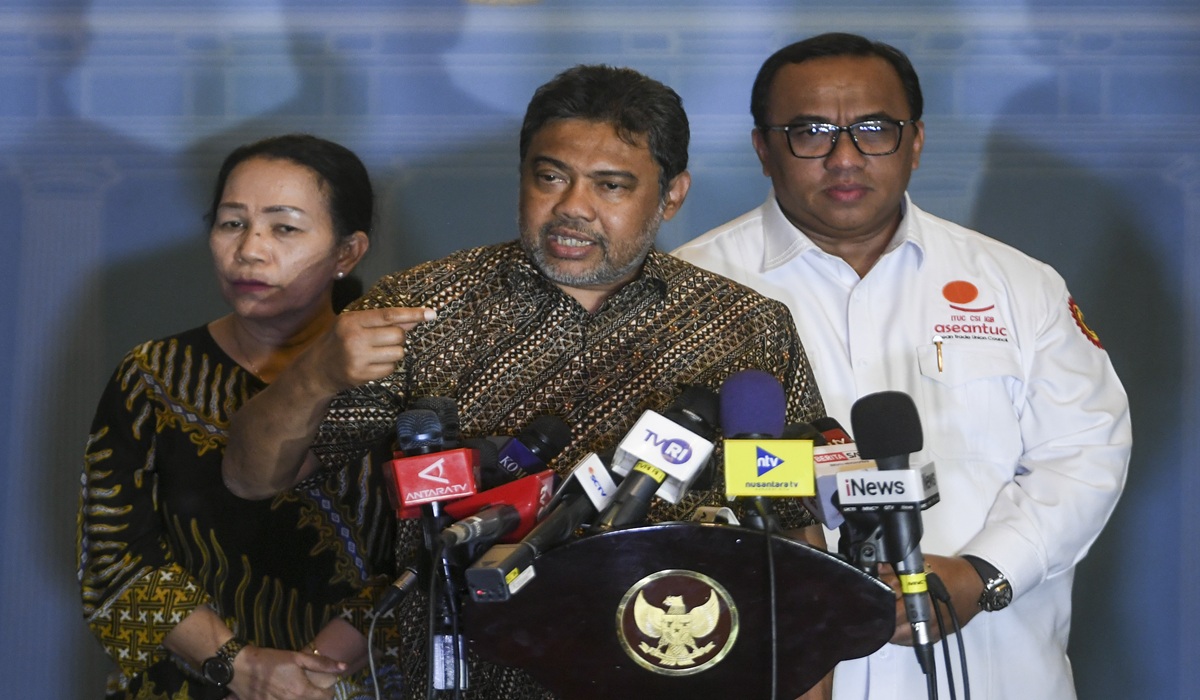
The medical treatment of printing employees who were victims of confinement by their employer in the Senen area of Central Jakarta will be covered by the state. This was conveyed by the Presidential Special Adviser on Employment and Labour Welfare, Said Iqbal, when visiting one of the victims named Tegal at his residence in Kebon Jeruk, West Jakarta, on Wednesday (1/7).
“All medical costs related to this case are the responsibility of the state. All costs will be borne by the government, including if the victims require psychiatric assistance,” he said.
He stated this is to ensure the victims’ rights are not ignored, including their rights to health and employment. The government, Said Iqbal said, has requested that there be no intimidation during the legal process. Currently, the victims are being advocated for by the West Kalimantan Legal Aid Institute (LBH). The alleged confinement and torture case is being supervised by the Metro Jaya Regional Police.
According to him, the act of chaining and confining workers is a criminal offence as well as a human rights violation that cannot be justified. Said Iqbal mentioned he has coordinated with National Police Chief General Listyo Sigit so that the case receives the attention of law enforcement.
“Whoever the perpetrators are must be processed according to the applicable law,” he said.
“Incidents like this must not happen again in a country that upholds the second principle of Pancasila, which is a Just and Civilised Humanity,” he continued.
Said Iqbal also confirmed that the employment rights of the victims will be investigated, from wage rights and social security to the status of their working relationship.
The Central Jakarta Metro Resort Police stated that the motive behind the confinement and abuse case against three printing employees in Central Jakarta was triggered by accusations of stealing cast iron plates worth Rp230 million. The printing business owner, along with several perpetrators, claimed that the victims had to be held responsible for the loss of the items.