
State Secretary: Budget for free nutritious meal programme to be reduced after recalculation
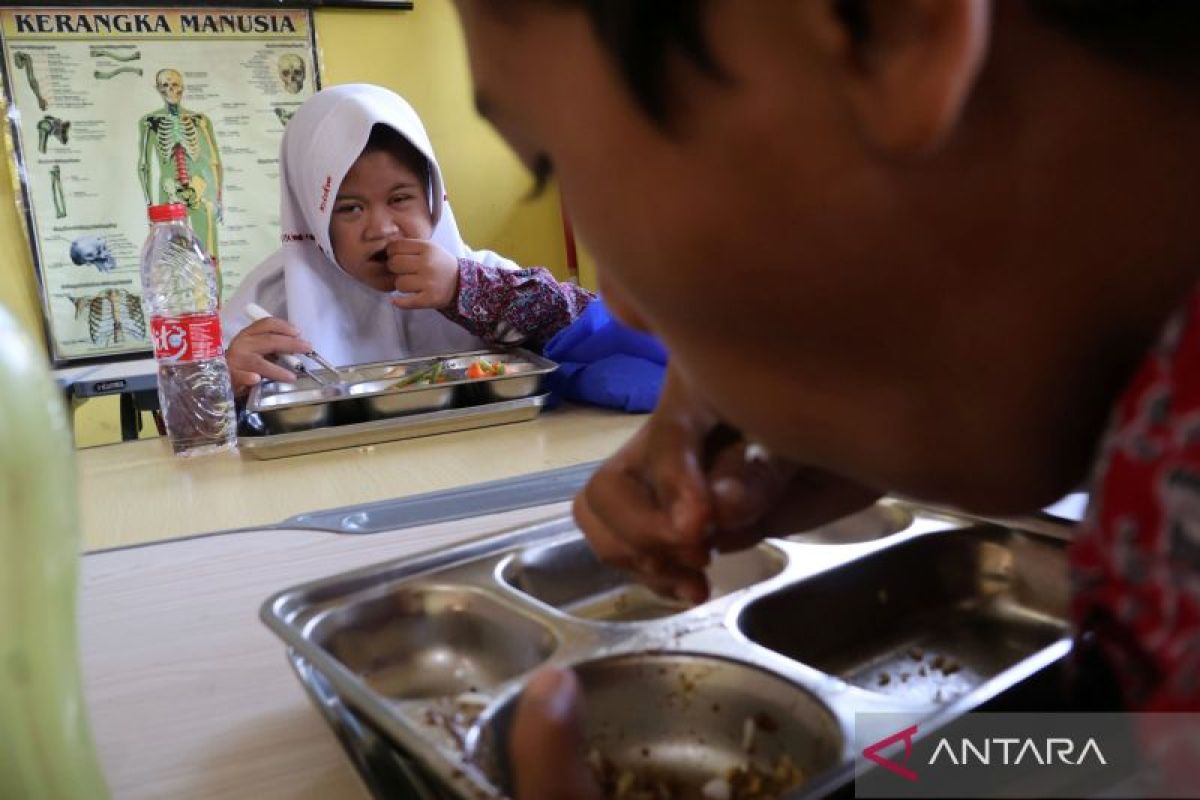
The State Secretary, Prasetyo Hadi, stated that following calculations and improvements in governance, there will be a reduction in the budget required for the Free Nutritious Meal (MBG) Programme.
“It is not a cut, per se, but based on our calculations, we believe there will be a reduction in the budget requirements for this MBG Programme. Therefore, we are requesting time to calculate this alongside the Ministry of Finance and the National Nutrition Agency (BGN). Through this restructuring process, we will be able to more precisely determine the actual total budget needed for the MBG Programme,” he said after a coordination meeting at the Coordinating Ministry for Food Affairs in Jakarta on Thursday.
For the year 2026, the MBG budget has been set at Rp268 trillion. The State Secretary emphasised that the government has agreed on a comprehensive restructuring of the MBG Programme, which is targeted for completion within the next month.
“Regarding the timeline, we aim to move as quickly as possible because there are indeed various clusters of issues. Most aspects are proceeding according to established mechanisms and standard operating procedures (SUT), so those will continue. However, there are certain clusters that we must restructure and rectify, including prioritising underdeveloped, frontier, and outermost (3T) regions so they can benefit from the MBG Programme as soon as possible,” he explained.
Prasetyo added that the government is also working to expand the programme’s beneficiaries to include pregnant women, breastfeeding mothers, and toddlers within the next two weeks.
As part of the restructuring process, the government is also refocusing the list of beneficiaries, which includes reducing distribution to schools that, based on data and priority assessments, do not qualify for the programme.
“There will be a process of determining whether a school is deemed eligible or a priority to receive the MBG, as this has been part of the standard operating procedures from the beginning,” said Prasetyo.
Meanwhile, the Coordinating Minister for Food Affairs, Zulkifli Hasan (Zulhas), revealed that an expansion in the number of Food Service Production Points (SPPG) has led to a potential waste of approximately Rp12 trillion per year.
“The initial plan was for 21,000 points, but there are now 27,877 points. There has been an increase of 6,877 points,” said Zulhas.
Furthermore, the number of SPPG points in 3T regions has expanded from an initial target of 2,000 to 8,617 points.
“A comprehensive restructuring by the Head of the BGN and the new management is necessary to fix this vital programme,” added Zulhas.
In response, the Head of the National Nutrition Agency (BGN), Nanik S. Deyang, stated that the agency is implementing several budget efficiency measures to ensure the programme does not burden state finances, while maintaining the nutritional targets for beneficiaries.
The first step taken is a moratorium on the opening of new service points and kitchens. Currently, there are 27,877 operational kitchen points based on virtual accounts, which will be reassessed to ensure that service capacity aligns with the number of beneficiaries in each region.