
State Revenue Set at 12.4% of GDP, Tax Strategy Outlined in Draft 2027 State Budget
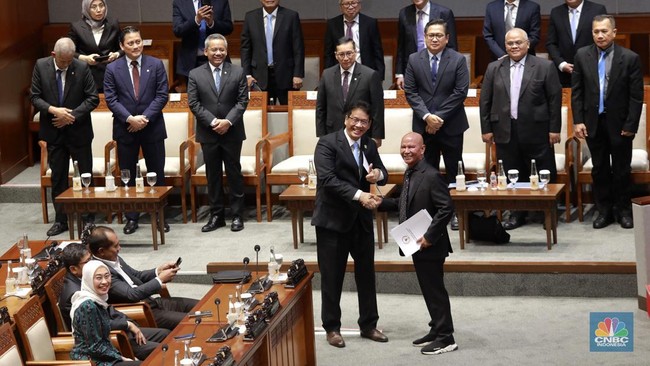
The Working Committee (Panja) drafting the preliminary posture of the 2027 State Budget (RAPBN) between the House of Representatives (DPR) and the government, under the Budget Committee (Badan Anggaran), has agreed on the government’s provisional fiscal posture for next year. According to the committee’s agreement report document, the state revenue target is set in the range of 12.01% to 12.40% of GDP, with state expenditure at 13.81% to 14.80% of GDP. Consequently, the 2027 State Budget deficit is designed to be between 1.80% and 2.40% of GDP, with a primary balance ranging from a surplus of 0.45% of GDP to a deficit of 0.14% of GDP. To achieve the revenue target, tax revenue is designed to be collected in the range of 10.16% to 10.50% of GDP, non-tax state revenue (PNBP) at 1.85% to 1.89% of GDP, and grants at 0.002% to 0.003% of GDP. The document stated that state revenue policy for 2027 is directed towards encouraging a gradual and sustainable increase in state revenue to drive high economic growth. The increase in the state revenue ratio will be pursued through optimising revenue sources, including enhancing the effectiveness of tax administration and improving inclusive service quality, boosting taxpayer compliance, expanding the tax base, and optimising revenue from natural resources while maintaining a conducive investment climate. Other measures include strengthening law enforcement and providing more measured fiscal incentives, as well as aligning with the dynamics of the digital economy, global taxation developments, and the principles of justice and legal certainty. The government will also direct general taxation policies to strengthen ongoing tax reform and harmonisation to support high-value-added sectors, increase revenue and tax ratio through intensification and extensification, and improve tax compliance through IT-based supervision of illegal activities and goods using big data and AI. Further strategies involve joint programmes, ensuring legal certainty including accelerating the resolution of business and investment challenges, and strengthening a conducive and fair digital economy taxation system. Customs and excise policies will focus on reinforcing fiscal management, attracting investment, supporting exports and downstream industries, and optimising special economic zones. Plans also include boosting MSME exports through export clinics and collaboration, enhancing international customs cooperation, and revitalising supervision at sea, borders, ports, and major airports. Efforts to combat illegal trade, illicit excisable goods, narcotics, and transnational crime will be intensified, alongside improving law enforcement and audit effectiveness. Revenue optimisation will be pursued through intensifying excise tariff policies and import duties on certain commodities, extending excise objects, and expanding the base for export duties in line with current economic developments and purchasing power. Non-tax state revenue (PNBP) policy will focus on optimising natural resource management through improved strategies.