
State-Owned Enterprises Too Bloated, FSP BUMN Supports Danantara Streamlining
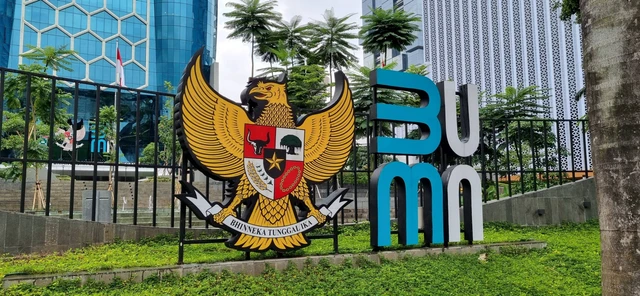
The streamlining programme to restructure State-Owned Enterprises (BUMN), managed by the Danantara Indonesia Investment Management Agency (BPI Danantara), has received support from the Federation of State-Owned Enterprise Workers’ Unions (FSP BUMN Bersatu). This consolidation step is considered vital for building a leaner, healthier, more productive, and collaborative BUMN structure capable of competing on a global level.
The Daily Chairman of FSP BUMN Bersatu, Djusman H. Umar, assessed that the streamlining programme is a crucial part of improving the governance and corporate structure of state enterprises. He noted that simplifying the number of BUMN entities, including their subsidiaries and sub-subsidiaries, should be directed towards eliminating overlapping businesses while strengthening the business focus of each company within its respective industrial ecosystem.
“FSP BUMN Bersatu strongly supports the streamlining programme initiated by BPI Danantara. Existing SOEs must be encouraged to become more productive and collaborative within their respective industrial ecosystems,” said Djusman in a statement on Saturday, 29 August 2026.
The streamlining programme targets a reduction in the number of BUMN entities, which are currently deemed too bloated. From approximately 1,077 entities, the number of companies is targeted to be slashed to around 250 to 350 operational entities.
The restructuring process will be carried out through several schemes, including mergers, liquidations, divestments, vertical consolidations, and the merging of companies with overlapping business activities. So far, approximately 274 to 290 entities are reported to be undergoing restructuring or closure processes. Consequently, the programme aims to eliminate around 652 companies.
In addition to simplifying the organisational structure, streamlining is also expected to generate fiscal efficiency. The government estimates that these steps could potentially save the state budget by up to approximately Rp50 trillion annually.
For FSP BUMN Bersatu, this efficiency figure should not be viewed merely as a cost-cutting measure, but as part of the transformation of state corporations so that the capital and resources held by BUMN can be utilised more optimally.
Amidst the downsizing process, labour issues remain a primary concern. FSP BUMN Bersatu expressed appreciation for the commitment of the COO of BPI Danantara Indonesia, Dony Oskaria, who ensured that the transformation and streamlining processes are not directed towards layoffs (PHK) or staff reductions.
Djusman noted that the commitment to mitigating layoffs is a vital element to ensure that the BUMN transformation process results not only in a more efficient corporate structure but also provides certainty and protection for workers.
He argued that the success of the streamlining programme cannot be measured solely by the reduction in the number of companies or the scale of budget efficiency. The transformation must also be able to create healthier companies so that job sustainability and worker welfare are maintained.
“The commitment of BPI Danantara COO Dony Oskaria regarding mitigation and the absence of layoffs in this streamlining programme deserves high appreciation. For us, corporate efficiency must go hand in hand with worker protection and sustainability,” said Djusman.
Djusman added that, historically, streamlining practices in state corporations are not new. Several countries have undertaken the consolidation and restructuring of state enterprises as part of a strategy to increase productivity, strengthen business focus, and enhance company valuations.
Therefore, he believes Indonesia needs to view BUMN streamlining as a long-term transformation agenda, rather than merely a policy to reduce the number of entities.
“Historically, streamlining programmes by state corporations have been implemented in several countries as a way to drive productivity, strengthen business focus, and increase business valuation within each industry,” said Djusman.
He assessed that merging companies with similar businesses could create greater economies of scale. Meanwhile, companies that no longer hold strategic relevance can be restructured through mechanisms that comply with legal provisions and good corporate governance principles.
On the other hand, companies that are maintained must have a clear business mandate, measurable performance indicators, and the ability to build collaborations with other BUMNs within the same industrial ecosystem.
Efficiency Must Lead to Productivity.
FSP BUMN Bersatu maintains that the ultimate goal of streamlining is not simply to reduce the number of BUMNs. More importantly, restructuring must produce state-owned enterprises that are more productive, competitive, and capable of providing a greater contribution to the national economy.
Therefore, the assessment process conducted by BPI Danantara and the Ministry of BUMN must be carried out in depth, considering business conditions, industrial potential, assets, human resources, and the prospects of each entity.
Djusman emphasised that workers must be placed as a vital part of this transformation process, as the success of a company ultimately depends on the quality and productivity of its human resources.
“Streamlining should not merely be interpreted as a reduction in the number of entities. What is far more important is how companies become healthier, more productive, and capable of growing. If companies grow and become strong, the benefits must return to the workers and the community,” he asserted.
Thus, FSP BUMN Bersatu views the Danantara streamlining programme as a momentum to rebuild the foundation of BUMNs to be simpler in structure, stronger in capital and business, and more productive in contributing to the national economy.