
State-Owned Enterprise Transformation for the Nation
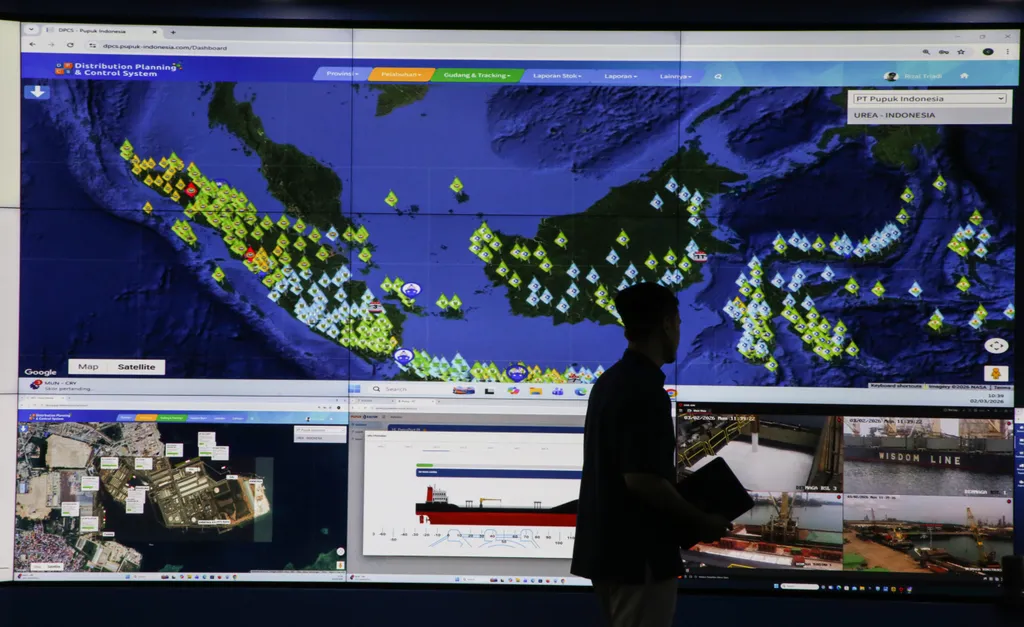
The transformation of state-owned enterprises (BUMN) has entered a new chapter with the establishment of the Daya Anagata Nusantara Investment Management Agency (BPI Danantara) in late February 2025. As an investment body and asset manager for BUMN, Danantara continues to push for transformation to make the enterprises more professional, efficient, and directly impactful on the national economy.
The transformation encompasses strategic decisions, business model changes, organisational restructuring, and optimisation of company fundamentals in line with current business characteristics. Over the past year, the transformation process under Danantara’s umbrella has yielded encouraging profit growth.
Minister of Investment and Downstreaming/Head of the Investment Coordinating Board and CEO of Danantara, Rosan Roeslani, stated that the financial performance of BUMN continues to grow. However, he stressed that BUMN are not merely profit-making machines for the state. “BUMN do not solely pursue profit, but their presence must also be felt by the people in the form of providing equal opportunities, from MSMEs to commercial and corporate levels,” Rosan said in a written statement in Jakarta on Thursday (2/7/2026).
On Monday (29/6/2026), 22 BUMN recorded higher realised profits up to April 2026 compared to April of the previous year. This stellar performance was achieved by, among others, PT Pupuk Indonesia (Persero), PT Pelabuhan Indonesia (Persero), PT Aviasi Pariwisata Indonesia (Persero) or InJourney, and PT Bank Tabungan Negara (Persero) or BTN.
Pupuk Indonesia posted a profit of Rp 4.82 trillion in April 2026, up from Rp 1.59 trillion in April 2025. In the same period, Pelindo recorded a profit of Rp 1.48 trillion from the previous Rp 550 billion, InJourney achieved Rp 300 billion from Rp 226 billion, and BTN booked Rp 1.45 trillion from Rp 1.01 trillion. Overall, the total consolidated profit of the 22 BUMN jumped from Rp 76.4 trillion in April 2025 to Rp 107.1 trillion in April 2026, representing a growth of around 40 percent.
Beyond profit achievements, BUMN also contribute to job creation. In the industrial estate sector, for instance, BUMN revenue reached Rp 3.81 trillion in 2025, an increase from the previous year’s Rp 3.09 trillion. Profits in this sector also surged from Rp 830 billion to Rp 1.3 trillion in the same period. Foreign direct investment in this sector was recorded at USD 400-500 million, equivalent to the creation of at least 10,000 new jobs. This achievement demonstrates that BUMN transformation has a multiplier effect that goes beyond corporate financial reports.
Head of the BUMN Supervisory Board, Dony Oskaria, added that the increase in revenue and profit is inseparable from the consolidation process of parent companies and their subsidiaries. This effort leads to corporate efficiency. “Generally, subsidiaries within BUMN work on jobs from their parent companies. This then causes inefficiency,” said Dony, who is also the Chief Operating Officer of Danantara. The BUMN consolidation process is estimated to save the companies at least Rp 30 trillion in operational costs per year. Danantara is determined that the BUMN transformation process will produce world-class state-owned corporations that can increase benefits for the Indonesian economy.
Continuous transformation has also enabled Pupuk Indonesia to operate more efficiently while increasing its contribution to providing fertiliser for farmers. One of Pupuk Indonesia’s breakthroughs, fully supported by the Red and White Cabinet and stakeholders, was the proposal to deregulate the subsidised fertiliser distribution process from 145 regulations into Presidential Regulation Number 6 of 2025 on Subsidised Fertiliser Governance, which was signed by President Prabowo Subianto on 30 January 2025.
This regulation allows Pupuk Indonesia to distribute subsidised fertiliser to farmers at the beginning of the planting season, thereby accelerating rice self-sufficiency. This was underscored on 7 January 2026, when President Prabowo announced Indonesia’s rice self-sufficiency during a grand harvest event in Kertamukti Village, Cilebar District, Karawang Regency, West Java, which was also attended by Coordinating Minister for Food Zulkifli Hasan.
“The transformation of subsidised fertiliser distribution is the basis of our philosophy that we do not want to make Pupuk Indonesia excessively profitable. Instead, we want farmers to get fertiliser more easily,” said Pupuk Indonesia President Director Rahmad Pribadi in Jakarta on Wednesday (1/7/2026).
The process continues with government support for Pupuk Indonesia to revitalise eight fertiliser plants that are over 30 years old. President Prabowo also signed Presidential Regulation Number 113 of 2025 on Subsidised Fertiliser Governance, which provides room for efficiency improvements, supply chain strengthening, and modernisation of the national fertiliser industry. This regulation makes Pupuk Indonesia more efficient because the fertiliser subsidy is now based on market prices, rather than production costs plus a margin. One implementation of this regulation is the reduction of NPK plant maintenance time from five days to three days, thanks to breakthroughs by Pupuk Indonesia employees. “That is why, if anyone asks where the company’s profits go, we return them to the farmers and the state,” Rahmad concluded.