
State-Owned Enterprise Pension Time Bomb: Pos Indonesia Short by Rp4 Trillion
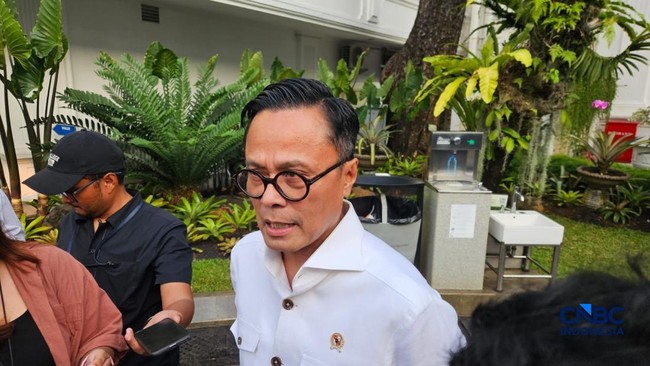
The Danantara Investment Management Agency (BPI Danantara) is committed to reforming the governance of state-owned enterprise (SOE) pension funds. The move follows problems in investment management that could lead to funding shortfalls and become a time bomb in the future.
Danantara Chief Operating Officer and Head of the SOE Regulatory Body (BP BUMN) Donny Oskaria said the pension fund issue is one of the major challenges currently being faced. However, Danantara has not yet been able to calculate the overall size of the funding shortfall that must be covered.
Donny explained that there are two types of pension funds: defined contribution and defined benefit. Under the defined contribution scheme, the founding company does not bear the risk of the pension fund’s investment performance.
The problem arises under the defined benefit scheme because the company guarantees the benefits that pensioners will receive, whether periodically or at the end of their retirement period.
“The essence is the management of the investments. If the investment management is carried out carelessly, causing the benefit plan received by beneficiaries or pensioners to be insufficient, then the founder is obliged to top up. This amount is quite large,” Donny said on CNBC Indonesia’s Squawk Box on Monday (24/8/2026).
He cited the problem occurring in PT Pos Indonesia’s pension fund. The company is said to be facing a shortfall of nearly Rp4 trillion.
“For example, at PT Pos we have a shortfall of almost Rp4 trillion, one company, which we must top up. What is the problem? The investments were not managed well. So all the problems are the same,” he said.
Going forward, Donny is pushing for internal reforms. These reforms include establishing criteria and requirements for parties managing pension funds, including regulating permitted investment instruments and portfolios.
“But in the long term we are already thinking that SOEs will no longer prioritise defined benefits. We prefer defined contributions, so that we can be predictive and know how much cost we have to incur for pensioners,” he continued.
The pension fund issue is not new. In mid-2023, the governance of SOE pension funds came under scrutiny.
At that time, Commission VI Deputy Chairman Aria Bima said that 22 of the 48 SOE defined-benefit pension funds had a funding adequacy ratio below 100 per cent. This ratio measures a pension fund’s ability to pay the obligations of all pension participants.
Kartika Wirjoatmodjo, who was then Deputy Minister of SOEs, revealed that the funding shortfall of the 22 SOE pension funds, based on calculations by the Ministry of SOEs and the Financial Services Authority (OJK), was estimated to reach Rp12-13 trillion.