
State Estimated to Save Rp3 Trillion as Free Nutritious Meals Paused During School Holidays
Jakarta - The National Nutrition Agency (BGN) has recorded potential budget savings of more than Rp3 trillion after temporarily suspending the distribution of the Free Nutritious Meals (MBG) programme during the 2026 school holidays. The policy is outlined in Circular Letter (SE) Number 12 of 2026, which regulates the operational adjustments of the Nutrition Fulfilment Service Units (SPPG) during the holiday period. The measure was taken in line with the temporary halt of MBG distribution during the holidays, which is normally provided to beneficiaries, both students and non-students.
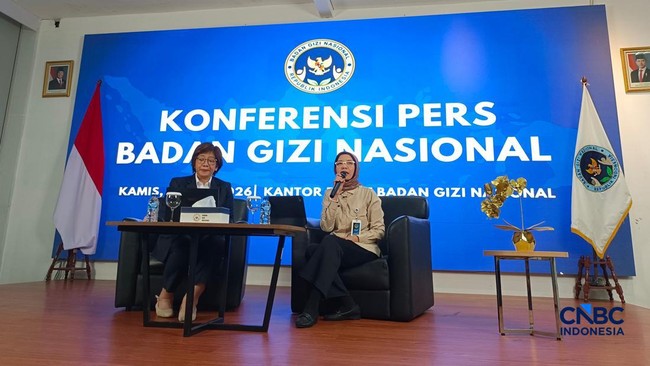
Deputy Head of BGN and agency spokesperson Agustina Arumsari stated that the regulation was issued to adjust programme operations during the holiday period, while also serving as a momentum for evaluation and restructuring of MBG implementation. "On 17 June 2026, BGN issued SE Number 12 of 2026 concerning the operational adjustment of SPPG during holiday periods for the implementation of the MBG programme in the 2026 fiscal year," Sari said during a press conference at her office in Jakarta on Thursday (18/6/2026).
Sari explained that during the temporary suspension, non-operational SPPGs would also not receive operational incentives. Previously, each SPPG received an incentive of Rp6 million per day. From this policy, BGN estimates the resulting budget efficiency reached more than Rp3 trillion. "If we look at the number of SPPGs that have been operating, multiplied by the daily incentive over 18 days, we have achieved SPPG incentive efficiency of Rp3,004,560,000,000," she revealed.
Beyond cutting operational costs, BGN is also restructuring the target beneficiaries of the MBG programme. As of 18 June 2026, the agency had identified 76 schools on Java Island with a total of 39,352 students deemed capable of independently meeting their nutritional needs. These schools will undergo further evaluation to determine their eligibility as programme beneficiaries. If the evaluation results indicate that assistance is no longer required, the budget allocation will be redirected to groups deemed more in need of nutritional support from the government. "The budget previously allocated there will be focused on the MBG programme for children who require nutritional intervention," she said.
Going forward, BGN will prioritise MBG distribution to vulnerable groups, including communities in underdeveloped, frontier, and outermost (3T) regions, pregnant women, breastfeeding mothers, toddlers, and children requiring nutritional intervention. Nevertheless, Sari emphasised that the data on the 76 schools is still provisional and may change as the data collection process continues. The evaluation is conducted by considering a number of indicators, ranging from nutritional vulnerability levels and socio-economic conditions to community access to nutritional fulfilment. "This Free Nutritious Meals Programme must be truly effective in reaching the right targets and efficient in the use of state funds," she concluded.