
State Deemed Not Yet to Recognise Indigenous Peoples' Right to Veto
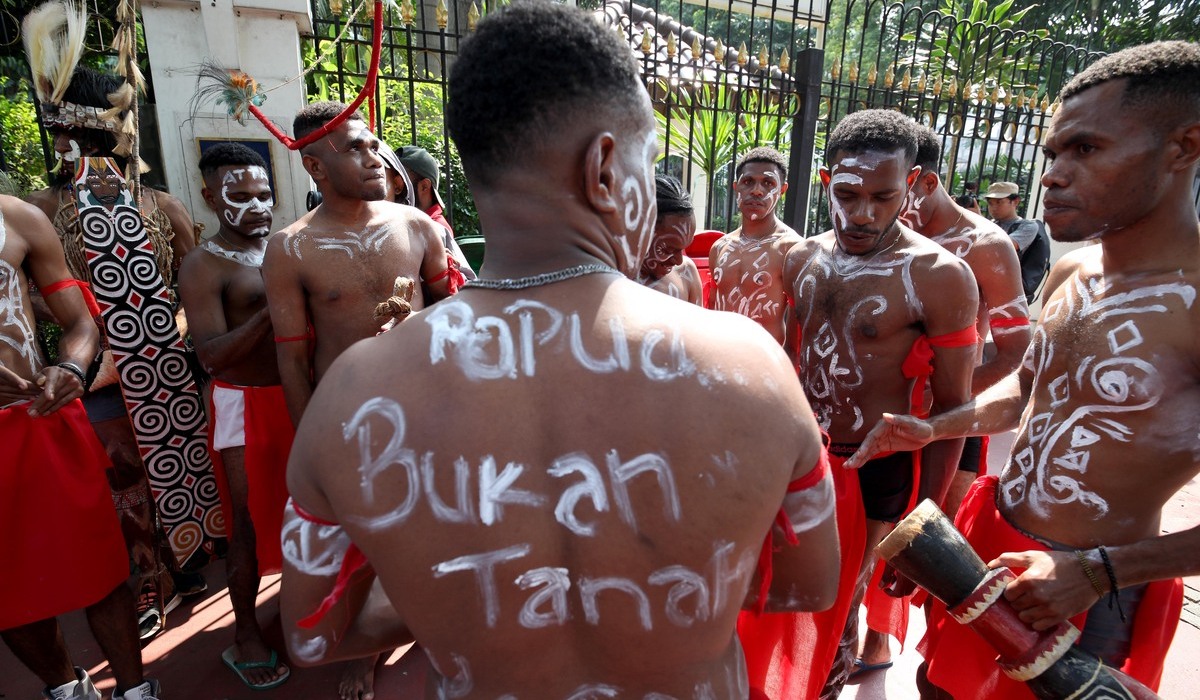
The draft Law on Indigenous Peoples (RUU MHA), which has entered the 2026 Priority National Legislation Programme, is still considered to have fundamental weaknesses. Academics from Universitas Gadjah Mada (UGM) have warned that without a strong free consent mechanism, indigenous peoples will remain vulnerable to coercion and land dispossession in the name of development.
Yance Arizona, a Constitutional Law lecturer at UGM’s Faculty of Law, stressed that the absence of a Free, Prior, and Informed Consent (FPIC) mechanism within the national legal framework is the root of various conflicts involving indigenous communities. “In Indonesia, there is actually no FPIC mechanism in our legal framework, so it is logical that many conflicts involving indigenous peoples occur because what happens is not FPIC, but coercion and dispossession of land and indigenous peoples,” Yance said on Wednesday (24/6).
FPIC is a mechanism that guarantees indigenous peoples receive full information regarding the benefits, losses, and impacts of a project before giving or withholding consent without coercion. According to Yance, the principle is actually scattered across several constitutional articles, but its explicit regulation in law remains very limited.
From an analysis of two versions of the Indigenous Peoples Bill—the DPR version and the Civil Coalition version—Yance found four identical fundamental weaknesses. First, the draft has not been integrated with the licensing system. Second, the aspect of inclusivity is still minimal. Third, there is no clear institution. Fourth, an effective complaint mechanism is not yet available. “The Indigenous Peoples Bill must transform from merely a compensation instrument into a tangible manifestation of sovereignty for indigenous peoples in Indonesia,” Yance concluded.
UGM Professor of Anthropology Bambang Hudayana added that the challenge of implementing FPIC lies not only in regulation but also in the highly diverse character of indigenous governance across Indonesia. “If we cannot see the character of indigenous governance, then we will fail to implement an FPIC that truly sides with indigenous peoples,” said Bambang.
He highlighted the state’s tendency to pursue development goals by subjugating indigenous communities. This condition, he argued, is narrowing the advocacy space for indigenous peoples. Without strengthening indigenous organisations, their interests will be difficult to fight for. “If there is no empowerment or strengthening of indigenous organisations, do not expect indigenous peoples to be able to voice their interests,” he asserted.
Bambang also reminded that the consent process is not sufficient if it only involves traditional leaders or elites. The mechanism must ensure the participation of all rights-holding community members who will be directly affected. “FPIC is carried out participatively through deliberation and collective decision-making by the community holding rights to customary land,” he said.