
State Budget Shields Against Oil Price Surge to Protect Indonesian Households
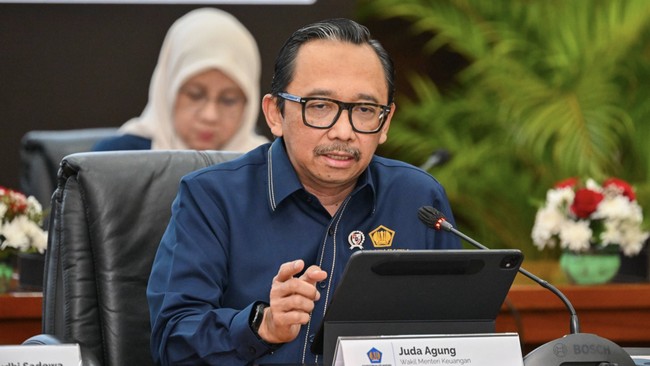
Jakarta, CNBC Indonesia - Deputy Finance Minister Juda Agung has assured that Indonesia’s fiscal condition remains stable despite the Indonesian Crude Price (ICP) moving above initial assumptions. In the 2026 State Budget, the government set a base ICP assumption of US$70 per barrel with a deficit target of 2.68% of GDP. Additionally, subsidised fuel prices such as diesel and Pertalite have been fixed at Rp 6,800 and Rp 10,800 per litre, respectively. However, due to the Middle East conflict driving a surge in global oil prices, Juda noted that the average ICP since early April has reached US$77.8 per barrel and is now fluctuating between US$79 and US$80. “From January to 8 April, the average was US$77.8 per barrel. As of now, it has risen to around 79-80. This means there is an excess over the US$70 per barrel assumption,” Juda stated at the National Policy Dialogue and Kick Off for Accelerating National Intermediation (PINISI) event on Monday (27/4/2026). In response to the rise in global oil prices, the government has decided to hold subsidised fuel prices steady. This step is taken to maintain public purchasing power and control inflation. However, the consequence is an increase in the energy subsidy burden. “Subsidised fuel prices are not rising. They remain the same. Of course, if prices stay fixed while economic costs rise, the subsidies will swell,” he said. Under these conditions, the state budget deficit could potentially breach the 3% of GDP threshold if no adjustments are made, especially if the average oil price throughout the year reaches US$100 per barrel. Therefore, Juda explained that the government is pursuing budget sharpening or refocusing measures. This will keep the state budget secure and Indonesia’s economy strong. At the same time, it will prevent pressure on the public’s wallets, as reflected in purchasing power. “First, public purchasing power must be protected. How? By keeping inflation from rising; fuel prices, if increased, could lead to widespread effects, so they are kept steady. The subsidies swell, of course, which means sacrificing other expenditures. Therefore, refocusing is carried out,” he said. As is known, Coordinating Minister for Economic Affairs Airlangga Hartarto previously stated that this budget relocation or reallocation is done from less priority spending such as official travel, non-operational meetings, and ceremonial activities. “This is towards more productive spending that directly impacts the public, including rehabilitation and reconstruction of disasters in Sumatra,” he explained. Airlangga emphasised that the government is also continuously pushing for accelerated spending by ministries and agencies as well as budget sharpening through optimisation, with the value ranging from Rp 121.2 trillion to Rp 130.2 trillion. “The potential for prioritisation and refocusing of ministry and agency budgets is in the range of Rp 121.2 trillion to Rp 130.2 trillion,” Airlangga revealed.