
State Budget Cannot Cover 100%, Private Sector Open to Invest in These Projects
The Ministry of Public Works is opening greater opportunities for private investors to participate in infrastructure development. This step is being taken because infrastructure funding needs continue to rise, while the capacity of the State Budget (APBN) is limited.
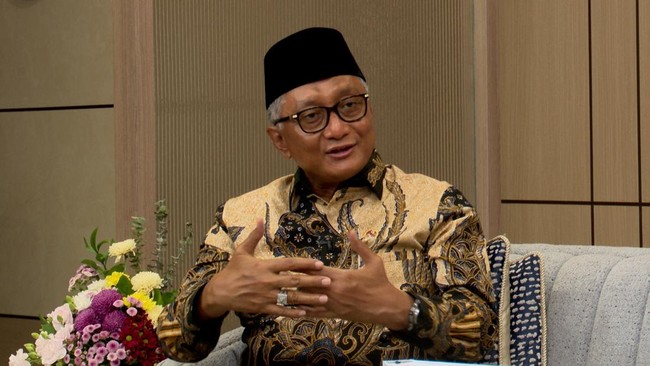
Minister of Public Works Dody Hanggodo stated that the government is now increasingly relying on the Public-Private Partnership (KPBU) scheme to accelerate the development of various projects.
“It is impossible for everything to be supported 100 percent by the APBN. That is why we are inviting many investors, especially through the KPBU scheme, particularly for projects that from the outset have profit prospects for investors,” Dody said during CNBC Indonesia’s Economic Update on Friday (2/7/2026).
A number of sectors are claimed to have high appeal for investors, ranging from toll roads, drinking water supply systems, and sanitation to other basic infrastructure. One sector requiring significant investment is drinking water provision; the funding needs are enormous to replace old pipe networks while transforming clean water services into ready-to-drink water.
“If we talk about drinking water, the funding requirement to replace obsolete pipes has already reached trillions of rupiah. The investment turnover is also quite large. I am confident the need to continuously improve the quality of drinking water services will persist year after year,” he said.
Investment opportunities in the drinking water sector remain wide open. The government wants regional water services to not only be capable of providing clean water but also to produce water that is ready for public consumption.
“Today, perhaps the majority is still limited to clean water. Going forward, we want the quality to improve to ready-to-drink water. As the name suggests, it is the Regional Drinking Water Company, not the Regional Clean Water Company. So, the investment needs are still very large, and that presents an opportunity for investors to participate,” he stated.
Private sector involvement does not mean reducing the government’s role in infrastructure development. On the contrary, the KPBU scheme is expected to accelerate and expand public access to more supportive infrastructure.
“Through collaboration via KPBU, the government can accelerate development without the entire financing being charged to the APBN. Most importantly, the public receives better infrastructure services, while investors also obtain business certainty from projects that are indeed economically viable,” Dody concluded.