
Starting 18 October 2026, These 7 Product Categories Must Have Halal Certification
The Halal Product Assurance Agency (BPJPH) has again reminded business operators to promptly obtain halal certification for their products ahead of the Mandatory Halal policy implementation on 18 October 2026. The policy is mandated by Law Number 33 of 2014 on Halal Product Assurance and Government Regulation Number 42 of 2024 on the Implementation of Halal Product Assurance.
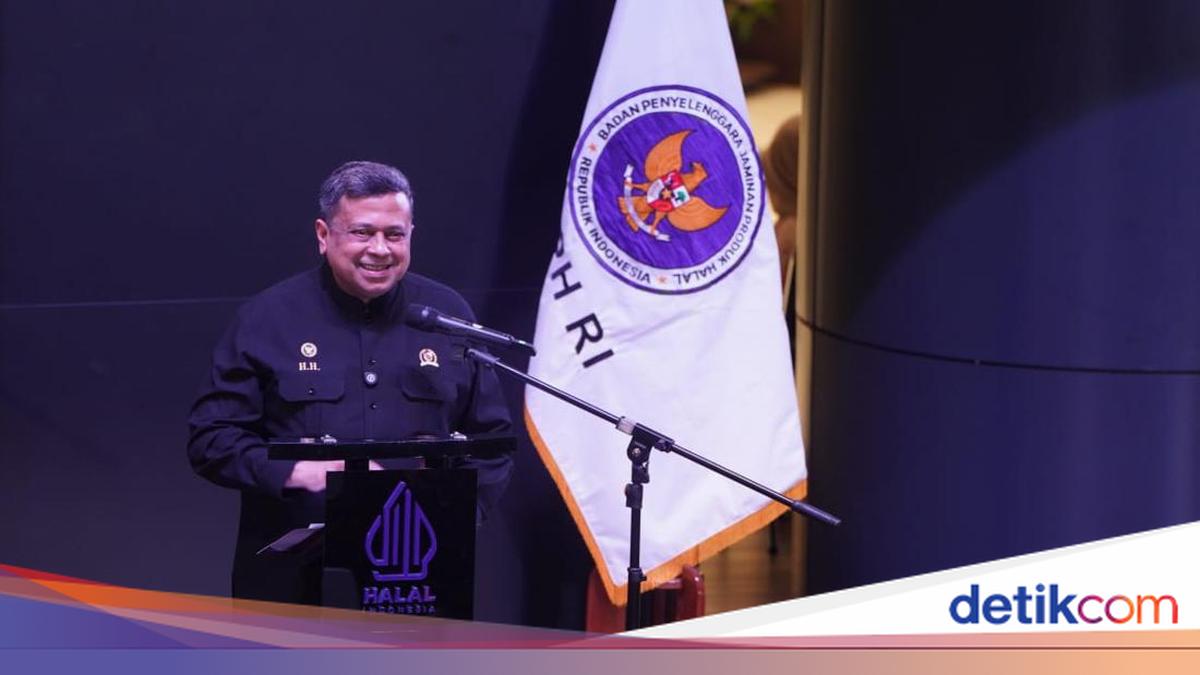
During a National Socialisation event for Mandatory Halal October 2026 held simultaneously at 1,183 locations, BPJPH Head Ahmad Haikal Hasan, known as Babe Haikal, stressed that the halal certification obligation represents the state’s presence in providing protection, certainty, security, and comfort to the public when consuming or using products circulating in Indonesia. It also aims to provide economic added value for business operators in developing their products and enterprises.
“Besides the fact that the time has come, if not now, when else? The scope of this second phase is very broad and touches various strategic sectors,” Babe Haikal stated in a written release. “This obligation absolutely covers a number of product types as stipulated in the regulations,” he added during the event at Pakuwon Mall Bekasi.
Babe Haikal further explained that the implementation of Mandatory Halal October 2026 is a continuation of the phased halal certification obligation for medium and large business products that began in October 2024. Mandatory Halal October 2026 not only requires food and beverage products to be halal-certified but also expands the scope to include products from micro and small enterprises, as well as foreign or imported products.
In accordance with Government Regulation Number 42 of 2024, the product categories that must be halal-certified starting 18 October 2026 include: 1. Food and beverage products; 2. Slaughtered products and slaughtering services; 3. Cosmetics; 4. Chemical products and genetic engineering products; 5. Natural medicines, quasi-medicines, and health supplements; 6. Raw materials, food additives, and processing aids for food and beverage products; 7. Consumer goods, including clothing and accessories, household health supplies, household appliances, worship equipment, stationery, office supplies, and Class A risk medical devices.
Babe Haikal also reminded that violations of Halal Product Assurance provisions may result in administrative sanctions according to applicable regulations, ranging from written warnings and administrative fines to revocation of halal certificates and product withdrawal from circulation. He urged all business operators whose products fall under the mandatory halal categories to apply for halal certification immediately.
“We encourage all business operators to utilise the available time before 18 October 2026. The sooner you prepare for halal certification, the better it is for business sustainability, consumer trust, and regulatory compliance,” Babe Haikal asserted. He noted that the halal certification obligation is not merely an administrative requirement. Beyond being a constitutional mandate to protect the public, halal certification has now developed into a market necessity and an indicator of consumer trust, as well as an increasingly important factor for product competitiveness in modern trade.
“Today, halal is not only a need for Muslims. Halal has become a standard of quality, safety, transparency, traceability, and trustworthiness that is universally applicable and globally recognised,” Babe Haikal explained. “Therefore, halal certification provides added value while strengthening the competitiveness of Indonesian products in both domestic and international markets.”
Through the implementation of Mandatory Halal October 2026, BPJPH also hopes to realise a national halal product ecosystem that is increasingly robust, trustworthy, and competitive, while providing more optimal protection to the public as consumers. “So wake up, ladies and gentlemen. Open your eyes. We can grow again, be great again, with halal,” Babe Haikal concluded.